Latvia’s growth depends on the country’s ability to transform its economy from labor- and resource-intensive to knowledge- and technology-based, emphasize leaders of science universities and research organizations. To achieve this, cooperation between industry and science must become closer, more coordinated, and strategically managed, while also supporting investment in the development of strategic technologies, including semiconductors, biotechnology, and defense technologies.
The European Innovation Scoreboard shows that although the situation in 2025 has slightly improved, Latvia still has not realized its potential, outperforming only Bulgaria and Romania. Latvia’s economy continues to be dominated by low- and medium-technology sectors, with labor productivity below the European Union (EU) average.
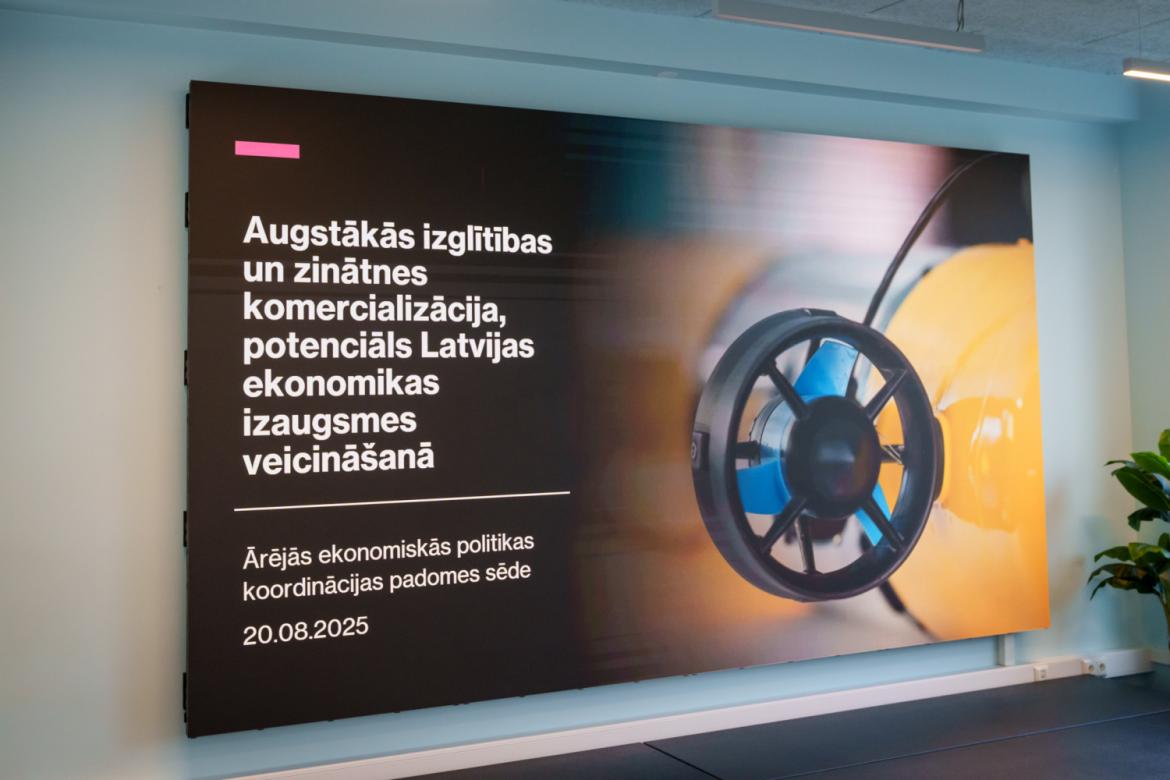
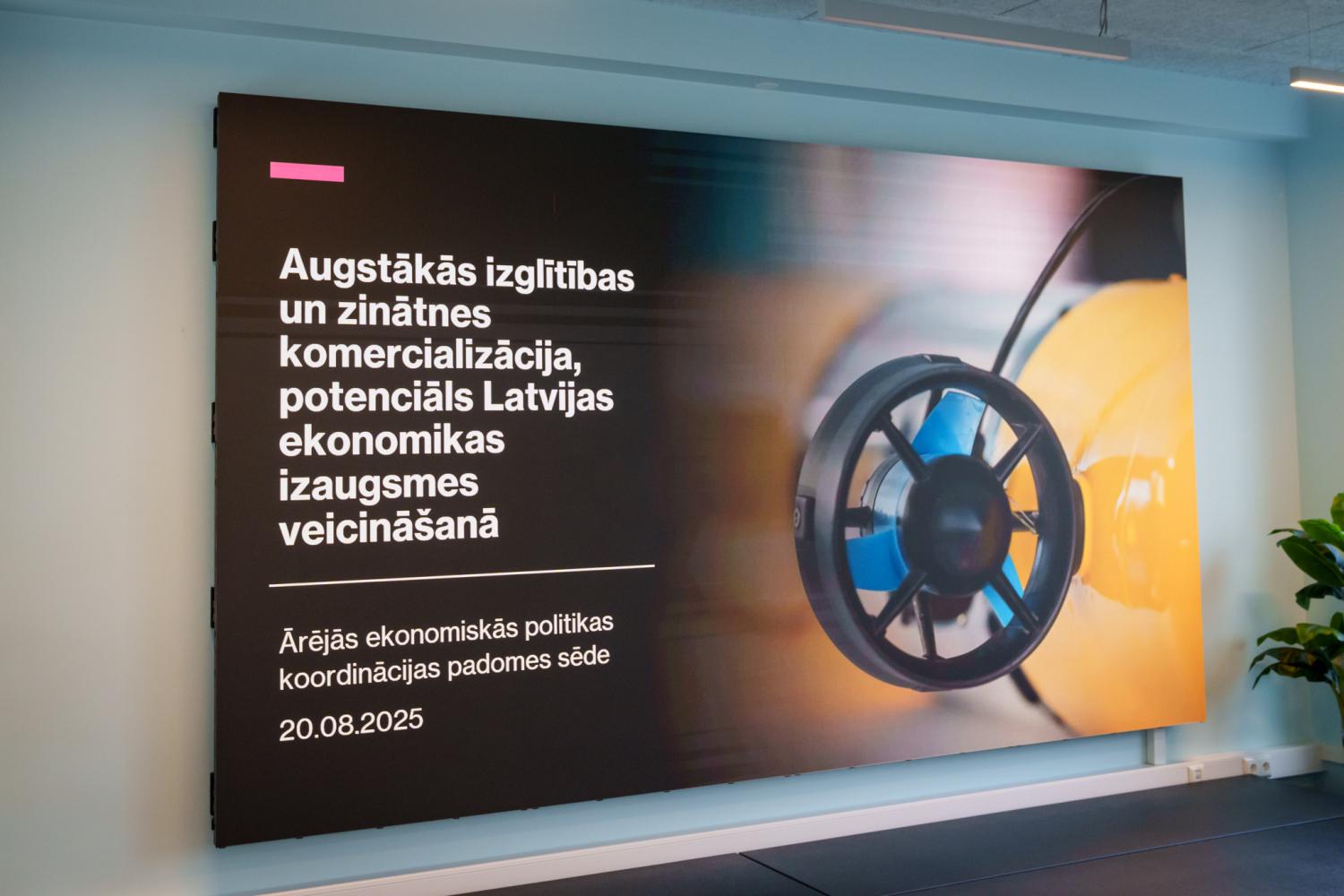
Investments in research and development also significantly lag behind the EU average, companies rarely take risks to invest in early-stage technologies, growth capital is lacking, and state support for business R&D remains limited. Collaboration between science and industry is irregular and fragmented, the commercialization of research results is slow, and coordination among ministries shaping science and innovation policy is insufficient, pointed out Riga Technical University (RTU) Rector Tālis Juhna at the 22nd meeting of the External Economic Policy Coordination Council, held at the RTU.
At the same time, science institutions and research organizations have much to offer in technology, expertise, and scientific knowledge for both Latvian and international markets in areas such as high technologies, energy, innovative and personalized medicine, dual-use technologies, and many others.
Leaders of science universities and research organizations agree – a unified governance structure must be established to coordinate science–industry cooperation and to synchronize education and science policy with innovation needs.
Implementing the knowledge economy approach, it is proposed to accelerate the adoption of research commercialization regulations, introduce a more effective innovation policy governance model, set national investment priority directions, and implement a unified innovation policy with defined measurable targets, such as public and private R&D investment, number of science-based startups, international patents and licenses, and number of doctoral students. Market-adapted supervision is also essential. Additionally, a sustainable financial model must be created to incentivize research commercialization and strengthen the capacity and efficiency of university technology transfer.
Foreign Minister Baiba Braže emphasized that Latvia already has many good examples of science-based startups, which were created in cooperation with universities or scientific institutions. She particularly highlighted the role of faculty and science universities in technology transfer and commercialization. B. Braže also commended the work of the Ministry of Education and Science, RTU, and the University of Latvia (UL) in fostering cooperation with the U.S. space sector.
“Latvia has great potential in science and innovation, but so far we have not fully utilized it due to fragmented governance. The Ministry of Education and Science, together with national and scientific sector partners, has prepared a proposal to improve governance in science and innovation commercialization.
Today we had a valuable discussion on this matter at the External Economic Policy Coordination Council. I thank colleagues and partners for their useful proposals – they will be incorporated into our proposal and advanced for government consideration,” said Minister of Education and Science Dace Melbārde.
“The potential of science and innovation in Latvia is enormous, but the process is currently too fragmented and stuck.
If we want to achieve faster growth, innovation and science commercialization policy must become much more targeted, coordinated, and results-oriented.
Latvia’s growth requires bold and clear action so that research and technologies can more quickly transform into products, services, and international success,” agreed Minister of Economics Viktors Valainis.
At the External Economic Policy Coordination Council, after hearing the vision of science universities, ministers agreed that government-level action is needed for faster and more effective decision-making regarding science commercialization, more effective implementation of innovation policy, as well as simplification of regulations and significant reduction of administrative burdens, placing trust in universities and other representatives of the innovation ecosystem.
The External Economic Policy Coordination Council is a collegial and coordinating body established by the Cabinet of Ministers in 2012, under the leadership of the Minister of Foreign Affairs. Its goal is to ensure coordinated cooperation between public administration, various institutions, and the non-governmental sector in order to successfully shape and implement external economic policy.
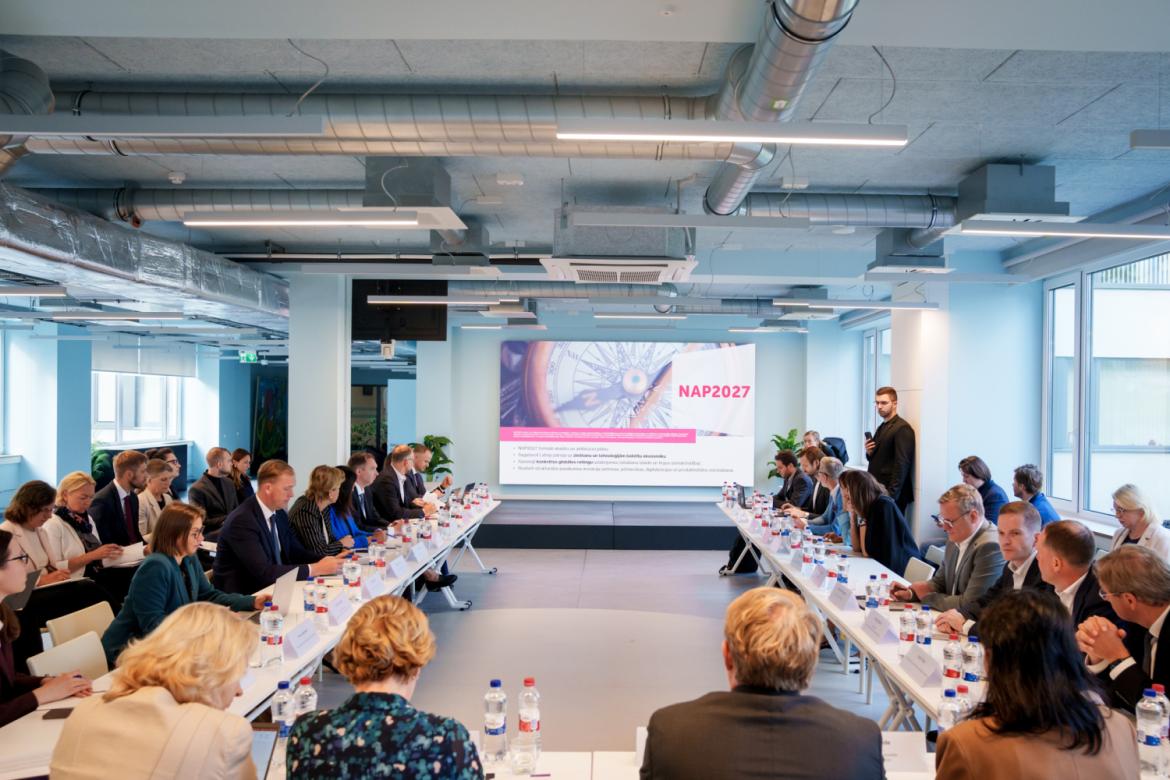
The 22nd Council meeting was chaired by Foreign Minister Baiba Braže and attended by Minister of Economics Viktors Valainis, Minister of Education and Science Dace Melbārde, Minister of Finance Arvils Ašeradens, Minister of Transport Atis Švinka, Deputy State Secretary of the Ministry of Agriculture Juris Zīvarts, Mayor of Riga Viesturs Kleinbergs, as well as representatives of the Chancellery of the President of Latvia, the Latvian Chamber of Commerce and Industry, the Employers’ Confederation of Latvia, the Investment and Development Agency of Latvia, RTU, UL, the Latvia University of Life Sciences and Technologies, the Latvian Institute of Organic Synthesis, and the Latvian Space Industry Association.
Photo gallery: 20.08.2025. External Economic Policy Coordination Council meeting >>