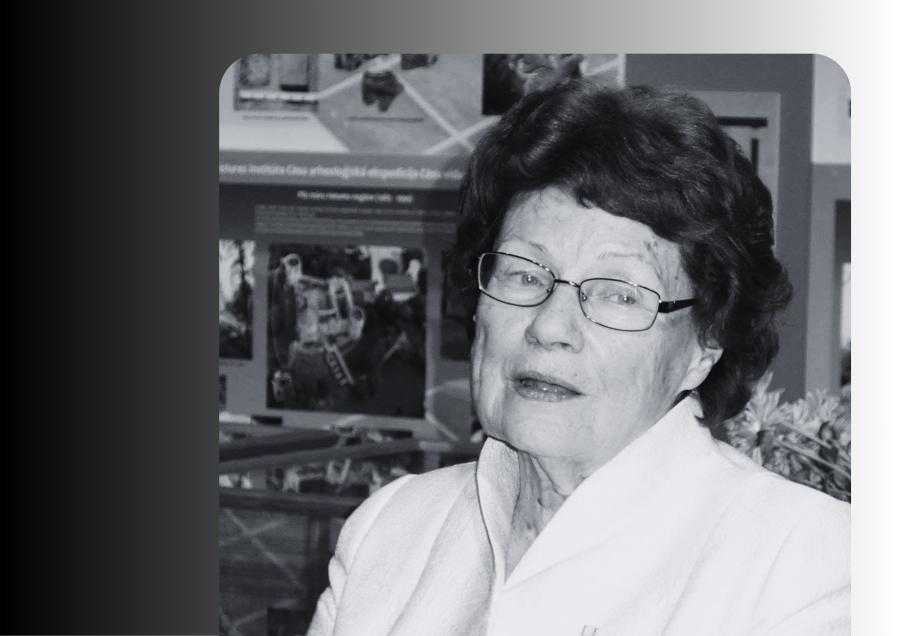
Zigrīda Apala belongs to the now legendary generation of archaeologists of the 1960s–1980s, who were destined to carry out extensive and significant archaeological excavations.
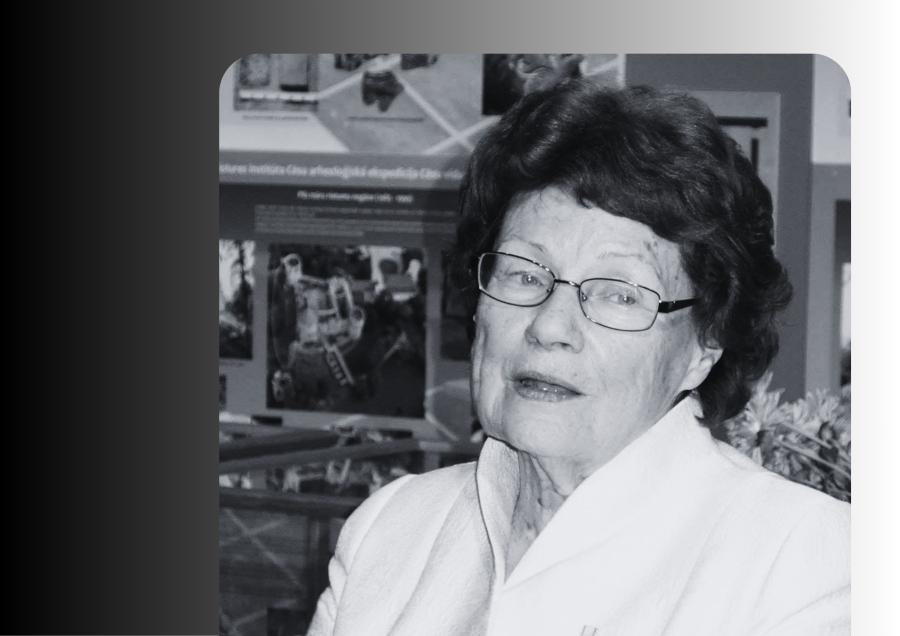
Zigrīda Mieriņa entered Latvian archaeology in 1958, when she was employed as a laboratory assistant in the Archaeology Sector of the Institute of History and Material Culture of the Academy of Sciences of Latvia, then the Latvian SSR. Like most archaeologists of that time, she had to work at archaeological sites along the Daugava — in the area that was intended to be flooded during the construction of the Pļaviņas Hydroelectric Power Plant — at Ķentes Hill, Oliņkalns, Mūku Hill and Altena. This provided her with rich experience in working at various sites — hillforts, stone castles and burial places. The excavations were led by outstanding archaeologists of the time — Ādolfs Stubavs, Jānis Graudonis and Ēvalds Mugurēvičs.
At Mūku Hill and Oliņkalns, the archaeologist Jānis Apals worked as deputy excavation director. Friendship grew into love — on 20 October 1962, the Apals family of archaeologists was born.
In 1965–1966, when Jānis Apals began the archaeological investigation of the Āraiši lake dwelling, Zigrīda became deputy director of this expedition.
A significant event in the lives of Zigrīda and Jānis Apals was the establishment of Gauja National Park (GNP) in 1973. During this period, the identification and research of archaeological monuments in the territory of GNP was expanded. Initially, small-scale excavations were carried out at Cēsis Medieval Castle, but it soon became clear that the site was too complex and required extensive research. At first, in 1974, Jānis and Zigrīda Apals undertook the management of the excavations together, but since Jānis was occupied with the methodologically very complex excavations at the Āraiši lake dwelling, Zigrīda took over the management of the Cēsis stone castle expedition. This expedition lasted for more than 30 excavation seasons, during which more than 10,000 antiquities and 1,800 coins were obtained, and significant evidence of the Livonian War (1558–1583) was uncovered. It is no coincidence that, in marking Zigrīda Apala’s 75th birthday, her colleagues and friends dedicated to her a collection of scholarly articles entitled Regina in castro Wenda, compiled by Academician Andris Caune. Although the work at Cēsis Castle required a great deal of time and energy, Zigrīda Apala was also able to lead excavations at the Priekuļi Ģūģeri archaeological complex, where 85 burials were uncovered. Zigrīda also studied the 13th–14th-century Uplanti cemetery in Drabeši.
From 2000 to 2010, Zigrīda Apala carried out archaeological supervision at 15 sites in the old town of Cēsis, and in 2009–2010 at Riekstu Hill in Cēsis.
It should also be noted that during the winter period Zigrīda Apala not only prepared excavation reports and scientific publications, but for more than 30 years (1972–2004) was Head of the Antiquities Conservation and Restoration Laboratory of the Archaeology Sector. From 1972 to 2000, she compiled the materials of the scientific reporting sessions of archaeological, ethnographic and anthropological expeditions — initially abstracts of papers — which in the early period were published annually, and later once every two years. These publications contain brief, concise information about the research carried out and are indispensable in the work of almost every researcher.
Zigrīda Apala was actively involved in the work of the “Lake Dwelling Foundation”, which ensured the development and growth of the Āraiši Lake Dwelling Archaeological Park. Together with Jānis Apals, she was among the active initiators of the establishment of the International Association for Experimental Archaeology, Open-Air Museums, Traditional Crafts and Cultural Heritage Interpretation (EXARC).
In cooperation with EXARC colleagues, many significant projects were implemented, which contributed to the development of the archaeological park and strengthened its place in international tourism and experimental archaeology.
Zigrīda Apala remained faithful to the Āraiši lake dwelling until the very last days of her life. Āraiši had become her home in the literal sense of the word — together with her son Gints, she built the house “Sniedzes” on the shore of Lake Āraiši, and her life companion Jānis is buried in Vanagi Cemetery in Āraiši. Zigrīda never refused advice to the specialists of the Āraiši Lake Dwelling Archaeological Park.
Zigrīda Apala’s work was also highly valued — she received the Cultural Heritage Award in 2004, the Cēsis Municipality annual award “Cēsiniece 2005” in 2005, a lifetime scholarship from the State Culture Capital Foundation in 2006, and in 2012 she received the Order of the Three Stars, Fifth Class.
Zigrīda Apala’s work was also highly valued by the Latvian Academy of Sciences, which awarded her the honorary scientific degree of Doctor of History (Dr. hist. h. c.) in 2006.
Through her work, Zigrīda Apala helped us write the history of Latvia. Thanks to her and her life companion Jānis, we now see it more broadly and more clearly. Outstanding archaeologists do not work only for themselves and for science. They work for their people.
We express our condolences to Zigrīda Apala’s loved ones.
The farewell to Zigrīda Apala will take place on 28 July at 15.00 in the Farewell Hall “Krematorija” of Valmiera Crematorium.