Starting in June, the Latvian Institute of Organic Synthesis (OSI) and the Latvian Biomedical Research and Study Centre (BMC) will merge to form a single National Research and Innovation Institute. Both medical‑related research institutions are currently working on unifying their administrative structures, and the leadership of both organisations has expressed that the changes will provide scientists with additional practical opportunities for research while also strengthening the sector’s overall international competitiveness.
IN BRIEF (English Summary)
- The Institute of Organic Synthesis (OSI) and the Biomedical Research and Study Centre (BMC) will merge into a single National Research and Innovation Institute starting in June.
- The government approved the merger last autumn, and the administrative consolidation is currently under way.
- For scientists, the merger will create additional research opportunities, including broader collaboration between chemistry and biology.
- The new institute will employ around 500 staff members, maintaining both current locations while unifying administrative functions.
- Dace Kārkle will serve as Acting Director from 31 May until a new director is elected later this autumn.
Aiming for Global Markets and International Funding
The Ministry of Education’s proposal to merge the two medical‑related research institutes was endorsed by the government last autumn. OSI focuses on discovering and developing new drug compounds, while BMC specialises in life sciences and medical research. According to OSI Director Dace Kārkle, the merger is a strategic step that will accelerate scientific excellence and enable broader, faster research.
Combining OSI’s strengths in chemistry with BMC’s expertise in molecular biology will open new research directions, particularly in areas where biology and chemistry intersect — a key frontier for next‑generation therapeutics. The unified institute will be able to offer these capabilities to academic partners and industry alike.
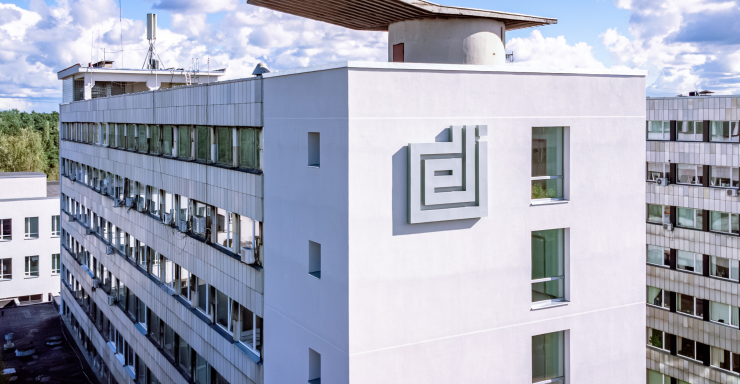
Both institutes have built significant research infrastructure over the years and recently received top evaluations from international experts. While the two sites in Teika and Kleisti will remain, administrative consolidation will reduce costs. Kārkle emphasised that the institute’s true competitive arena is the global research landscape, not the local one.
Strengthening Scientific Impact
Jānis Kloviņš, Chair of BMC’s Scientific Council, noted that the merger will help create more impactful science. Researchers will gain full access to both institutes’ infrastructure and support systems — from grant preparation processes to commercialisation experience.
One of the most challenging tasks was selecting a shared name. The chosen title, National Research and Innovation Institute, avoids tying the organisation to a single field and allows room for future expansion across its three strategic pillars: medicine, technology, and the environment.
Dace Kārkle will serve as Acting Director from 31 May until the Scientific Council elects a permanent director, expected this autumn.