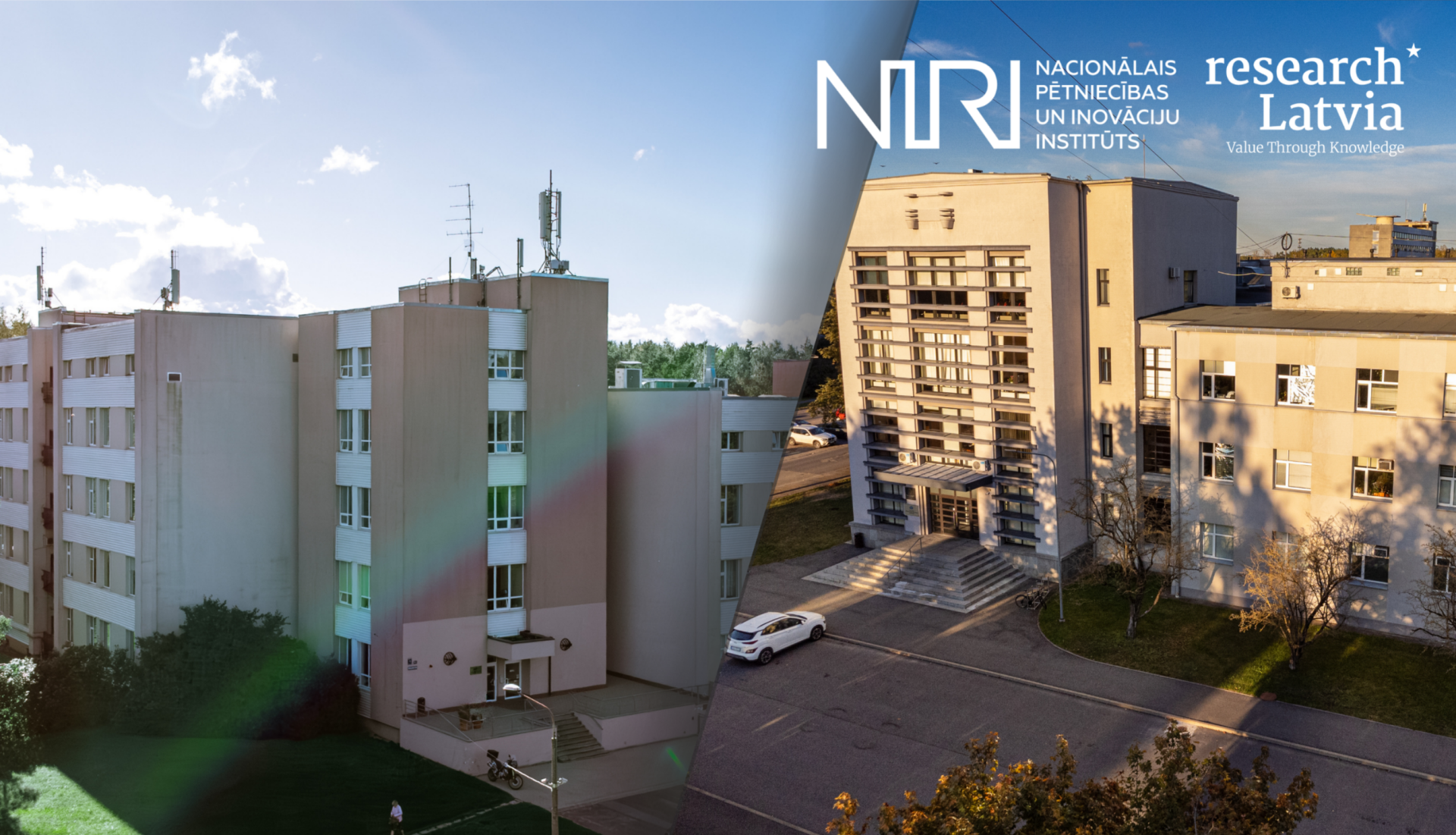
The National Institute of Research and Innovation (NIRI) is a European-level life and natural sciences research centre in Latvia, established in the summer of 2026 through the merger of the Latvian Institute of Organic Synthesis (OSI) and the Latvian Biomedical Research and Study Centre (BMC). The Institute’s activities encompass drug discovery and development, molecular medicine, biomedicine, genomics, biotechnology, and the advancement of diagnostic methods. By bringing together expertise in chemistry, biology, and medical research, NIRI develops solutions for new treatment methods and medical technologies, while promoting the transfer of knowledge to healthcare and the manufacturing industry.
The Institute’s approach enables multiple stages of research to be carried out within a single organisation — from the design of new molecules and the study of their biological activity to the evaluation of drug candidates, investigation of the molecular mechanisms of diseases, and development of personalised medicine solutions. This approach promotes the integration of chemistry, genomics, and biomedical data and methods, supporting research into new opportunities for diagnosis, treatment, and prevention.
NIRI brings together more than 400 scientists and researchers, forming a broad, interdisciplinary scientific community. This extensive research community strengthens the Institute’s capacity to contribute to science policy development, attract funding, and develop shared research infrastructure. The combined expertise enables NIRI to expand the range of services offered to businesses and increases its opportunities to compete for European research funding, fostering international collaboration and competitiveness. Approximately 180 students are involved in the NIRI’s work, while around 50 researchers from other countries contribute to international cooperation and knowledge exchange.
NIRI continues the long-standing research work of its predecessor institutions, which has resulted in the development of 18 drug substances, 9 vaccines, and more than 100 new technologies. Over several decades, the NIRI’s research legacy has contributed to the advancement of pharmaceuticals, biomedicine, biotechnology, and public health. NIRI continues to develop new therapeutic agents, diagnostic methods, and technologies.
An important part of the Institute’s research resources is its infrastructure for biological samples and genetic data. The biobank enables the systematic collection, processing, and storage of biological samples for research purposes, while genomic data support studies of human genetic diversity and the genetic factors underlying diseases. The Institute contributes to the development of personalised medicine by advancing research into disease risk assessment, diagnostics, and individually tailored treatment approaches.
In 2025, NIRI’s funding totalled EUR 36.3 million, approximately 80% of which came from research project funding secured by the Institute itself. This project funding includes support from European Union research programmes and private-sector funding.
NIRI strengthens Latvia’s research capacity, expands international cooperation, and promotes the application of scientific discoveries to meet the needs of businesses. The Institute’s long-term goal is to advance science-based healthcare and strengthen Latvia’s position within the European life sciences research landscape.