Today, June 1, at the Kokaru Hall of the Mežaparks Great Stage, with the participation of representatives from the state, universities, and the science sector, the National Research and Innovation Institute (NIRI) — a new European‑level centre for life and natural sciences — was ceremonially opened. The newly established institute brings together two of the country’s strongest research organisations — the Latvian Institute of Organic Synthesis (OSI) and the Latvian Biomedical Research and Study Centre (BMC). From today, both institutes begin operating as a single research organisation.
As noted by the Minister of Education and Science, Ilze Indriksone: “By launching the merger project in 2023, OSI and BMC made a conscious and strategic decision — to combine knowledge, competences, people, and resources in order to raise the quality of science, strengthen international competitiveness, and ensure long‑term development. It is a choice in favour of cooperation and unified, purposeful growth. By merging, these institutions create a critical mass that allows not only adopting best practices from leading European research organisations, but also becoming drivers of change within Latvia’s science system themselves. Latvia’s population is not large — our strength lies in excellence, specialisation, and cooperation. In today’s geopolitical environment, science, research, and innovation are not only the foundation of economic development, but also of national security.”
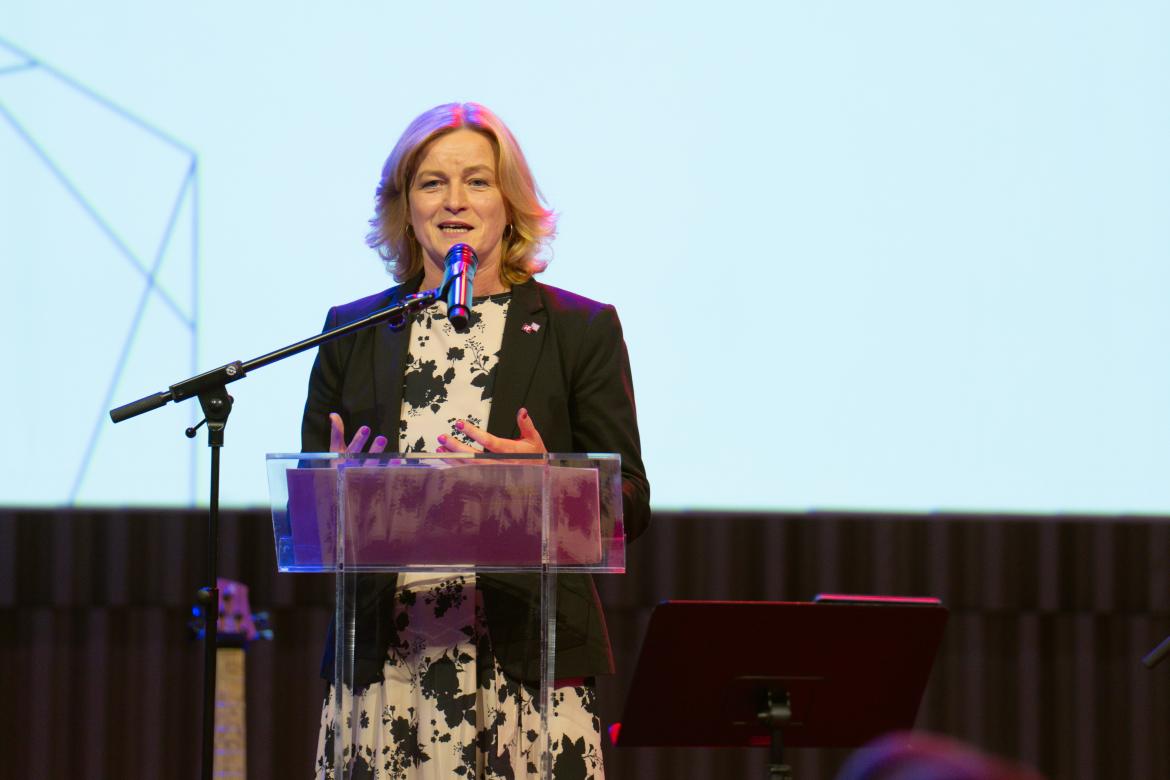
Meanwhile, Parliamentary Secretary of the Ministry of Economics Jurģis Miezainis emphasizes: “We highly value what science practically provides in everyday life, and we recognize that Latvia’s competitiveness can only be created through innovation. OSI and BMC have demonstrated that they are very successful in attracting private funding, and this is proof that Latvia can compete in the market across the whole of Europe. Science is also a struggle for belief, and the newly established institute is trusted by the business sector, the state, as well as innovators themselves and representatives of the academic community. This is a perfect formula for strong growth in the future, and we, as policymakers, will continue to address challenges, provide support, and ensure that scientists are able to create great things for Latvia’s economy.”
The establishment of NIRI is a strategic step that will strengthen the excellence and international competitiveness of Latvian science. By combining the competences, infrastructure, and human resources of two leading research organisations, the conditions will be created for more targeted use of available resources, closer cooperation, and higher added value both in education and innovation. This merger is a vivid example that it is possible in Latvia to successfully unite high‑level scientific institutions, creating an internationally competitive centre of scientific excellence.
The aim of NIRI is to develop world‑class research in the development of new medicines, diagnostics and treatment methods, personalized medicine, biotechnology, and public health. The overarching mission of the institute is to seek solutions that help people live healthier and longer lives.
“The idea to merge the two institutes arose based on the successful experience of foreign scientific centres. By combining the competences of more than 400 scientists, we gain the opportunity to achieve more both in science and in the development of innovation. NIRI will become a stronger platform for attracting international projects, modern research infrastructure, and closer cooperation with entrepreneurs and universities,” emphasizes NIRI Director Dace Kārkle.
By combining the capacities of OSI and BMC, NIRI consolidates resources and competences to develop innovative solutions in healthcare — from the development of new medicinal substances and therapy methods to health data analytics and personalized medicine. NIRI will become an important partner for entrepreneurs, as well as offer an environment for internships and research for students in the fields of medicine, life sciences, and chemistry.
During the event, NIRI signed a cooperation memorandum with the three largest universities — Riga Technical University (RTU), Rīga Stradiņš University (RSU), and the University of Latvia (UL), affirming close cooperation in science, research, and the development of new talent. The memorandum предусматривает strengthening cooperation in research and innovation development, as well as expanding student involvement in practical scientific projects, providing a full‑fledged environment in which to develop and test new ideas.
The event took place within the framework of the project “Consolidation of the Latvian Institute of Organic Synthesis and the Latvian Biomedical Research and Study Centre”, funded by the European Union Recovery Fund and the state budget.
About NIRI
The National Research and Innovation Institute (NIRI) is a European‑level centre for life and natural sciences that brings together the Latvian Institute of Organic Synthesis (OSI) and the Latvian Biomedical Research and Study Centre (BMC). The aim of the institute is to develop world‑class research and innovation in the development of new medicines, diagnostic and treatment methods, personalized medicine, biotechnology, and public health. By combining the competences of more than 400 scientists in chemistry, molecular biology, medicine, and health data analytics, NIRI will create the strongest platform in the Baltics for drug discovery and the development of medical technologies.