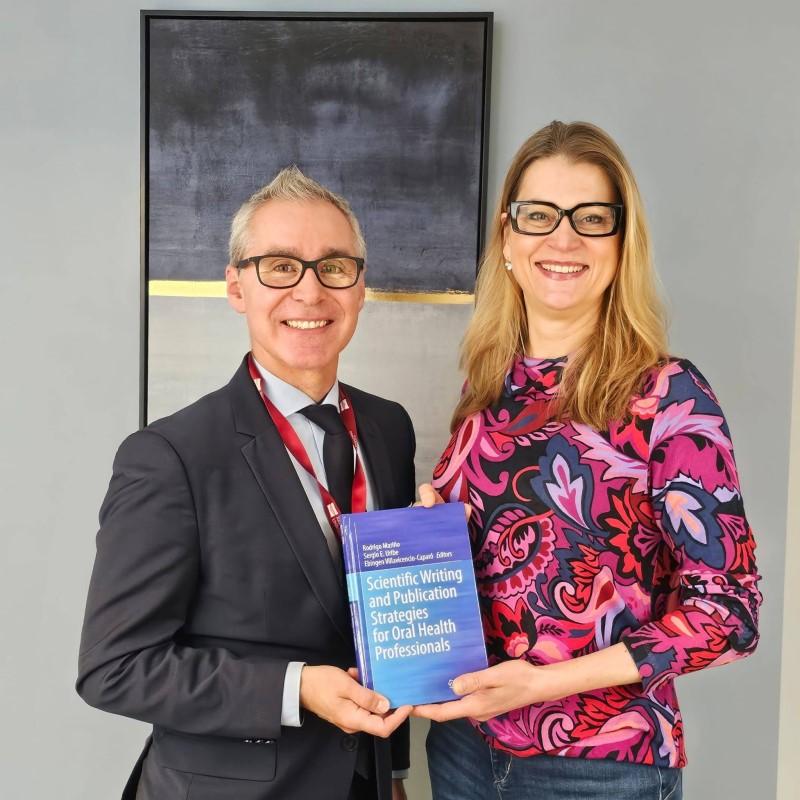
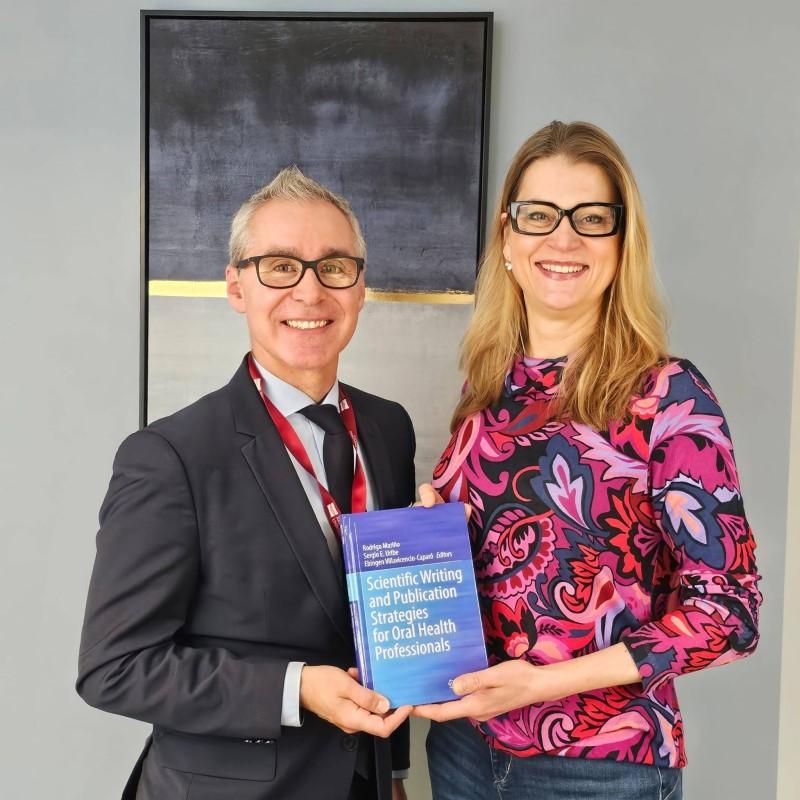
Assoc. Prof. Sergio Uribe, PhD in Oral Health Sciences and Lead Researcher at the Rīga Stradiņš University (RSU) Department of Conservative Dentistry and Oral Health, has published a book together with his colleagues – Scientific Writing and Publication Strategies for Oral Health Professionals. This is the first known book on scientific writing and publication strategies specifically for oral health professionals.
How would you describe the significance of this book?
This book emerged from a specific challenge. The International Association for Dental, Oral and Craniofacial Research wanted to improve how dental researchers share their work and raise the quality of submitted manuscripts. Prof. Rodrigo Mariño from the University of Melbourne and I proposed a solution: a targeted workshop. We developed the content and began teaching it, starting in Ecuador.
We have taught research methods for over 20 years in Chile, Australia, and Latin America. Throughout this time, we found no dental-specific guidance for scientific writing. Our workshops revealed content that existing textbooks do not cover, particularly Open Science principles. These principles are essential when the public demands transparency and the scientific community requires replicability.
The COVID-19 pandemic made this question all the more urgent. Misinformation spread through media channels, creating an "infodemic" that undermined public health responses. The WHO now lists misinformation among the 10 most serious threats to public health.
This gap between research volume and health outcomes persists partly because of poor communication. Researchers write for other researchers, using technical language that prevents practitioners from applying findings in their clinics.
This book provides dental professionals with the fundamentals of scientific communication. It explains how to present research at conferences and in peer-reviewed journals. The emphasis is on transparency and reproducibility as methods to increase research impact.
How broad is the audience for which this book is intended?
Scientific communication now touches every stage of the dental profession. Dental students must plan, execute, and write theses. Postgraduate students present at conferences. Dental researchers communicate findings as part of their core work. This book serves all three groups.
The book aims to create research that matters. Consider this: dentistry produces extensive research, yet oral diseases affect more people than any other condition.
The WHO reports that half of all adults in the WHO European Region have a major oral disease, the highest rate worldwide. At RSU, we found that nearly all Latvian adolescents have dental caries. One quarter have small lesions that can be stopped. Three quarters have lesions that need restoration.
Lack of proper communication contributes to this gap between research and practice. Researchers often write for technical audiences rather than enabling dental professionals to implement findings in practice. This book helps any dental professional understand how scientists communicate results, what to check in papers to assess their validity, and how to apply findings in clinical settings.
We invite all dental professionals to explore this book. Whether you are a student preparing your thesis, a researcher seeking to increase your impact, or a clinician who wants to evaluate and apply scientific evidence in practice, this book offers practical guidance. We wrote it to bridge the gap between research and clinical application. We have donated copies to the RSU Faculty of Dentistry and to the RSU library, and the book is available through the Springer website and any major online bookstore.
About the authors
The authors are internationally renowned experts from different continents. Rodrigo Mariño is an expert and researcher working in both Australia and Europe, and a specialist in public health and dental education with extensive publication experience. Ebingen Villavicencio-Caparó from Ecuador is known for his contribution to scientific writing methodology in the Latin American region, which gives the book a global perspective.
The professional activities of Sergio Uribe, Associate Professor at RSU, cover conservative dentistry, diagnostics, the application of artificial intelligence in healthcare and meta-research methodology. He is actively involved in international initiatives, including WHO projects on digital health solutions.