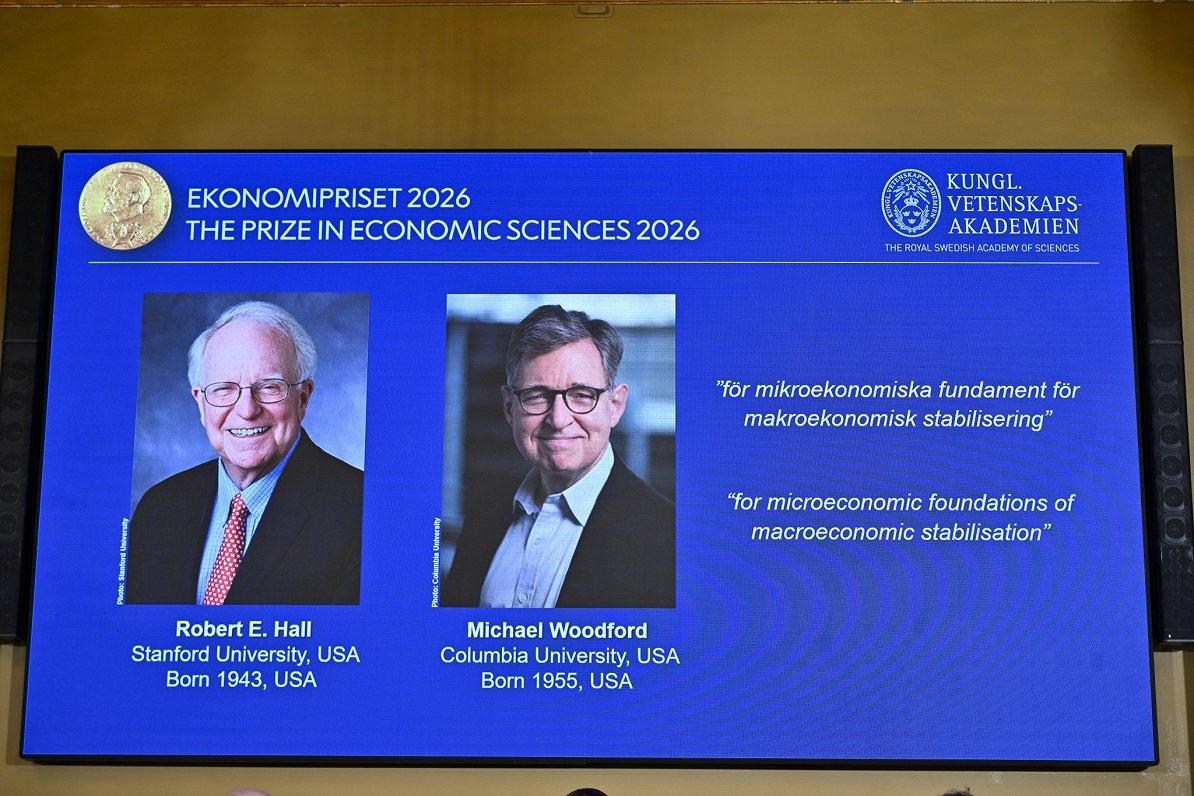
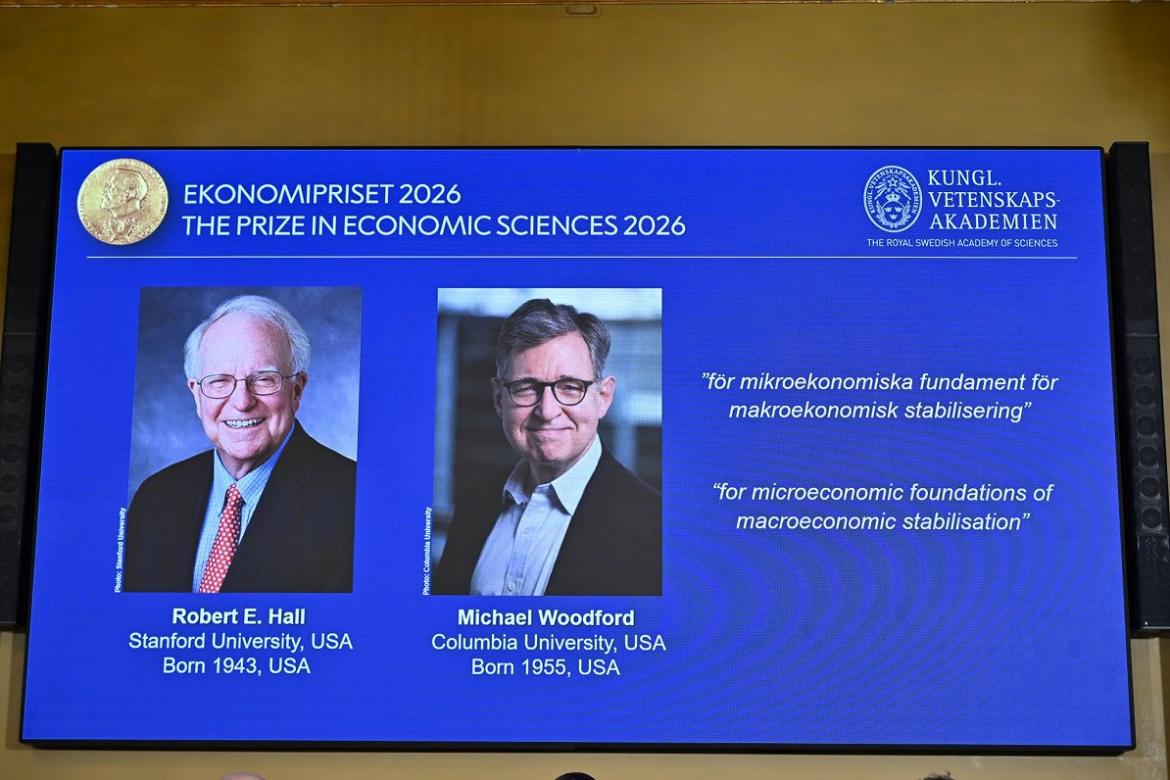
The Royal Swedish Academy of Sciences, which awards the Nobel Prize in Economic Sciences, announced that this year’s prize was awarded to American researchers Robert E. Hall and Michael Woodford for research that helped explain the “microeconomic foundations of macroeconomic stabilization.
Economic development is shaped by alternating periods of downturns and expansions. Stimulating or slowing the economy at the appropriate time can help maintain stability and prevent prolonged recessions or uncontrolled inflation.
Nearly a century ago, economist John Maynard Keynes proposed economic models for macroeconomic stabilization. These models suggested that during a recession, the economy should be stimulated, for example by lowering interest rates and increasing budget deficits. Conversely, when an economy is growing too rapidly, policymakers should take the opposite approach. However, these models proved inadequate during several economic crises in the late twentieth and early twenty-first centuries.
According to the Royal Swedish Academy of Sciences, the research of Robert E. Hall and Michael Woodford has transformed the understanding of macroeconomic stabilization policy. The researchers demonstrated that stabilization policy can be restored by building it on microeconomic foundations rather than relying solely on macroeconomic relationships.
Hall and Woodford developed new macroeconomic models that have significantly advanced knowledge of effective stabilization policy. Based on these models, timely fiscal and monetary policy measures can reduce the impact of economic disruptions, the Academy notes.
“The laureates’ work has provided us with a solid theoretical foundation for the models now used by central banks and governments around the world. Thanks to their contributions, we are better prepared to address economic shocks such as energy crises or sudden changes in household consumption,” said John Hassler, Chair of the Nobel Prize Committee for Economic Sciences.
Hall is an American economist and Professor at Stanford University in California. He is also a member of the U.S. National Academy of Sciences, the American Academy of Arts and Sciences, and the Econometric Society. Since 1978, Hall has chaired the Business Cycle Dating Committee, which is responsible for determining the starting and ending dates of recessions in the United States.
Woodford is an American economist at Columbia University in New York. He is a member of the American Academy of Arts and Sciences and the Econometric Society, and a research associate at the National Bureau of Economic Research. In 2007, he received Deutsche Bank’s Prize in Financial Economics, in 2018 the Banque de France/TSE Prize in Monetary Economics, and in 2024 the Erwin Plein Nemmers Prize in Economics.
The Nobel Prize in Economic Sciences was awarded 57 times to 99 laureates between 1969 and 2025. It was established and financed by Sveriges Riksbank rather than the Nobel Foundation, although recipients receive the same award as other Nobel Prize laureates.
The prize was created to mark the bank’s 300th anniversary, and the first recipients in 1969 were economists Ragnar Frisch and Jan Tinbergen for “developing and applying dynamic models for the analysis of economic processes.