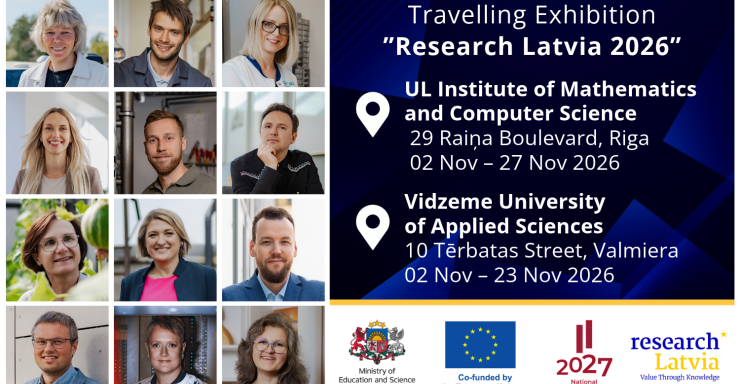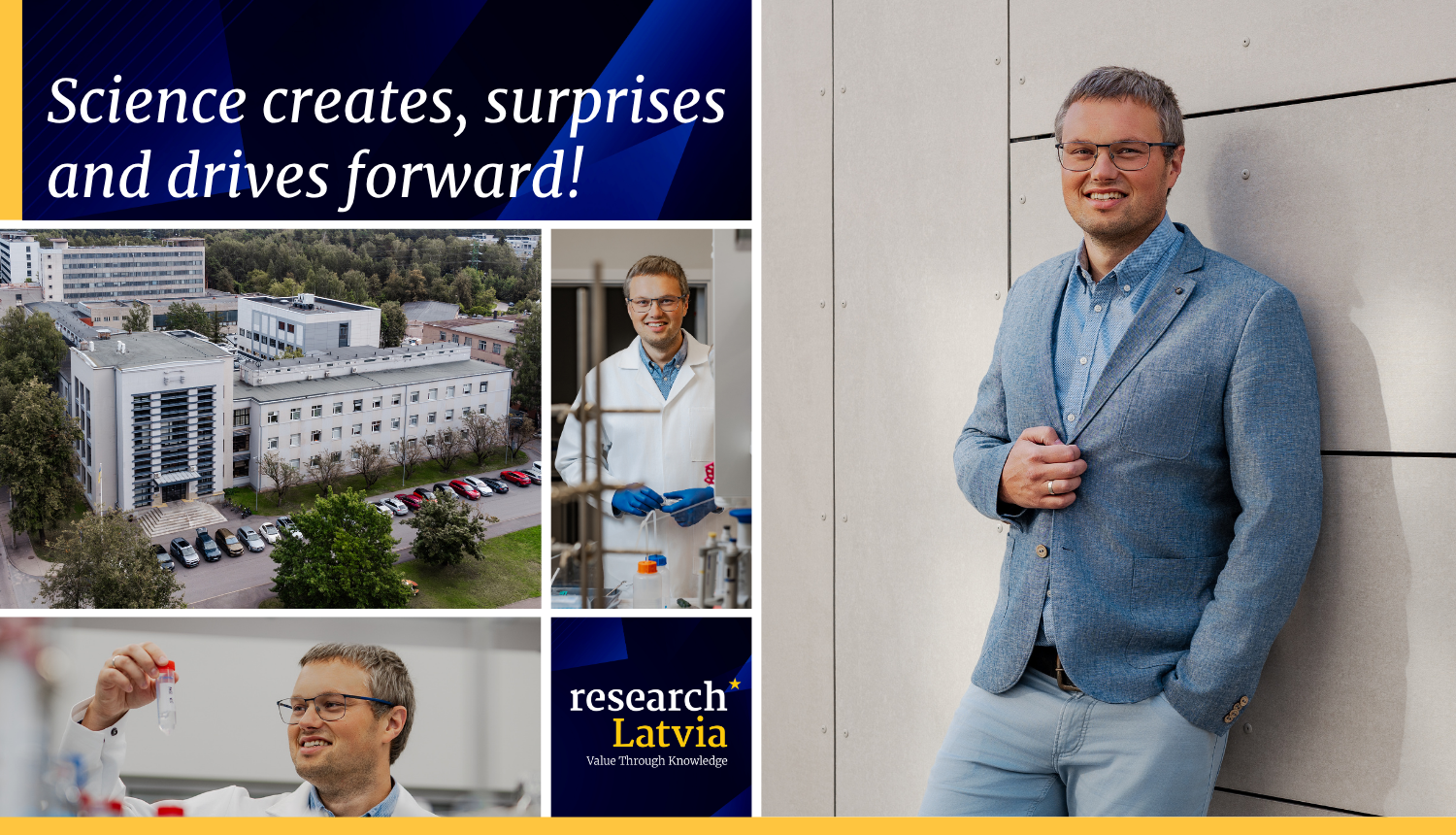
As a Leading Researcher at the National Institute of Research and Innovation (NIRI) and Head of the Laboratory of Active Compounds of the Central Nervous System, Dr. chem. Gints Šmits also serves as an Associate Professor at the Riga Technical University (RTU). His work lies at the intersection of chemistry, biotechnology and biomaterials – particularly in the field of biomimetic solutions inspired by nature.
“Science is not detached from society. It begins with human curiosity and ends with solutions that change day-to-day life.”
One of the most remarkable research directions led by Gints Šmits is the development of synthetic spider silk. This project was recognised as one of the scientific achievements of the year by the Latvian Academy of Sciences in 2024. Spider silk is considered the strongest and most elastic natural fibre known, surpassing steel and most synthetic materials in specific strength. At the same time, it is biodegradable, biocompatible and made from natural proteins, making it highly promising for surgical materials, tissue engineering and wound healing.
The newly established National Research and Innovation Institute (NIRI) is formed by the Latvian Institute of Organic Synthesis and the Latvian Biomedical Research and Study Centre, creating a strong interdisciplinary base for drug development, biomedicine and advanced biotechnology in Latvia. NIRI aims to create a strong interdisciplinary base for drug development, biomedicine and advanced biotechnology in Latvia.
Together with teams from NIRI (formerly the Latvian Institute of Organic Synthesis), RTU and the Karolinska Institutet in Sweden, researchers developed a new biomimetic method for synthesising and transforming silk proteins into fibres with properties resembling natural spider silk. This breakthrough brings science closer to producing high-performance biomaterials for medicine – including sutures, implants and other biomedical applications.
To advance the practical use of this material, Gints Šmits and his colleagues established the start-up company “PrintyMed”, which has already gained recognition in the Latvian and European innovation community. The start-up has developed a technology for producing spider silk thread, with the next milestone being the development of methods to weave these threads into yarns suitable for medical use.
Dr. chem. G. Šmits emphasises: “Biomimetics serves as a bridge between nature and man-made technologies – it contains both beauty and enormous potential.”
His work exemplifies how cutting-edge science, entrepreneurship and international cooperation can turn fundamental discoveries into real-world biomedical solutions. These achievements confirm that Latvia contributes to globally relevant innovations that will shape the future of materials science and medicine.
Watch the video story about Dr. chem. Gints Šmits' research:
The science calendar “Research Latvia 2026” and the researcher descriptions were developed within the ERDF-funded project No. http://1.1.1.1/1/24/I/001 “More Efficient Implementation and Management of Latvia‘s Science Policy”, implemented by the Ministry of Education and Science.