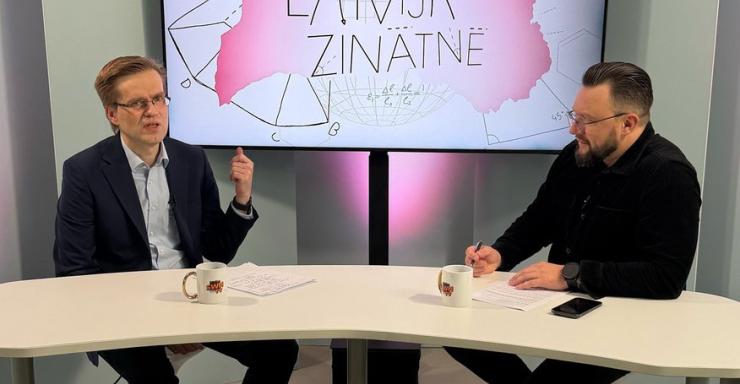
Cultural and art research is one of those scientific fields that provides an opportunity to see connections within society and to find answers to questions about human values, participation, and cultural processes. The study of this area reveals both the paths of past development and the perspectives for shaping the cultural environment in the future. Ph. D. Baiba Tjarve, leading researcher at the Latvian Academy of Culture (LAC), has worked extensively on these issues. She is a recognized cultural researcher whose work is dedicated to understanding cultural and artistic processes and explaining their impact on society.
“Researching various cultural and artistic processes allows me to see the bigger picture—the structure in which these processes take place—while at the same time, in closer detail, to observe micro-events and their influence on social life,” says Ph.D. Baiba Tjarve, Deputy Head of the LAC Institute of Culture and Arts and developer of international research projects. She emphasizes that cultural research can create a link between science and society, offering a broader perspective on processes that affect each of us.

The scientist is actively involved in national and international research projects, including European research cooperation networks and State Research Programs. B. Tjarve has participated in many applied studies in the cultural sector, gaining significant experience in issues of cultural consumption, cultural management, audience development, and participation. Her research helps strengthen the foundations of cultural policy-making in Latvia, as well as provides practical recommendations to municipalities and cultural institutions for the development of the cultural environment.
The work of Doctor of Arts Baiba Tjarve reminds us that the task of research is not only to find answers but also to ask questions that help society understand itself and move forward, making the humanities an integral part of contemporary research.
About the science calendar “Research Latvia 2025”
This activity is implemented within the ERDF project No. 1.1.1.1/1/24/I/001 “More Effective and Smarter Implementation and Management of Latvia’s Science Policy” carried out by the Ministry of Education and Science. Developers: the creative team of “Entuziasti Digital” Ltd., including Mārtiņš Pavasaris, video director Kristaps Mozgirs, photographer Mārtiņš Goldbergs and the researchLatvia team.
Since 2018, the science calendar “Research Latvia” and traveling exhibition have been created to promote the visibility of Latvian researchers’ achievements, to strengthen public understanding of the importance of science, and to inspire young people to pursue science.