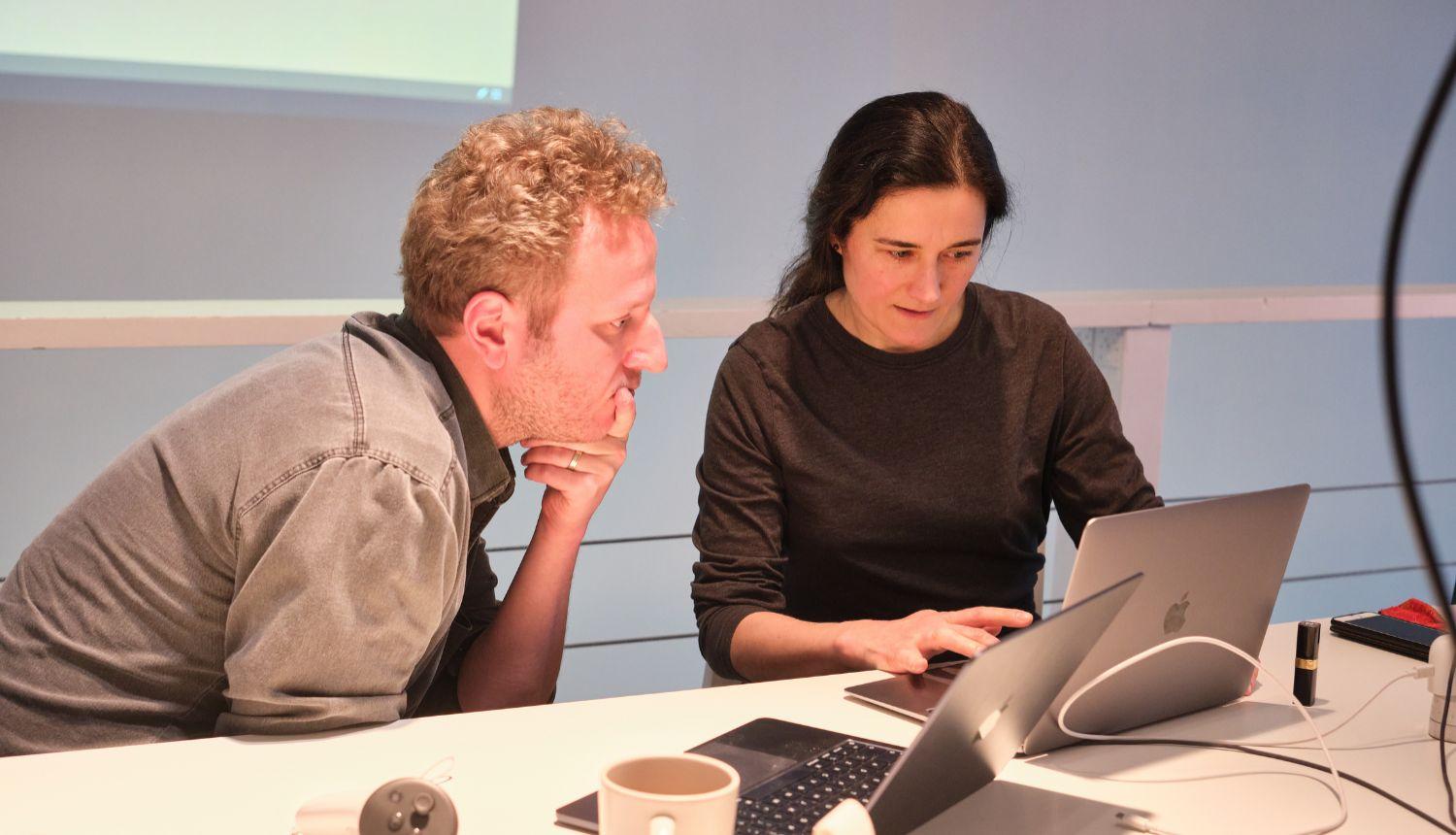
The leading researcher at Vidzeme University of Applied Sciences (ViA), Ieva Gintere, is a person whose theoretical thinking, creativity, and readiness to learn converge. Her path to science began in music – at Emīls Dārziņš Music Secondary School and later at Jāzeps Vītols Latvian Academy of Music, where she earned a doctoral degree in musicology. Yet although her professional education is rooted in music, Ieva consciously chose the path of a researcher. Music and art have not disappeared from her life; they have become the central field of her research, including in her postdoctoral work.
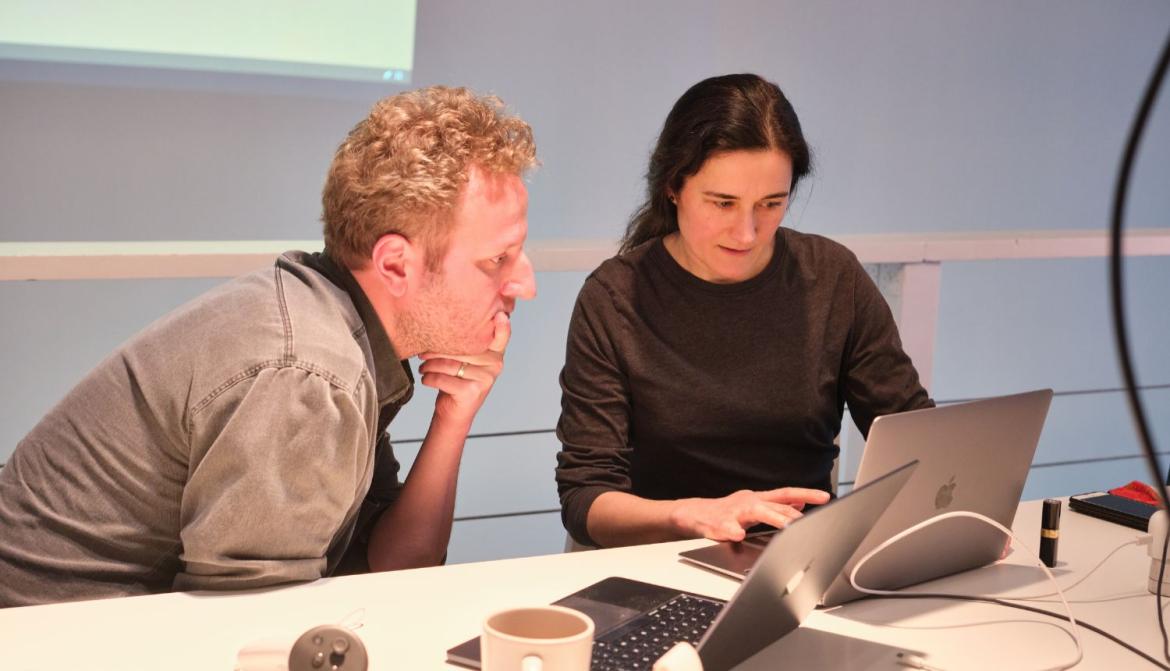
Ieva openly admits that she once made her professional choice pragmatically and, most importantly, based on an honest self-assessment. She deliberately chose a field in which her strengths could fully unfold.
“Although music is one of my passions, I simply did not feel talented enough to perform professionally in an orchestra or pursue a career as a performer. At the same time, I was clearly aware of my other strengths – I have a distinctly theoretical mind and a natural interest in research. I am not afraid of working alone – I enjoy concentrating, reading, thinking, and writing. Research, therefore, seemed like a logical choice,” she explains.
Exploring What Has Not Yet Been Explored
Ieva’s academic interest focuses on 21st-century contemporary aesthetics: images, sounds, audiovisual works, and cultural artefacts that characterise our time. She emphasises that the most recent decades in art and culture are still relatively underexplored. Within this field, Ieva seeks connections between art history and the present: what is entirely new, what continues older ideas, and how ideas transform over time.
One example she mentions is “error” and “noise” as aesthetic devices. What may once have been used as a joke or provocation in a work of art or musical composition has today become a fully developed artistic language.
An International Collaboration Resulting in a Digital Exhibition
Currently, Ieva is implementing the postdoctoral project “Development of Digital Art Games and the Ecology of the Mind in the 21st Century (EcoMind)” (No. 1.1.1.9/LZP/1/24/009). The project is carried out at Vidzeme University of Applied Sciences in cooperation with École Supérieure d’Art et de Design d’Orléans in France and the Business, Arts and Technology University RISEBA.
Under Ieva’s leadership, students from all three institutions are also involved in the project, learning virtual reality technologies. The project includes a range of activities, but its practical outcome will be a virtual contemporary art exhibition, “EcoMind” – a digital exhibition featuring 21st-century new media artworks created in Latvia, focusing thematically on ecosystems and the environment. In implementing the idea, Ieva expresses her gratitude to the ViA Virtual Reality Laboratory and personally to Associate Professor Arnis Cīrulis.
An important aspect of the project is the development of digital skills and close collaboration with students. Ieva admits that learning itself is one of the greatest benefits: she is acquiring the basics of digital design and programming, working with the creation of virtual reality environments, and collaborating more closely with technology specialists. In her view, this is a direction that cannot be avoided today: researchers in the humanities increasingly need to work in the digital space.
Postdoctoral Research as an Opportunity for Growth
Ieva is one of the researchers who has taken advantage of the postdoctoral opportunity for the second time, and she regards the programme as significant support for academic development:
“This programme provides a solid foundation for further academic career development. It is not just funding, but also time and a structured environment to understand how the scientific community functions. It is start-up capital for a young researcher – one could hardly wish for anything better.”
She emphasises that within three years, thanks to the opportunities provided by the programme, it is possible not only to implement one’s scientific vision but also to learn the “rules of the game” in academia – how to develop publications, how to build collaborations, and how to structure one’s scientific path.
Ieva does not hide her belief that research is a field and profession that must be chosen in close alignment with one’s personality and character.
“Research requires the ability to be alone with one’s thoughts, and that is not suitable for everyone,” she stresses.
For this reason, Ieva highly values the fact that today career choices are discussed earlier and earlier in schools – already from the first grades, children are encouraged to think about their interests, abilities, and character traits. In her view, such an approach gives young people much broader opportunities to make conscious decisions about their future. Addressing young women who are interested in the intersection of art, technology, and science but still hesitate, Ieva encourages them not to be afraid of their own path and to allow it to take shape step by step.
She herself feels she is exactly where she belongs: “Research is simply what suits me best.”
The programme “Postdoctoral Research” in Latvia is co-financed by EU funds. It aims to develop the skills of early-career researchers, enhance their scientific capacity, and provide career-start opportunities in research institutions and companies, strengthening the renewal of research human resources and increasing the number of qualified researchers in Latvia. Measure 1.1.1.9 “Postdoctoral Research” (2024–2029) is administered by the Latvian Council of Science.
More information about the programme.