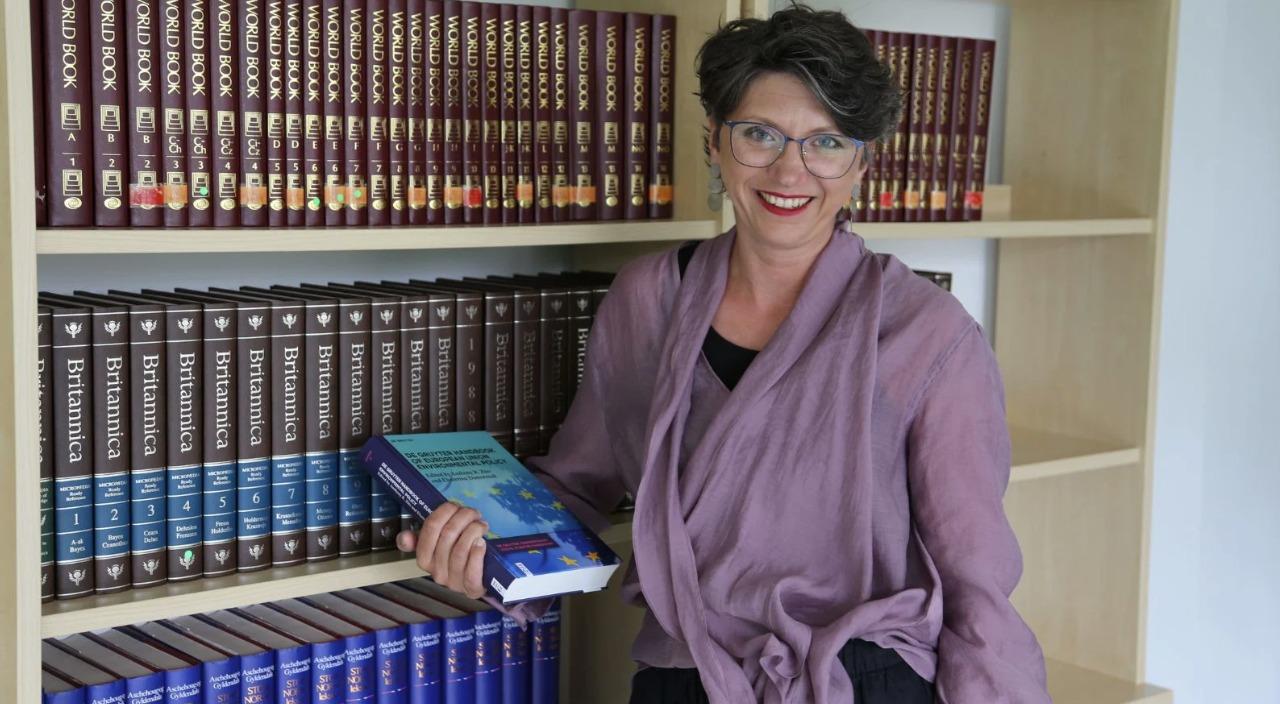
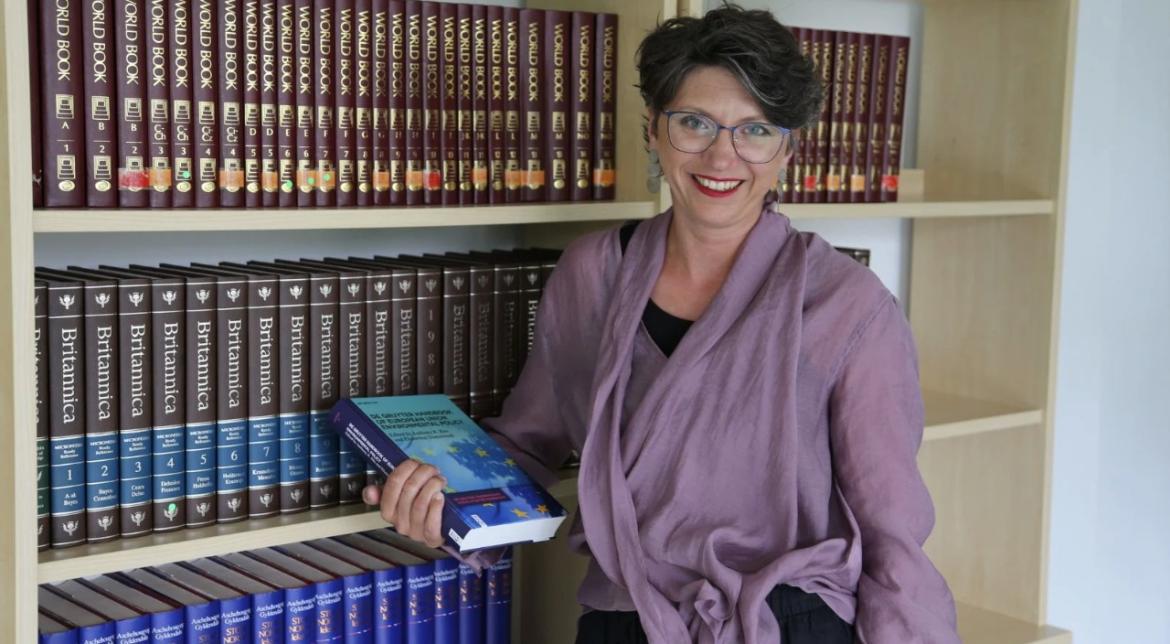
Anna Broka, a researcher at Vidzeme University of Applied Sciences, has become one of the authors of the prestigious academic publication De Gruyter Handbook of European Union Environmental Policy. The book is dedicated to the environmental policy of the European Union – one of the most important contemporary policy fields addressing the challenges posed by climate change and other environmental issues. The publication analyses the key processes, actors and decision‑making mechanisms that shape EU environmental policy, as well as outlines the development directions of this field and future research perspectives.
What are you working on at the moment?
Anna Broka: I have several research directions. One of them is the study of welfare systems. I analyse how resource redistribution takes place in welfare states and compare the welfare systems of different countries.
Another research direction is closely related to the analysis of these systems – I study vulnerable groups in society, especially children in out‑of‑home care who have been left without parental care. In my research, I focus on the factors that influence people’s opportunities to live a full life and on the conditions necessary to ensure such opportunities.
I find it particularly important to analyse how the welfare system treats the most vulnerable members of society. The strength of a system is determined by its ability to support people with functional impairments, promote inclusive education and reduce social inequality.
The third dimension of my work is political science as a whole. It often seems that politics does not concern us, yet we encounter political decisions every day. They affect the availability of infrastructure, the education system, social protection and many other areas of life.
In recent years, I have devoted a significant part of my time to research on security, societal resilience and environmental policy. These studies help to find answers to questions about how people adapt to rapidly changing circumstances, rising prices and other contemporary challenges. This is precisely where I see the main purpose of my research.
The environmental issue you study is also addressed in the De Gruyter Handbook of European Union Environmental Policy. How did you come to collaborate with world‑class researchers?
Anna Broka: It was three years of work that began quite unexpectedly. I had applied to the European Consortium for Political Research (ECPR) conference in Toulouse. Participants in this conference are carefully selected, and I was honoured to be among them.
At that time, within the framework of the Fundamental and Applied Research Programme (FLPP) project, I was conducting a comparative analysis in environmental policy. Of course, I was not the only researcher – it was the work of a research group at Vidzeme University of Applied Sciences, but at the conference I represented the field of environmental policy.
I presented the idea of a simple model that would allow analysing and comparing environmental policy at the level of the European Union. The European Union is one of the world leaders in this field and in many respects serves as an example for other countries. Focusing on a relatively new research area required a certain boldness, but it paid off.
At the conference, I received the first feedback on the work – comments and suggestions on how to improve it. After some time, Professor Anthony R. Zito contacted me. At that moment, I did not yet know that he had been working on environmental policy analysis for more than 30 years and is the editor of several important academic publications.
He had been recommended to me by one of the conference participants. During an online conversation, the professor invited me to develop an analysis of the European Multilevel Governance model for waste management. At that moment, I did not yet realise that this study would become part of the De Gruyter Handbook of European Union Environmental Policy.
How do you feel after completing the work?
Anna Broka: It is a great honour to be one of the authors alongside internationally recognised researchers and professors. I am very grateful to Professor Anthony R. Zito for his support, mentoring and trust throughout the process.
Who is the book’s audience?
Anna Broka: The main audience is researchers, academic staff and students, but the book will also be valuable for policymakers and decision‑makers.
It provides a comprehensive insight into the environmental policy of the European Union and will be an important resource for anyone who studies or works practically with environmental, climate and sustainable development issues.
What are your future plans?
Anna Broka: I will continue my research work. At the moment, together with colleagues, we have started work on a new study on public participation, and I hope that it will also make a significant contribution to policy development.
The handbook has been created by internationally recognised scholars from various countries, and the participation of a researcher from Vidzeme University of Applied Sciences demonstrates the quality of the university’s research and its international visibility. The publication provides an important contribution to understanding the role of the European Union in addressing global environmental challenges and serves as a valuable resource for researchers, students, policymakers and other interested parties. The book can be viewed at the Valmiera Integrated Library.