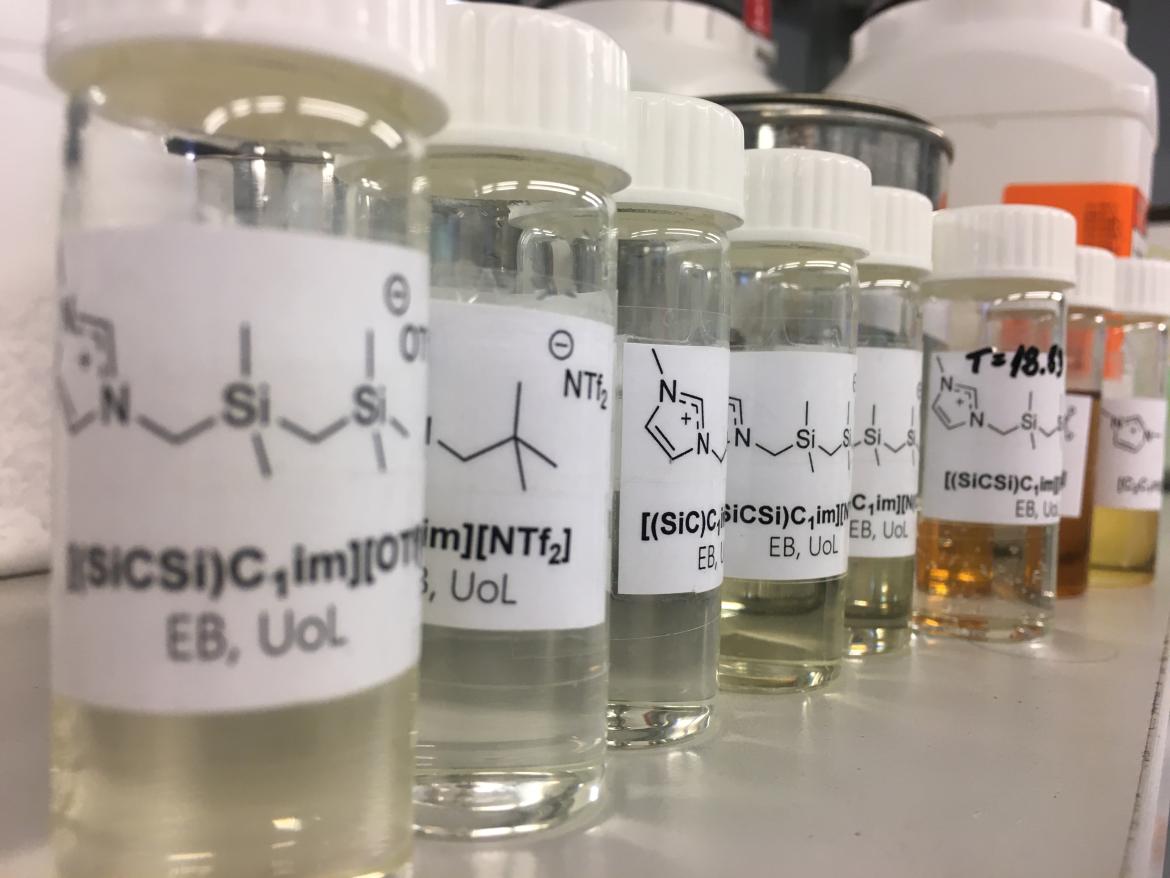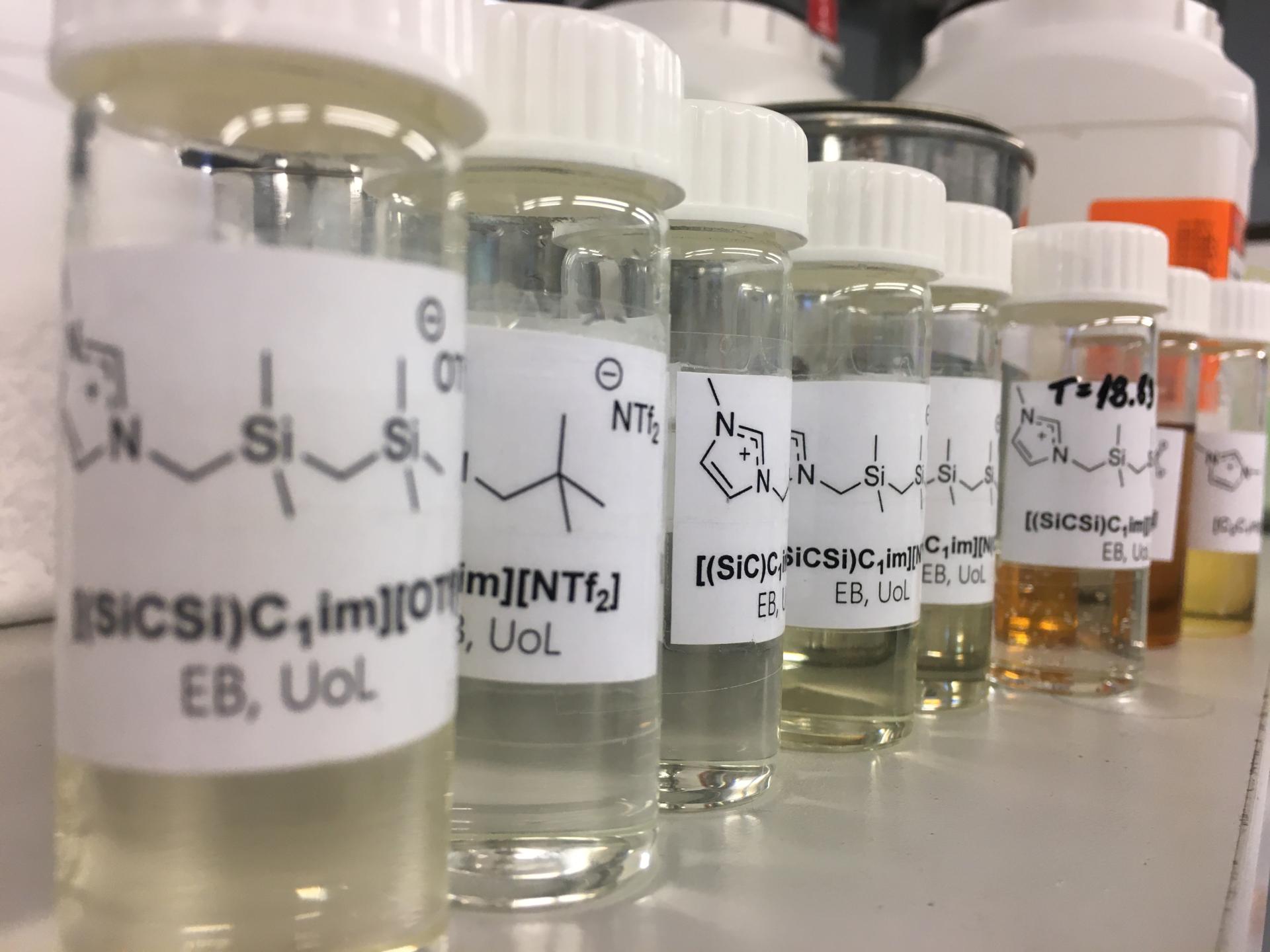
At the UL Faculty of Medicine and Life Sciences (FMLS), researchers of Ionic Liquids and Sustainable Chemistry Research Group conduct the synthesis and investigation of ionic liquids with the aim of advancing the sustainability of industrial chemical processes, namely, they design ionic liquids that function dually as solvents (media facilitating effective molecular contact between reactants) and as photocatalysts (that enable the transformation of chemical substrates into reaction products under irradiation). Light can serve as a highly “green” promoter of chemical reactions, offering a sustainable alternative to the use of costly transition metal–based catalytic systems.
One of the ongoing research projects, “Ionic liquids with low-energy ion pair charge transfer” has been implemented since 2024, supported by funding from the “MikroTik Grant Competition in the Natural, Technological, and Medical Sciences,” organized by the University of Latvia Foundation.
Another project, “Instrumentation for determination of electrical conductivity of liquid systems in the temperature range of –20 to +150°C” is being carried out with the support of the Juris Kalnavārns Memorial Foundation.
In an interview with the UL Foundation, Dr. Eduards Baķis, a leading researcher in the Department of Chemistry at UL FMLS, discusses ionic liquids and the significance of their investigation.
What are ionic liquids, and what benefits does their investigation provide for daily life of people? What practical use do you envisage for the developed ionic liquids?
Ionic liquids are a special type of liquid that have a lot in common with familiar substances such as water, gasoline, or acetone. They flow, can be poured, and take the shape of whatever container they are in. They can be either colourless or brightly coloured. What makes them different is how they behave at a deeper level. Unlike everyday liquids, ionic liquids do not evaporate easily – even left in an open container. They efficiently conduct electricity, which makes them useful for various technological applications. Another interesting feature is their huge variety. While there are only a few hundred common molecular liquids, scientists can create over a million different ionic liquids by combining different charged particles. These different properties arise from the structure of both types of liquids: molecular liquids are made up of one type of particle – neutral molecules, while ionic liquids consist of positively and negatively charged ions, where each “combination” of ions forms a new, unique liquid material.
Ionic liquids are often studied for their sustainable applications. How could they contribute to sustainable development?
There are several aspects in which the use of ionic liquids can ensure sustainability in the implementation of chemical processes. First of all, due to their non-volatility, it is possible to reduce emissions of volatile organic compounds (VOCs) in synthetic production processes. When using molecular liquids as solvents, such emissions inevitably occur in the pharmaceutical, agrochemical, paint and varnish industries, as well as elsewhere.
Secondly, ionic liquids can be reused as solvents in synthetic processes. If the material itself has catalytic properties, it is also possible to avoid the use of additional catalysts, which often contain heavy metals. This saves resources and prevents the formation of waste. For example, in oil refining, the company Chevron (USA) has introduced a process based on Lewis acidic ionic liquids, which allows saving the consumption of extremely dangerous acids (HF, H2SO4) in the production of alkylate.
Thirdly, the natural conductivity and fire-resistant nature of ionic liquids make for safer and more efficient battery electrolytes. We all probably remember the cases of mobile phone batteries catching fire during flights several years ago. Power banks are also carefully monitored in our flight luggage for the same reason. There are many examples of how research results help sustainability.
Has the research identified a specific class of ionic liquids that shows the greatest potential for the studied application? What exactly makes this class particularly promising? What makes ionic liquids with low-energy ion pair charge transfer particularly stand out?
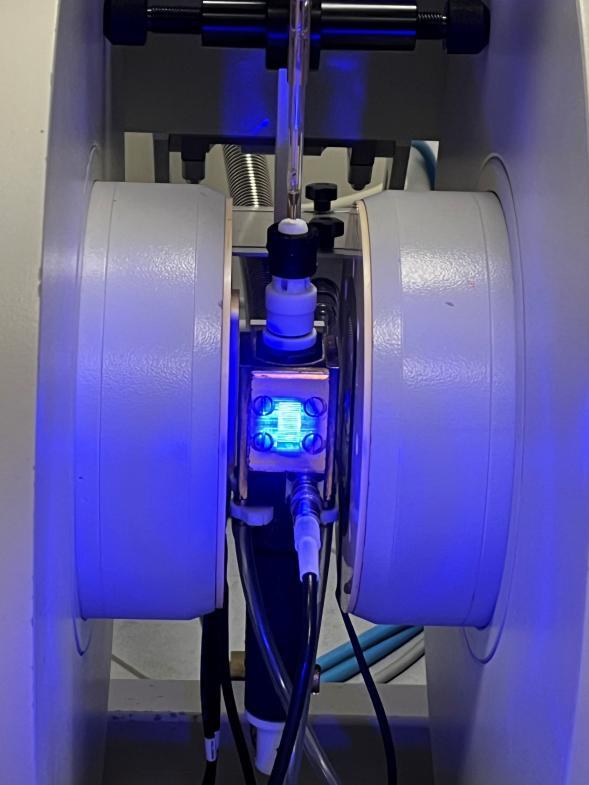
A phenomenon characteristic of ionic liquids – charge transfer – means that the charge of the positive ion is not entirely unitary, but only about 80% of it. The negative charge compensates for this to the same extent, but with the opposite sign. Low-energy charge transfer, on the other hand, means that in addition to this simple charge transfer effect, a negative charge in the form of a single electron briefly travels from a negative ion to a positive ion under the influence of visible light, forming a highly reactive particle – a radical. We have demonstrated the formation of such radicals and it is well known that they are able to promote various unique molecular transformations that cannot be achieved in other ways – this is the subject of our current studies.
Have any unexpected insights or challenges emerged during the experiments? How have they influenced the advancement of the research?
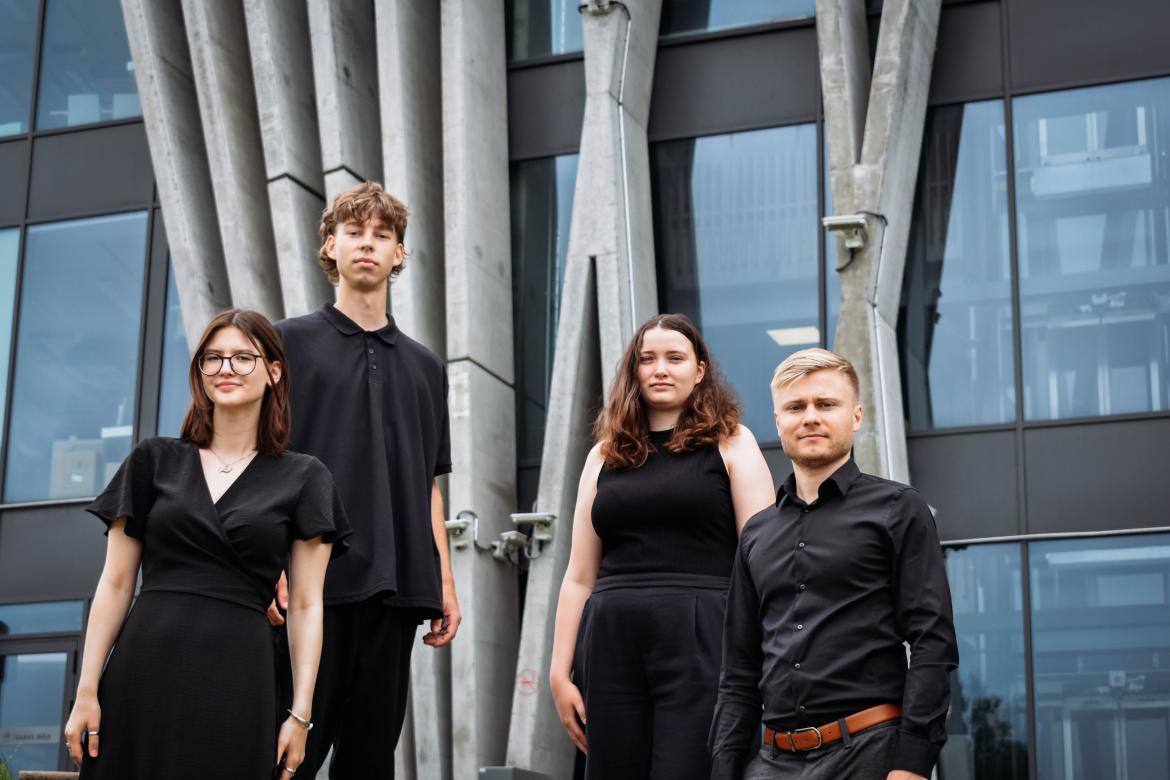
Our group of researchers – the best chemistry students Beatrise Silava and Artūrs Jubass – are constantly surmounting challenges. I think this allows them to gain “immunity” against results that do not immediately meet expectations, and motivates them to work even harder until they achieve their goals. And they succeed!
Considering that your research is interdisciplinary and its results may be significant for various scientific fields, have there been any examples of successful collaboration with other research groups within the project? How has this collaboration influenced the development of the project?
We work closely with the French CNRS Institute Chemistry Laboratory in Lyon, ENS de Lyon. In the autumn, I did an internship on the topic of my research at one of the topmost centres in the world for the ionic liquids industry – Queen’s University Ionic Liquid Laboratories (QUILL Research Centre) in Belfast, Great Britain. A joint publication is already planned, which will lay the foundation for future publications within the framework of the “PostDoc Latvia” project. I learned about our common interests in this field in 2024, when, with the help of the UL Foundation, our group participated in a conference in Belfast.
What are the current main goals and development plans in this field, and what priorities have you set as the youngest research group leader?
There are plans to supplement our capacity with new doctoral students. In addition, together with UL Associate Professor Vladislavs Ivanistševs, we are applying for a Marie Curie Framework project to create a consortium of more than six countries, where UL would have a leading role and which would allow for effective networking in a common thematic area in Europe.
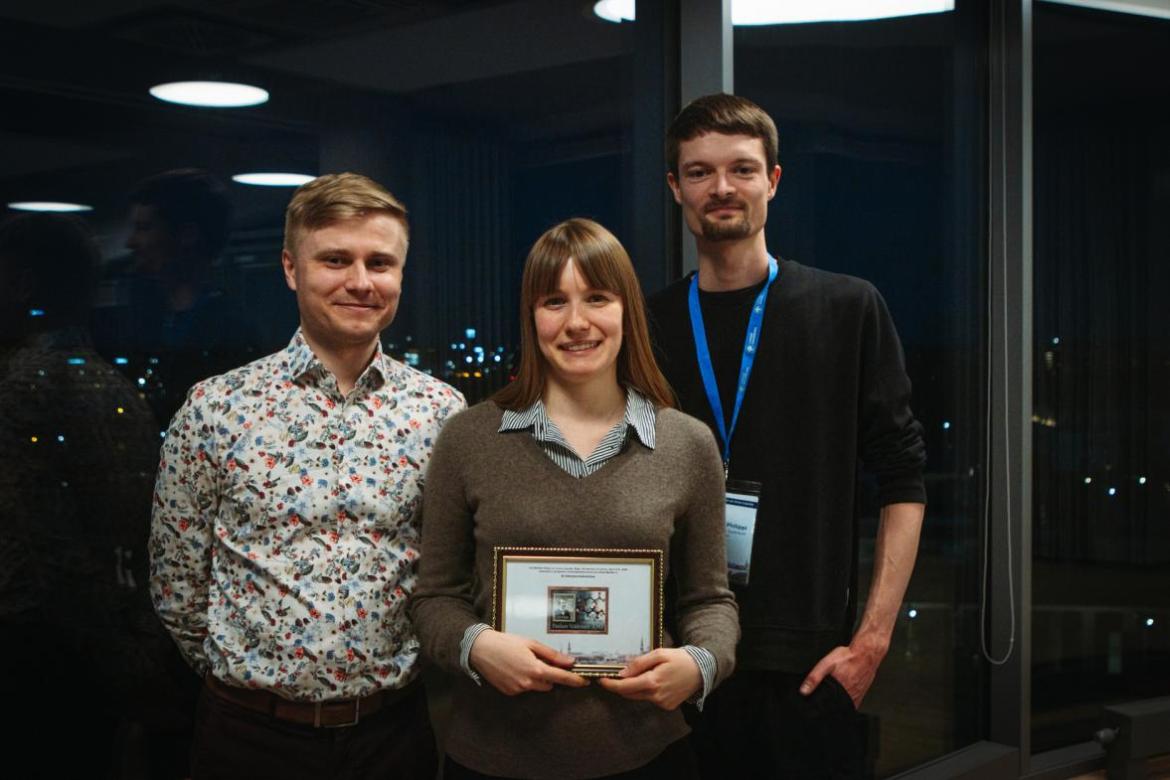
Another prominent event took place on 8–9 April 2026, when we hosted “The 1st Walden Panel on Ionic Liquids”, the first conference of its kind in the history of the industry. More than 10 panellists – young European leaders representing ionic liquid research subfields – gathered to jointly discuss the vision of how research will develop in the next 10 years, and to arrive at the publication of an influential opinion article. The completion of this article by the end of the year is the priority assignment that will allow us to raise our field and group to a new level of recognition.
The project is financially supported by the UL Foundation. How has this support contributed to the competitiveness of the research group and UL in this field of science, and what significant results has it helped achieve?
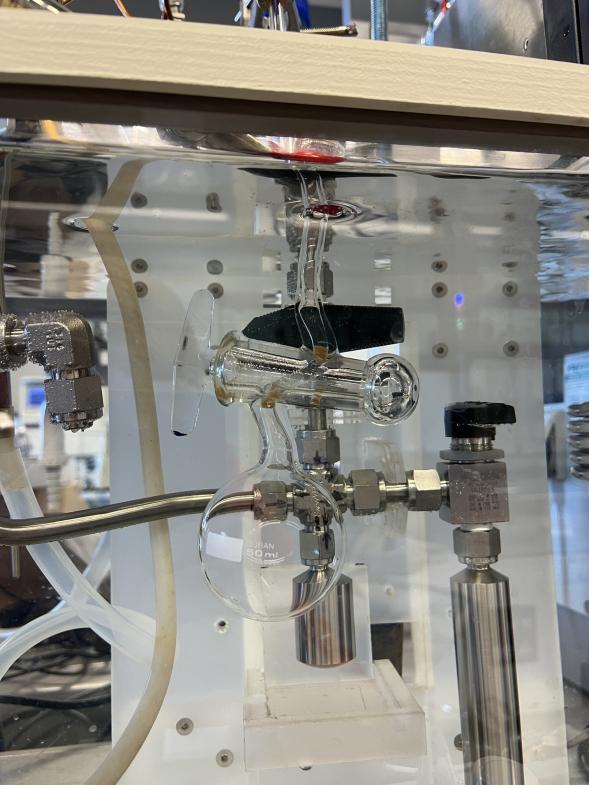
The contribution of the patron company “MikroTik” and the UL Foundation has enabled us to acquire modern equipment for working with liquid materials – we can measure critical properties (determine density, viscosity, water content), thus confirming the quality and significance of the research. Juris Kalnavārns Memorial Foundation opened up an opportunity for us to expand the range of physicochemical analysis methods with equipment for determining the electrical conductivity of liquid materials in the temperature range of –20 to +150°C. Since our specialty is the synthesis of new, unique structures, it is these critical physicochemical properties that other researchers want to know first about a new ionic liquid.
Currently, several scientific articles on various topics are in preparation on the basis of the results obtained with the aforementioned equipment, which is also being used by other UL researchers. Furthermore, modern equipment is one of the prerequisites for attracting motivated and talented students, which is a very satisfying aspect regarding our group. Many thanks to the students for their diligent work every day and the courage to share their results at international conferences! In essence, the support of the UL Foundation is like fuel and wheels for our development engine. Resources themselves would not make as much difference if we did not feel trust and team spirit. We are profoundly grateful to the patron “MikroTik” for supporting our ideas, – we aim to grow just as successfully within UL and on the “scientific stage” of the world in the future.