Ionic liquids can unlock opportunities across remarkably diverse fields - from wood processing and extracting valuable compounds from wild lupins to developing cleaner methods for obtaining rare earth metals. In the “Latvia in Science” programme on Radio SWH TV, Eduards Baķis, leading researcher at the University of Latvia, explains the potential of these extraordinary liquids.
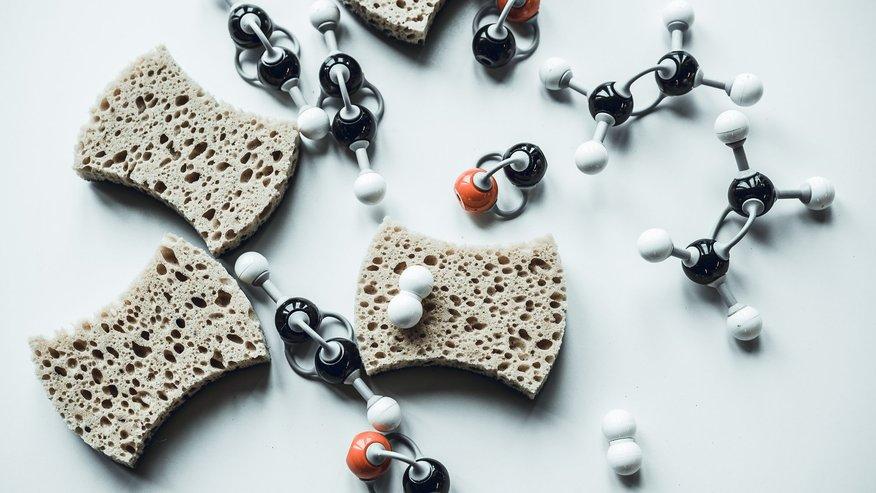
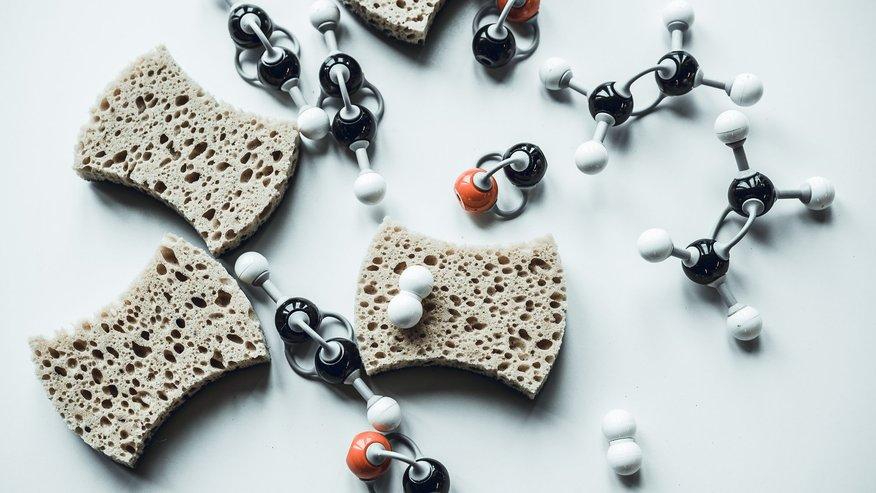
Ionic liquids may sound complex at first, yet Baķis explains their essence in simple terms. Unlike conventional liquids, which consist of neutral molecules, ionic liquids are made of ions - particles carrying an electric charge. Table salt, for example, is also made of ions, but it melts only at around 800°C. By using larger and more structurally complex ions, it is possible to create salts that are liquid already at room temperature.
“One of their remarkable properties is that an open bottle of ionic liquid does not evaporate,” Baķis notes. This feature makes them particularly interesting for green chemistry - an approach aimed at reducing pollution and resource consumption in chemical processes. Ionic liquids can potentially reduce contamination associated with volatile solvents, as well as inhalation and fire safety risks. At the same time, Baķis emphasizes that true sustainability requires that these liquids can be recovered and reused.
In practice, this means seeking ways to extract valuable compounds and materials from different resources while reducing energy consumption and minimizing waste.
Cleaner pathways to critical materials
One of Baķis’ newest research directions focuses on rare earth metals. Together with a colleague at the University of Latvia, he has developed the concept for a new class of ionic liquids that could enable the extraction of these elements under milder and cleaner conditions.
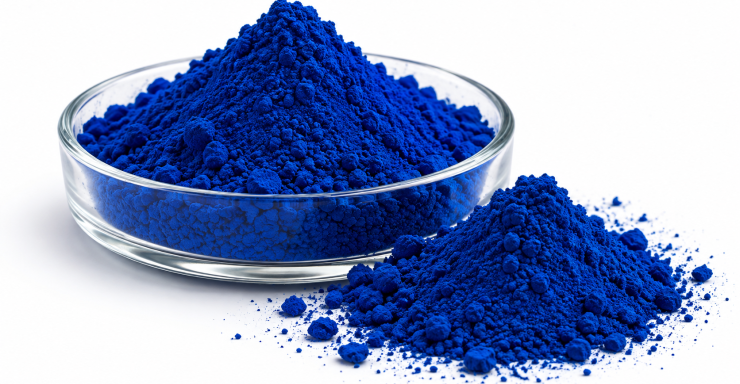
Rare earth metals are essential for producing magnets, phones and many other technologies. In Europe, they are classified as critical materials, yet the continent remains heavily dependent on supplies from other parts of the world.
One of the currently used extraction methods relies on fluoride melts and requires temperatures of several hundred degrees. “Europe sets high environmental standards, and the ‘dirty’ industry usually relocates to regions where such standards do not exist. Unfortunately, that is the reality,” Baķis notes.
“We want to offer a method that makes this process much cleaner - to obtain these critical materials and demonstrate that we in Europe can become more self‑reliant.” Eduards Baķis
The idea has already grown into an international four‑year project involving research groups from several European countries and includes researcher exchange.
What ionic liquids can do with wood and lupins
Ionic liquids can also be used in processing wood biomass by separating cellulose and lignin. “There are very few solvents capable of doing this, because we all know that wood simply does not dissolve,” Baķis explains. Cellulose can be used, for example, in bioethanol production, while lignin serves as a source for chemical platforms that are currently mostly derived from petroleum.
An even more unusual example is wild lupin biomass. Its seeds contain the alkaloid lupanine, from which valuable chiral catalysts can be produced - useful for more efficient pharmaceutical manufacturing. “Our preliminary tests show that wild lupins growing in Latvia contain sufficient amounts of this alkaloid,” Baķis says. “It is another long‑dreamed idea that turns out to work.”
Here, ionic liquids come into play again. “If you place lupin seeds into a specific ionic liquid, after a few days they will be gone - completely dissolved,” he explains. As the cell walls break down, the compounds enter a uniform solution from which the desired alkaloid can then be extracted.
Discovery Doesn’t Happen in a Day
From an idea to a result, the crucial step is having the opportunity to carry out the first experiments. Baķis highlights the support of the University of Latvia Foundation - he has been a multiple‑time scholarship recipient, and his research projects have received funding both through the MikroTik competition for acquiring research equipment in the fields of natural sciences, technology and medicine, and through two Juris Kalnavārns project competitions in natural sciences and medicine. This funding helped expand laboratory equipment and carry out essential preliminary experiments. Their results later contributed to securing a PostDoc Latvia grant.
“It’s not as if you walk into the lab one day and think - well, today I’ll make a discovery,” Baķis says. New ideas emerge gradually - from publications, conferences and experiments - until at some point the connections “click.” That is why, he emphasizes, “we cannot aim for applied results without what we call fundamental science.”
Rare earth metals, wood and lupins are only part of the possibilities. In the conversation, ionic liquid research is also linked to batteries and agrochemistry, while Baķis mentions defence and even the space sector as other potential directions.
The Radio SWH TV programme Latvia in Science introduces Latvia’s scientists, researchers and innovators whose ideas and achievements shape future technologies and solutions, while revealing science as an exciting and human process. The conversations are created in cooperation with Rietumu Bank - excellence is never a coincidence. The scientists are supported by the University of Latvia Foundation.