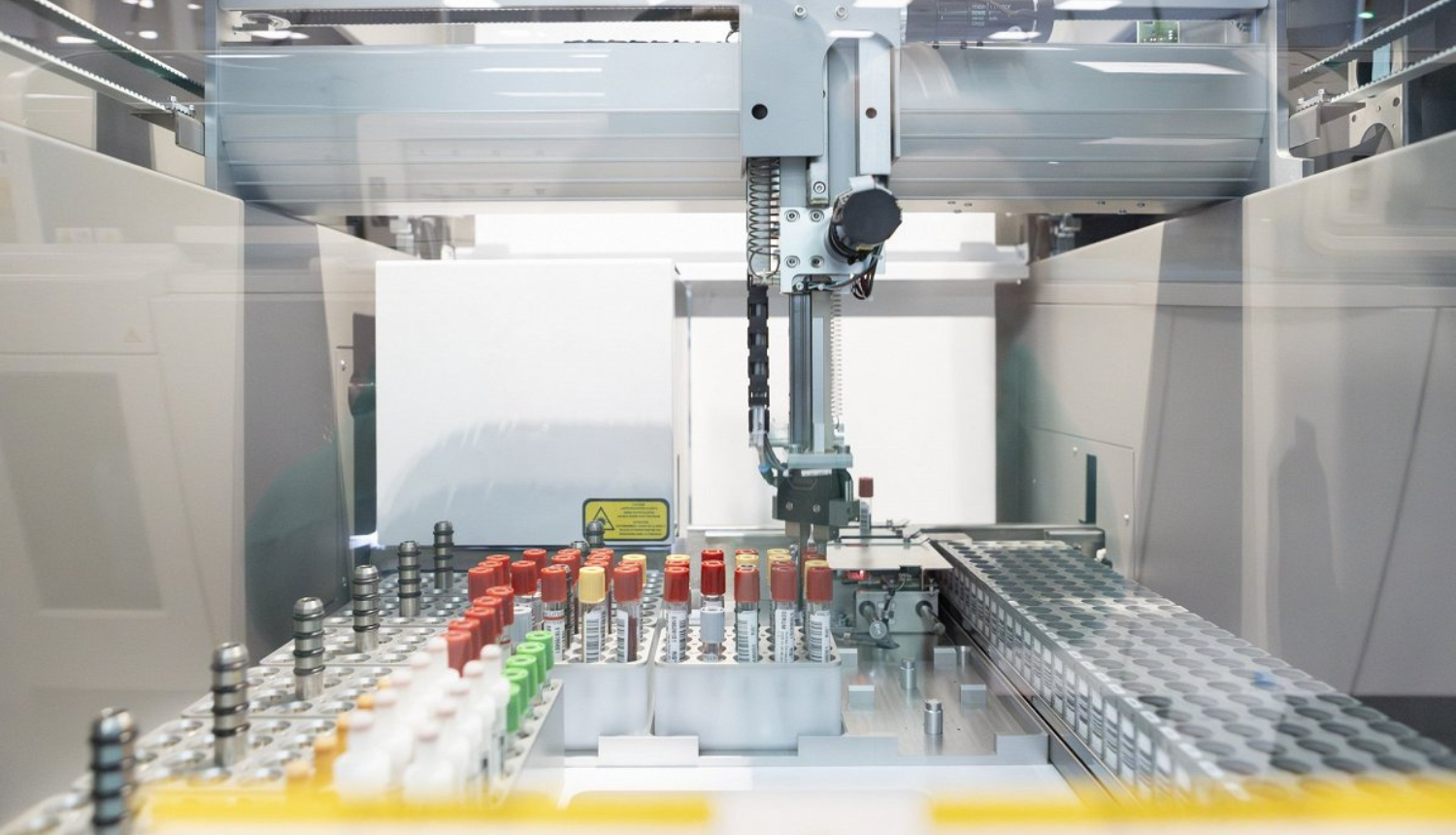
To reduce the need for frequent blood tests in premature infants, researchers and physicians are working together to find ways to replace blood analyses with the examination of urine or sweat.
Estimates suggest that approximately 6% of newborns are born prematurely. In Latvia alone, more than 600 infants were born too early last year.
One of the diseases that poses a particular threat to preterm infants is sepsis, or blood poisoning. It is hazardous for them, as their internal organs and immune systems are not yet fully developed.
Dace Gardovska, Advisor on Child Health Policy at the Children's Clinical University Hospital and Head of the Department of Paediatrics at Riga Stradiņš University (RSU), explained: "Sepsis is a life-threatening condition, both for newborns and for children of other ages. If we look globally at these life-threatening conditions caused by infection, each year about three million newborns become ill, and approximately 500,000 of them die."
In Latvia, neonatologists at the Children's Hospital treat several dozen infants with sepsis each year.
The earlier sepsis is detected, the greater the chances of successful treatment. Adults can communicate their symptoms, but newborns cannot, and in the early stages, symptoms are not specific enough for physicians to identify them. To detect sepsis early, infants undergo blood tests relatively frequently. Unfortunately, the amount of blood in newborns is minimal.
Kristaps Kļaviņš, Lead Researcher and Associate Professor at Riga Technical University (RTU), noted: "The volume taken, although it may sound small, is about three millilitres. But for infants weighing only 600 grams, this represents about 5% of their total blood volume, and such diagnostics must be performed very often."
Therefore, two years ago, RSU, RTU, and the Children's Clinical University Hospital began searching for methods to diagnose sepsis non-invasively in premature infants.
Now, researchers and physicians hope to continue their investigations with funding from the "BioPhoT" program, which supports research and innovation projects.
Gardovska emphasised: "This research creates an opportunity to identify laboratory indicators in a child-friendly way that can be introduced into practice, allowing us to detect these life-threatening diseases before clinical symptoms appear. At that stage, the process is often already quite advanced, and treatment becomes extremely complicated."
Treatment is also costly: on average, about 40,000 euros are spent per infant with sepsis.
It has already been established that metabolites change during sepsis, both in blood and in urine. However, collecting urine from infants is not simple. Therefore, part of the research involves determining how to collect and analyse it more effectively. For instance, innovative test strips may be developed.
Sweat could also be helpful in diagnostics, Kļaviņš explained: "In parallel, we have begun investigating the potential of sweat, though technically it is referred to as a skin swab. The scientific literature, particularly regarding adults, indicates that sweat is a surprisingly informative sample type."
Sweat contains more than 200 different types of molecules, many of which are already used in clinical diagnostics. Kļaviņš added that although infants do not sweat profusely, it is still possible to collect sweat samples by applying special filter paper to the skin for half a minute.
The more information researchers can obtain from urine and sweat, the less frequently blood samples will need to be taken from infants.
The goal of the study is to develop a commercializable diagnostic product that can be used independently by hospital physicians without the direct involvement of researchers. Such a product may be available in approximately five years.
Discussing the current progress of the study, Kļaviņš stated: "We have identified markers in urine that allow sepsis to be detected with high accuracy. This was conducted in a rather limited population! We are developing the study further and seeking funding to validate the marker. As for sweat, we have confirmed that we can indeed collect samples and measure the substances we aim to measure."
To date, several hundred urine and sweat samples have already been studied, taken not only from newborns but also from adults. Part of the information observed in blood samples is also reflected in sweat.