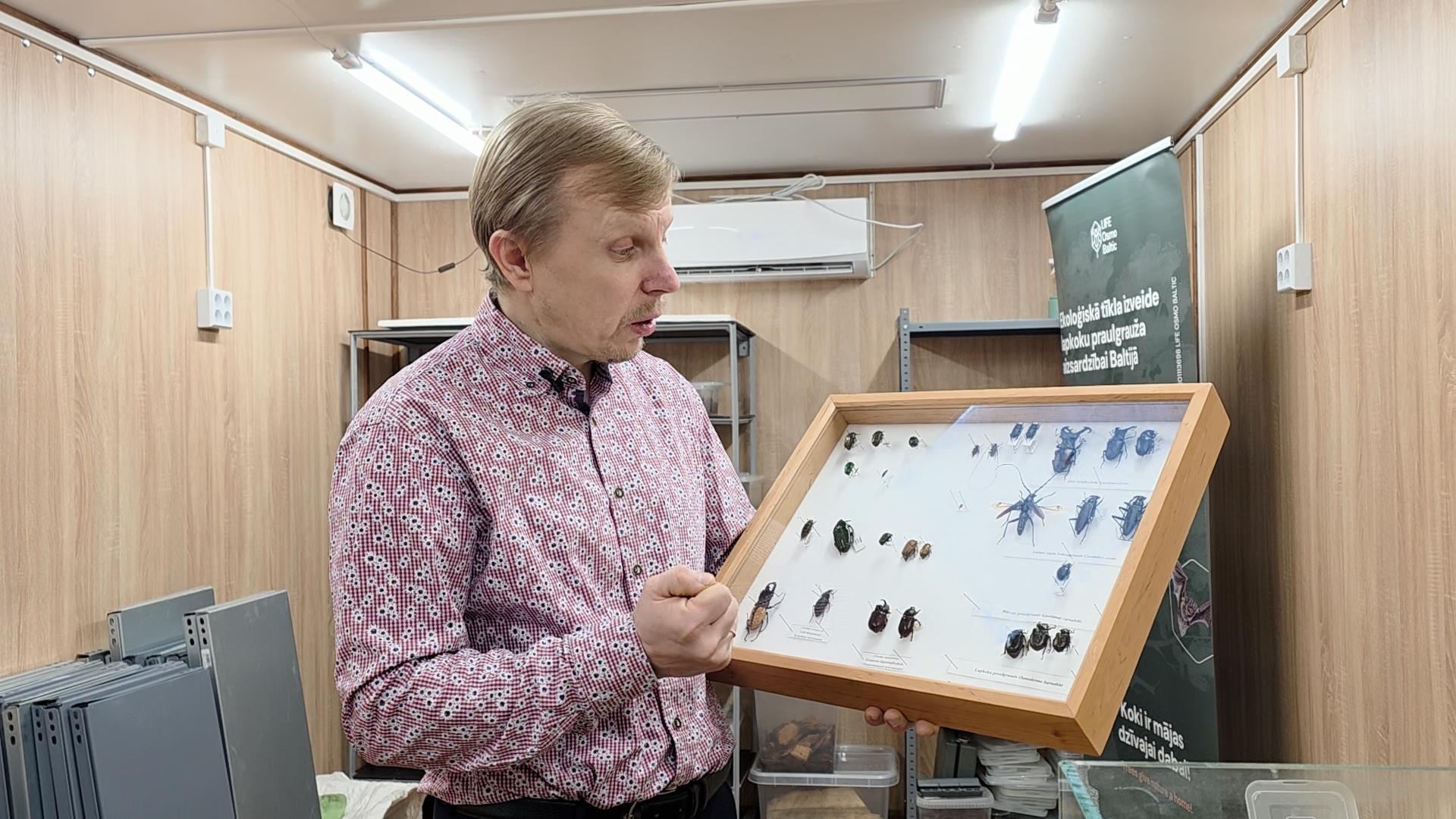
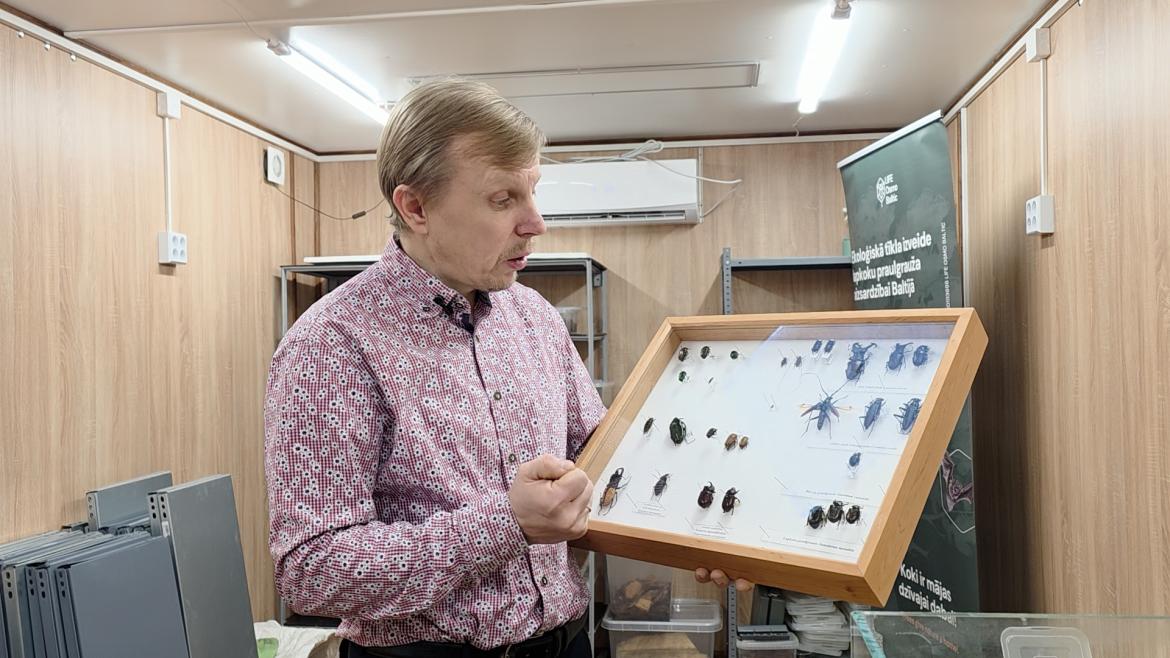
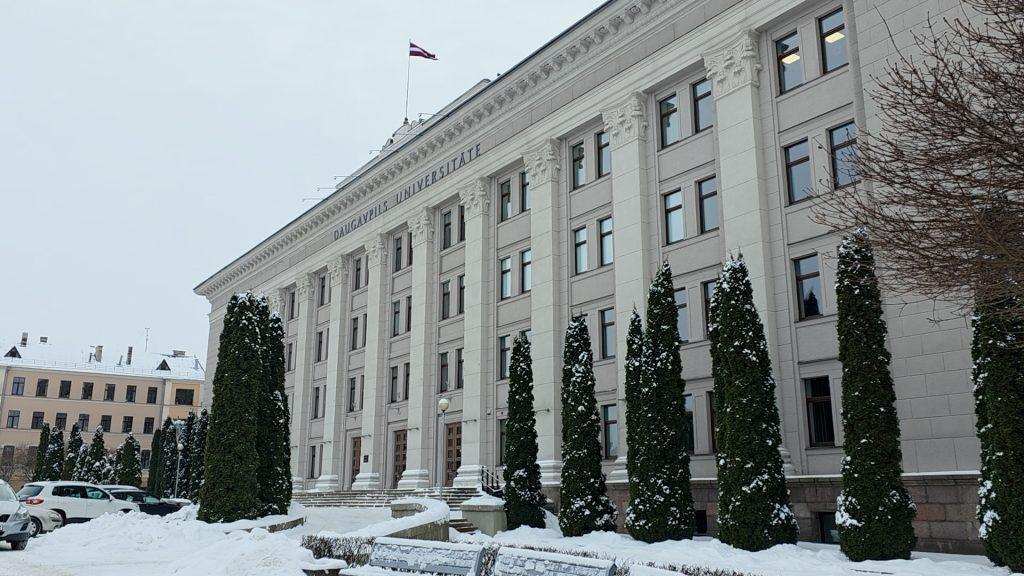
Researchers at Daugavpils University are working to conserve one of Europe’s specially protected beetle species—the hermit beetle. Within the framework of an international project, this rare insect is bred under laboratory conditions so that it can later be reintroduced into the wild, while at the same time preserving old, hollow trees that are essential for its habitat.
Maksims Balalaikins, leading researcher at Daugavpils University, is involved in the international nature conservation project LIFE Osmo Baltic, which aims to protect and study specially protected beetle species in the Baltic region. To gain a better understanding of the life cycle and ecological requirements of this rare species, researchers breed the beetles in laboratory conditions.
Maksims Balalaikins, leading researcher at Daugavpils University:
“We aim to obtain individuals that can be used in the future to reinforce natural populations.”
Maksims Balalaikins, leading researcher at Daugavpils University, explains:
“The hermit beetle is one of the most important species for nature conservation, not only in Latvia but across Europe, because it is associated with old deciduous trees—both large and smaller ones that have hollows.”
This beetle plays a key role in the decomposition of dead wood, supporting natural nutrient cycles and creating habitats for many other organisms. When old trees are being maintained in Latvian parks, researchers visit these sites to collect larvae and pupae, which are then taken to the laboratory.
Maksims Balalaikins, leading researcher at Daugavpils University, adds:
“The first adult beetles appeared for us this summer. We established several breeding pairs, and now the cycle has begun. It’s important to understand that the full life cycle lasts three to four years. One of our goals is to shorten this cycle, so that we can obtain offspring more quickly and eventually use them to reinforce wild populations.”
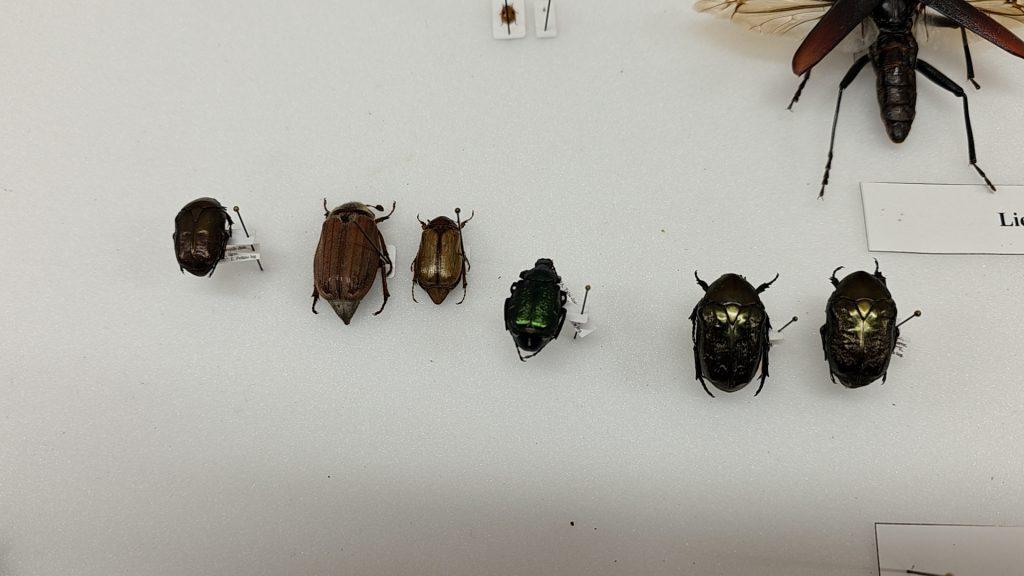
Maksims Balalaikins, leading researcher at Daugavpils University, explains:
“Some time ago, it was believed that individuals of this species primarily inhabit a single tree hollow and do not move, but now, by marking and recapturing them, we are gaining an understanding of how far the species can travel and how far from a given site it can find new habitats.”
The researchers emphasize that by protecting a single species, many other species and their habitats are also conserved.
Maksims Balalaikins adds:
“This is known as the umbrella species principle. In other words, by protecting one species, a whole range of others benefits. And it’s not just insects—birds, mammals such as bats that inhabit tree hollows, and other invertebrates all gain from this protection.”
The LIFE Osmo Baltic project brings together scientists, nature conservation specialists, and local authorities from Latvia and Lithuania. The project runs until 2030, during which parks are being restored and old hollow trees preserved.
The project is co-financed by the Media Support Fund from the Latvian state budget. The content on Novadu Ziņas on the ReTV channel is produced by Re MEDIA Ltd.