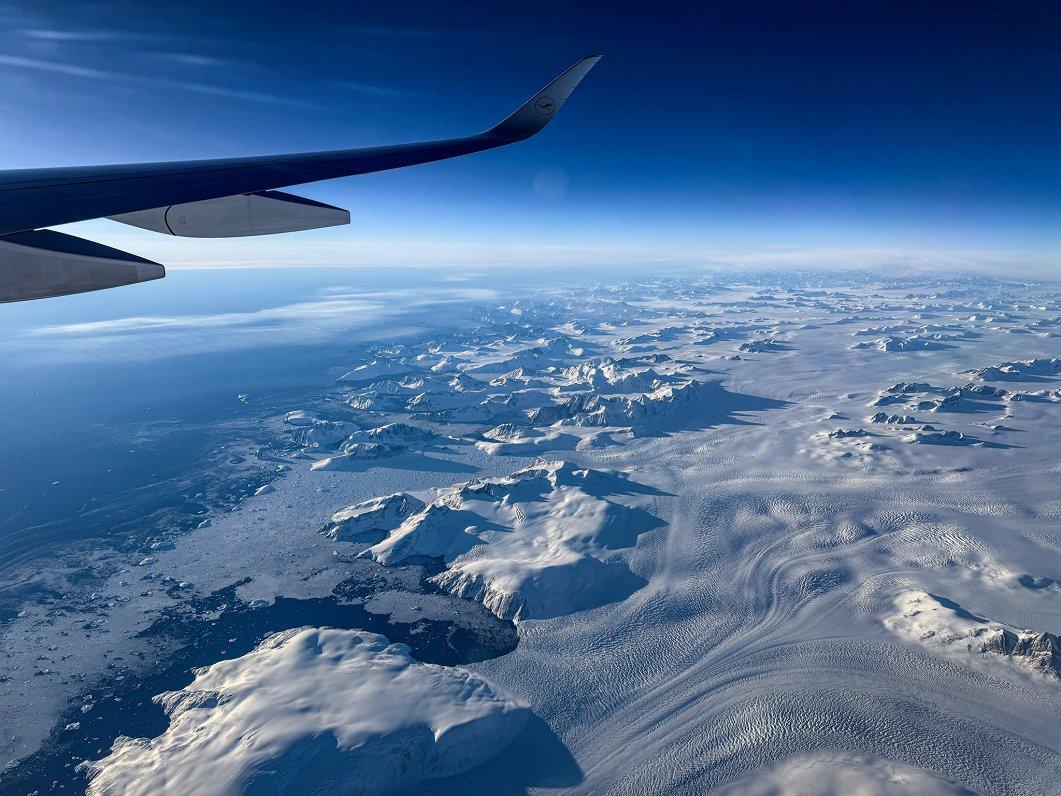
Researchers from the University of Latvia (UL) will head to Greenland this summer on another expedition. The island’s ice sheet contains the largest ice masses and freshwater reserves in the Northern Hemisphere, but in recent decades it has been losing mass at an increasingly rapid rate. Recently, Greenland has been mentioned less often in the context of climate change, instead finding itself at the center of geopolitical tensions.
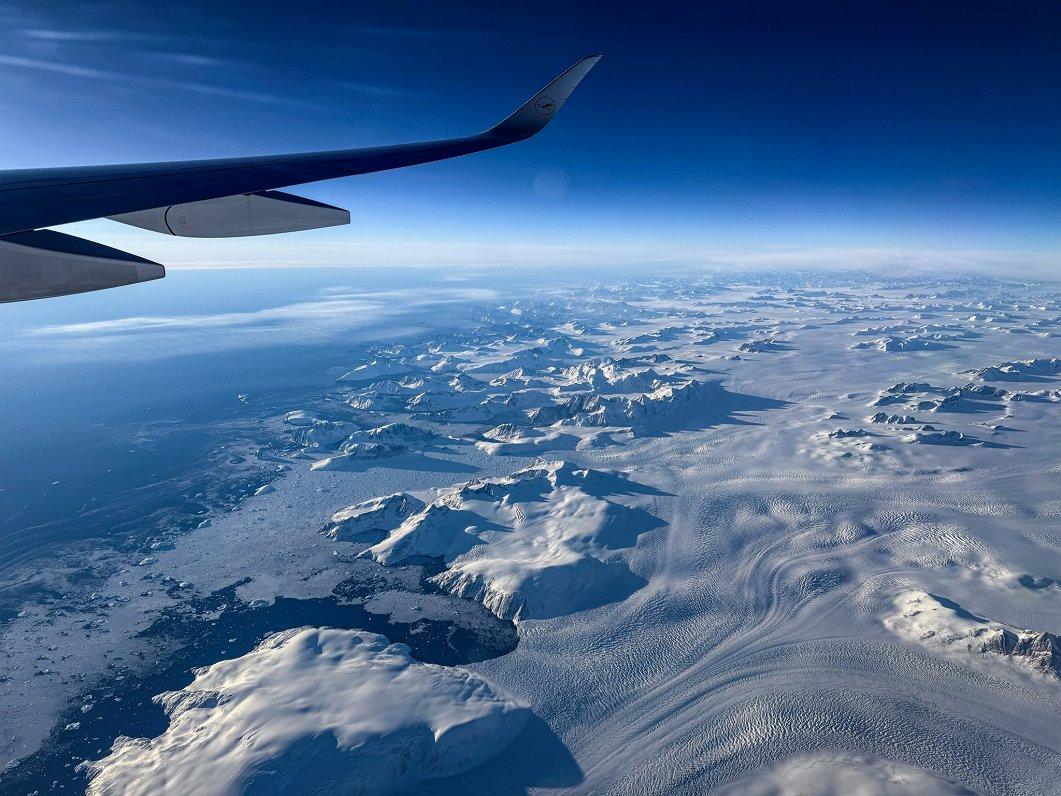
Researchers from Latvia will set out this summer on an expedition lasting more than a month to Qaanaaq in northwestern Greenland. One of the team members, Associate Professor Kristaps Lamsters from the Department of Geology at the University of Latvia, explained that this time they plan to study the structure of the largest outlet glacier of the Qaanaaq ice cap. Latvian geologists studied a relatively small glacier in this area four years ago, but this time the goal is more ambitious, with several expeditions planned.
“In the first expedition, we will go to the two largest glaciers of the Qaanaaq ice cap. The aim is to study the thermal structure of these glaciers. It sounds complicated, but put simply, it means understanding the temperature of the ice, how much water it contains, and, of course, how all of this is related to climate change and the future of glaciers,” Lamsters explained.
Special equipment is used to conduct this research.
“A ground-penetrating radar sends electromagnetic signals, and we can obtain reflections, for example, from the glacier bed. That means we immediately get the ice thickness, can calculate ice volume, and understand changes in volume. But the equipment also allows us to look more closely inside the ice itself and indirectly determine how much water is inside the glacier, where it is melting and where it is not, where water may be flowing in a more concentrated way within the glacier, and thus understand the internal thermal structure, which has not been studied for glaciers of this type,” Lamsters said.
The geologists will reach the study areas by boat, but afterwards will mostly travel on foot, setting up a camp with a tent on each glacier.
Ten years have passed since the first Latvian research expedition to Greenland, and based on previous experience, the researchers are preparing to face various challenges.
“We will of course have tents, equipment, food, a generator—basically everything that is needed—and then we will head onto the glacier. We will climb onto the glacier, set up a camp there, and possibly spend up to a week there, depending on weather conditions, carrying out measurements and research every day. We will probably experience milder sub-zero temperatures than in Latvia this winter, but in any case they will still be below zero. Sleeping on the glacier also means that the cold comes directly from underneath, so it will certainly not be comfortable, but these will be minimal conditions that allow us to work. It may also happen that we are ready to leave, but there are waves at sea or fog and the boat cannot come to pick us up. So we also need to bring food reserves. We will most likely rely on so-called tourism or mountaineering food, where you only need to heat water,” Lamsters explained.
Scientists around the world mainly conduct research at the scale of the Greenland ice sheet, but Lamsters pointed out that the island’s peripheral glaciers are particularly sensitive to climate change. They significantly affect sea-level rise and also serve as an important freshwater resource. However, insufficiently studied glaciers can also hinder reliable future projections.
“In the latest publication, scientists also talk about the possibility of reaching a kind of threshold—a temperature increase of 3–4 degrees since pre-industrial times. We have already reached a 1.5-degree increase, which means only about two degrees remain. It doesn’t matter over what time period, but if we reach a 3–4 degree temperature rise, an irreversible point is reached at which most models show that Greenland loses all its ice. Perhaps this sounds like scaremongering, but such consequences are entirely possible. More and more studies show that we really could lose a large part of Greenland’s ice, similar to what is happening with mountain glaciers elsewhere in the world. It is clear that by the end of this century we may effectively have to say goodbye to Alpine glaciers,” Lamsters noted.
Asked whether geopolitical developments around Greenland and statements by the United States also affect the research community that regularly travels there on expeditions, Lamsters said this creates some uncertainty, but he does not currently see military security risks. However, geopolitical tensions can also divert attention from real climate change, which, in his view, is the most important issue to consider in relation to Greenland, home to the largest ice sheet in the Northern Hemisphere, containing the equivalent of about seven meters of global sea-level rise.
“I feel a bit sorry that these geopolitical struggles may be distracting attention from what really matters—that the Greenland ice sheet is melting ever faster, as the models are becoming increasingly pessimistic and the question is about the stability of the Greenland ice sheet. And if climate change is as rapid as it is today, because the amount of carbon dioxide in the atmosphere is as high as it has not been for at least three million years, then we really could expect quite significant ice losses in the future. Yes, our study is, so to speak, one piece of the puzzle that helps us better understand the structure and composition of these glaciers, allowing us to make somewhat better future projections,” Lamsters said.
The Latvian research team will depart for the expedition to Greenland in the summer, but the overall study will continue until 2028.