In recent times, increasing attention has been devoted to urban environment issues in the media, on social networks, and on the environmental policy agenda. When comparing Riga with other European capitals, we often point to the successful infrastructure solutions of neighbouring countries and analyse local shortcomings. Although urban environment issues tend to spark heated debates among adults on social media, these discussions rarely lead to constructive common ground. At the same time, young people’s involvement in public discussions on socially significant issues is not always sufficiently appreciated. How can we ensure that young people express their views on the urban environment — and that their voices are genuinely heard?
One possible approach is offered by citizen science – a method that enables residents to actively participate in research, including collecting and documenting data themselves. It has been observed that young people’s civic engagement increasingly manifests in the digital sphere, while citizen science mobile applications allow them to document the urban environment, express their opinions, and take part in public discussions, becoming active observers and contributors in their surroundings. But what do young people in Riga consider important in the urban environment, and what problems do they identify?
Why does one place feel “ours”, while another does not?
In social and cultural research, various theoretical concepts help explain the relationship between people and their surroundings. Have you ever wondered why one city street makes you feel safe and comfortable, while another makes you want to quicken your pace?
Researchers explain these relationships using the concept of “sense of place”, which helps to understand not only the characteristics and values of a particular location, but also how people describe their environment and what personal meanings and values they attach to it.
In this context, it is not simply about city architecture or a beautifully paved street — a sense of place is shaped by our memories, emotions, and everyday routes.
Thus, the concept helps to understand not only the places where urban communities live and interact, but also the social and cultural meanings people assign to them.
This raises an essential question: how do young people perceive and evaluate the urban environment of Riga? Citizen science offers a way to find out. One of the most effective ways to deepen our understanding of young people’s sense of place is through citizen science.
Traditionally, citizen science has been viewed as a way for the public to actively participate in scientific processes rather than simply receiving information from experts. However, its potential extends far beyond data collection.
Citizen science can serve as a collaborative platform where young people, researchers, and other stakeholders work together to address social and environmental challenges.
Although citizen science has more commonly been used in the natural sciences and quantitative data collection, its application in studying human–environment interactions — especially in social and cultural contexts — opens broader opportunities to understand how young people perceive their surroundings and form relationships with them.
Seeing Riga through young people’s eyes: from smartphone to research data
In the research project “The Potential of Photovoice Methods in Studying Youth Digital Civic Engagement: The Case of Riga’s Urban Environment” at the Latvian Academy of Culture, a team of young researchers — Asnāte Kalēja, Laura Brutāne, Marta Dieviņa, and Andis Daugavvanags — invited 20 young people aged 18 to 25, living or studying in Riga, to use the mobile application CiVo – Citizen Voice to photograph urban locations in Riga that were meaningful to them. The participants reflected on the significance of these places, their technical condition, and provided their assessment of necessary improvements. At the end of the project, focus group discussions were held to explore the photographed material in greater depth.
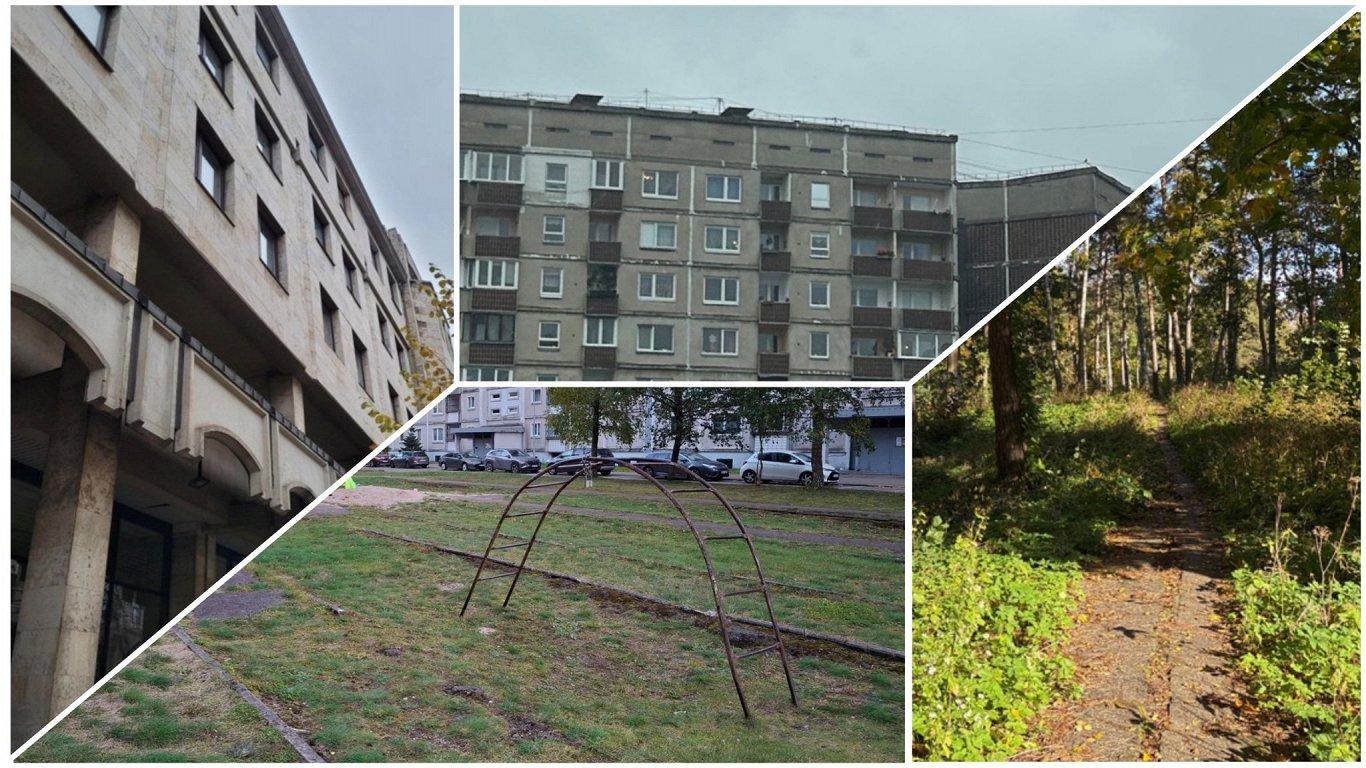
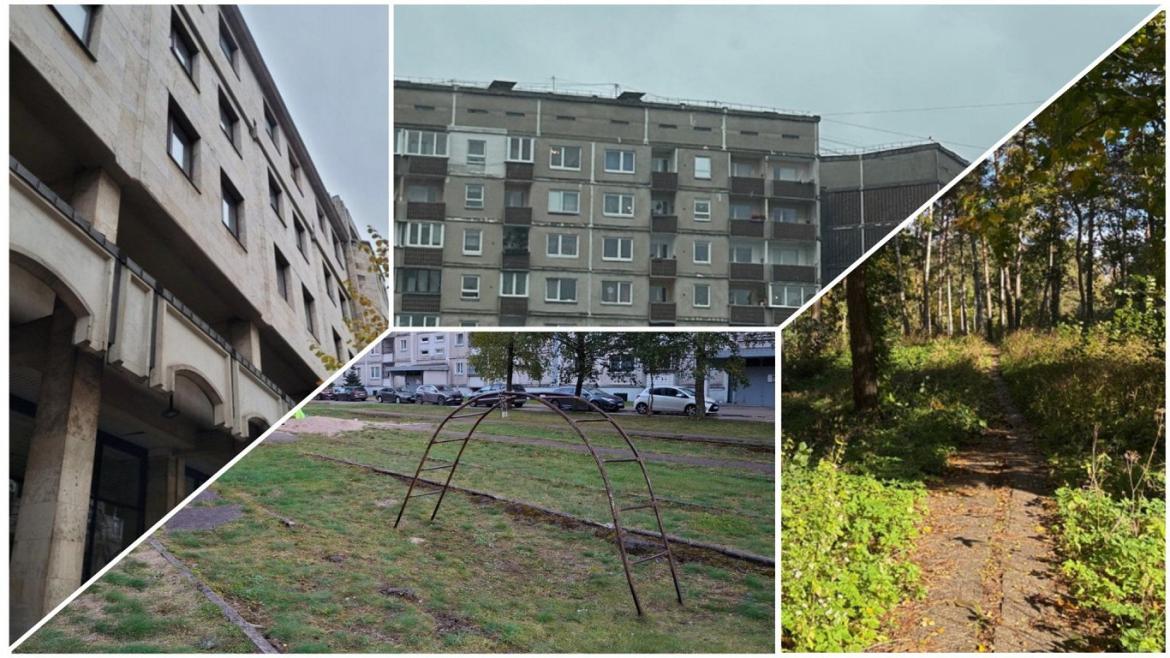
In collaboration with the Austrian company SPOTTERON (a digital platform for citizen science applications), the project used the CiVo – Citizen Voice app, where young people could upload photographs taken in Riga over the course of a month, attach geographic location data, and add comments. More than 150 photographs were collected. What did they reveal? After compiling the data and conducting thematic analysis, supplemented by discussions with participants, researchers concluded that young people pay particular attention to three elements shaping Riga’s urban space: (1) the technical condition of streets and pavements, (2) green areas and parks, and (3) buildings and their façades.
Pavements — an obstacle course of everyday life
Should city pavements and streets serve as safe routes for movement, or do they become obstacle courses that force you to constantly watch your step?
From the young people’s perspective, the technical condition of streets and pavements is one of the urban elements that affects everyone in their daily routines. Their photographs predominantly featured streets and pavements on the way to school, university, work, and back home. According to the participants, these routes — often uneven or full of potholes — not only negatively affect the city’s visual image but also endanger pedestrians and other road users, increasing the risk of injury.
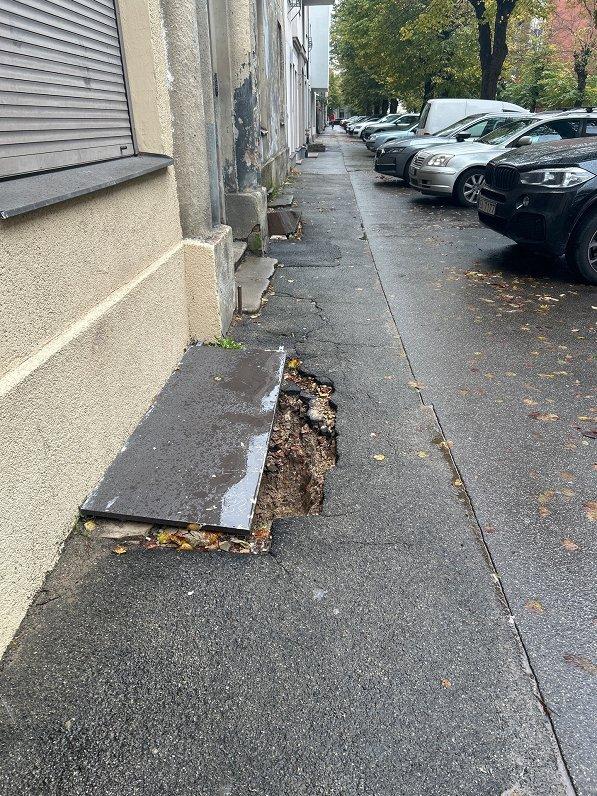
“[…] For example, for those who ride e‑scooters, it’s quite risky there, especially when the leaves have fallen — you can’t see where you’re stepping, it gets slippery, and it’s pretty awful. You can easily trip without noticing. The potholes there are really terrible. […]”
“[…] A lot of elderly people live here. Really — older men and women who can barely walk. I honestly see many of them tripping and falling every day. I think it’s negligence. It’s truly been neglected both by the municipality and by the building manager. It would be easier to remove the worn‑out paving stones altogether — there could simply be soil underneath. People wouldn’t trip. […]”
The photographs and discussions also highlighted the issue of accessibility in the urban environment. Young people pointed out that street and pavement surfaces are often unsuitable for people using wheelchairs, for parents with strollers, and for those who want to move around the city by bicycle, rollerblades, or other means of transport.
Although streets and pedestrian paths may seem like ordinary elements of the urban environment, young people view them as closely connected to broader questions of safety, maintenance, accessibility, and overall quality of life in the city. Poor‑quality infrastructure, insufficient lighting, and neglected surroundings are not perceived merely as aesthetic shortcomings — they directly affect people’s sense of safety, their ability to move freely around the city, and their willingness to spend time outdoors.
To relax or to be afraid? Parks and courtyard spaces
Where in the city can one find peace — and why can the sense of safety disappear once dusk falls?
The photographs submitted by young people and the discussions that followed revealed that Riga’s parks and other green areas, including courtyard spaces in residential neighbourhoods, are also significant places in their daily lives. Young people noted that several locations in the city need improvement and better maintenance to enhance the feeling of safety.
For example, one of the largest parks in central Riga — Vērmanes Garden — was repeatedly mentioned as a place that feels gloomy and insufficiently lit in the evening hours.
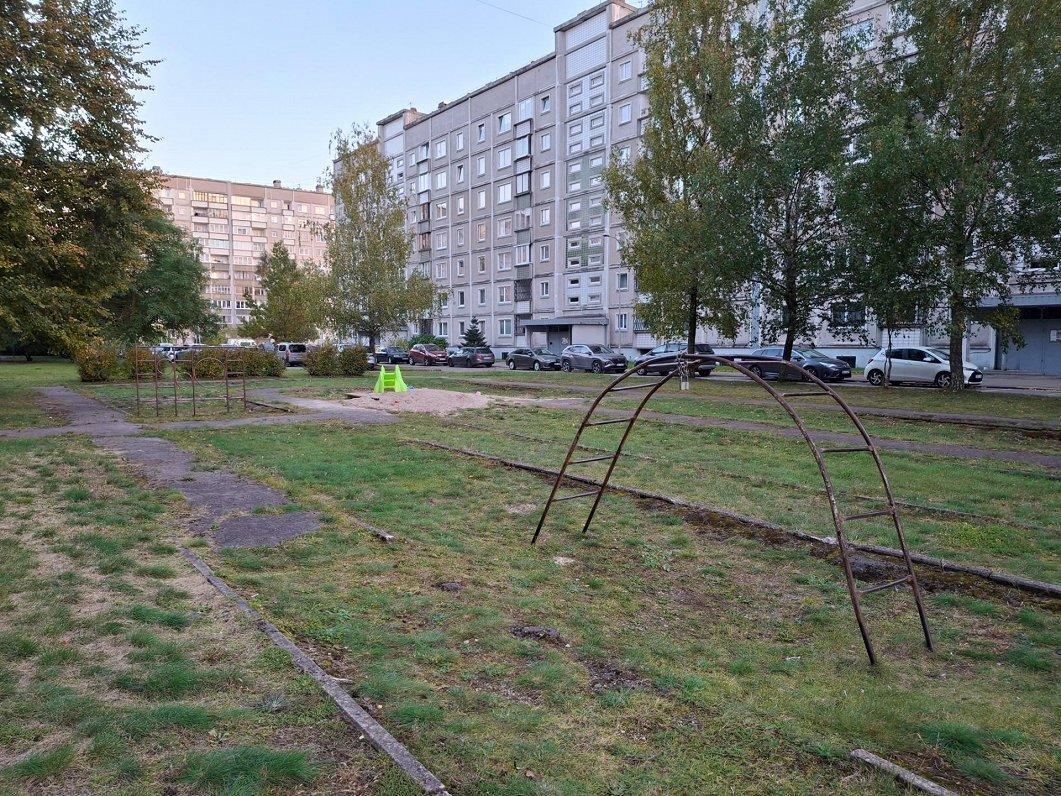
At the same time, young people drew attention to green areas and inner courtyards in Riga’s residential districts, which have long been neglected. They pointed out that playgrounds once beloved in their childhood have over time become potentially dangerous structures in the courtyards of apartment buildings.
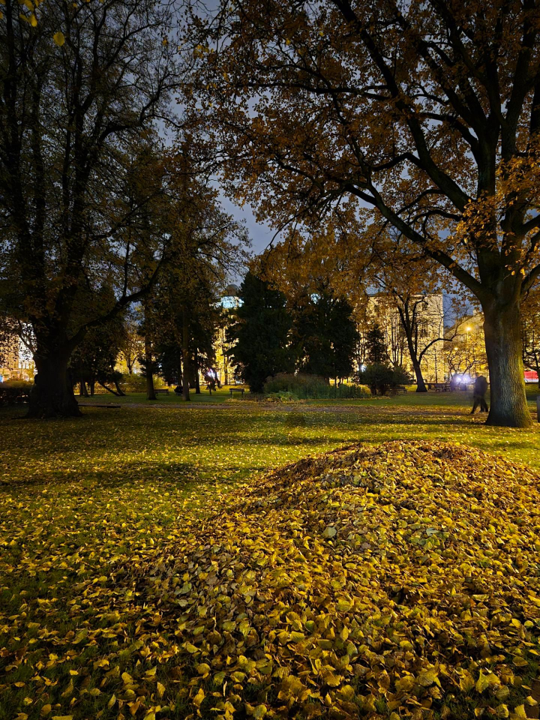
“In my opinion, Vērmanes Garden is too dark. Especially now, as winter is approaching and many people spend time there. Children and elderly people often walk through it. Sometimes I get the feeling that something could jump out of the bushes […]”
“In many places there are playgrounds. Often my parents would tell me, ‘don’t go there,’ because they are very old. You feel afraid for a child if they use them. They’re metal, rusted […]”
The discussions revealed that young people’s evaluation of Riga’s parks and green areas is shaped not only by their physical elements, but also by how these places are maintained, how functional they are, and whether they create a sense that the environment is being cared for. Participants preferred well‑planned spatial layouts and tidy green areas. In contrast, unfinished, abandoned, or poorly considered urban elements create discomfort and weaken emotional attachment to a particular place.
Participants also noted that their attitude toward these places has changed over time — from childhood to the present. For example, playgrounds near their homes, once an important part of their everyday environment, are now, in their view, neither attractive nor safe. This shows that green areas are valued not only as natural elements within the city, but also as important social infrastructure.
What do building facades reveal?
Both the young people’s photographs and the subsequent discussions showed that building façades and the city’s diverse architecture reflect, in their view, the social atmosphere, aesthetic quality, and overall well‑being of a particular urban environment. Therefore, young people paid attention not only to the functionality of buildings, but also to how they are maintained. In their opinion, empty and abandoned buildings in the city centre create a negative impression of the historical centre, while Soviet‑era residential districts are associated by some with outdated infrastructure, neglect, and lower quality of life.
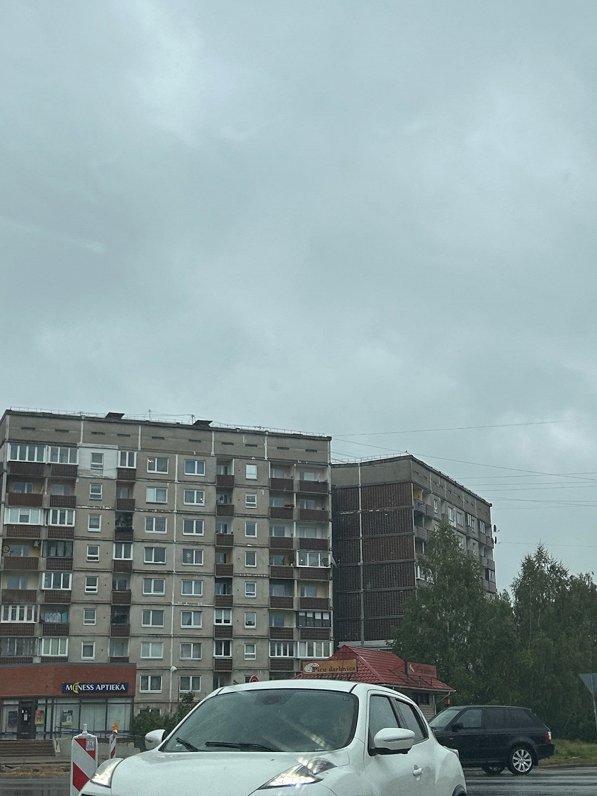
“I think the problem is that all the residential districts are quite old, because the buildings are Khrushchyovkas and old panel houses — a Soviet legacy. And first of all, they look bad, not to mention what they’re like inside, which is also a major issue in terms of how they were built. The biggest problem is those residential districts, because all the potholes and the general neglect are concentrated there. I think that in the city centre they at least try to maintain things somewhat.”
Overall, in young people’s view, the condition of the city’s buildings also affects how they evaluate the quality of the urban environment. Abandoned, empty, or visually degraded buildings are perceived as signs of social problems in the urban environment and of insufficient care for its maintenance.
Well‑maintained buildings and high‑quality architecture, in young people’s eyes, are associated with a sense of safety, pride, and belonging to the city.
For young people, the visual quality of the urban environment is not merely an aesthetic matter — it can signal the social relationships, values, and attitudes tied to a particular place, thereby shaping their everyday experience in the city.
Belonging to the city begins in everyday life
When examining the young people’s photographs and analysing the concerns expressed in discussions, researchers also paid attention to the symbolic meanings young people associate with the urban environment. Poor lighting, ageing façades, abandoned buildings, and neglected green areas were often interpreted during discussions as signs of insufficient care for the urban environment, its residents, and their needs. In contrast, a well‑maintained environment was linked to feelings of safety, comfort, and belonging.
This indicates that young people’s assessments of urban quality are closely tied not only to aesthetic appeal, but also to broader notions of social responsibility and city governance. The results of the study thus resonate with theoretical insights suggesting that the urban environment conveys social meanings and values that shape people’s emotional connection to place.
The study also reveals that young people’s sense of belonging to Riga is closely tied to their everyday experiences and movement through the city. Participants most often chose places that are part of their daily routines, such as routes to university, work, or home. This indicates that a sense of belonging is formed not only through recognisable city landmarks or symbolic locations, but also through regular interaction with seemingly ordinary urban spaces.
Overall, the results show that young people want to engage in conversations about the city’s development and are willing to share their experiences and evaluations of the urban environment. The citizen science mobile application used in the study proved to be a suitable engagement tool for young people, encouraging them to pay more conscious attention to their surroundings and to document them in a familiar way — with their smartphones. The potholes, dark parks, ageing façades, and abandoned buildings captured by young people are therefore not just a story about shortcomings in the urban environment. They reveal how everyday surroundings shape young people’s sense of safety, belonging, and their perception of how well the city cares for its residents.