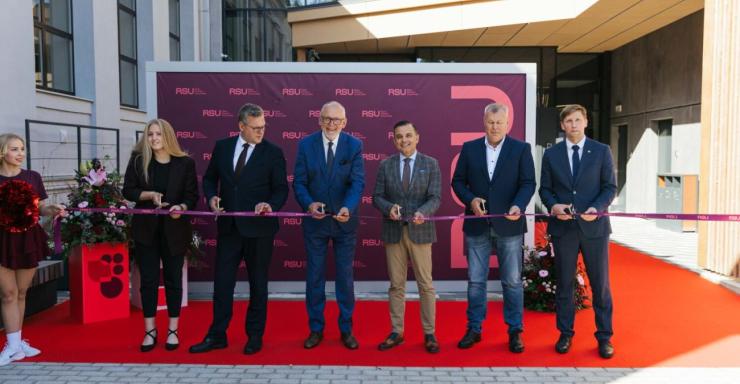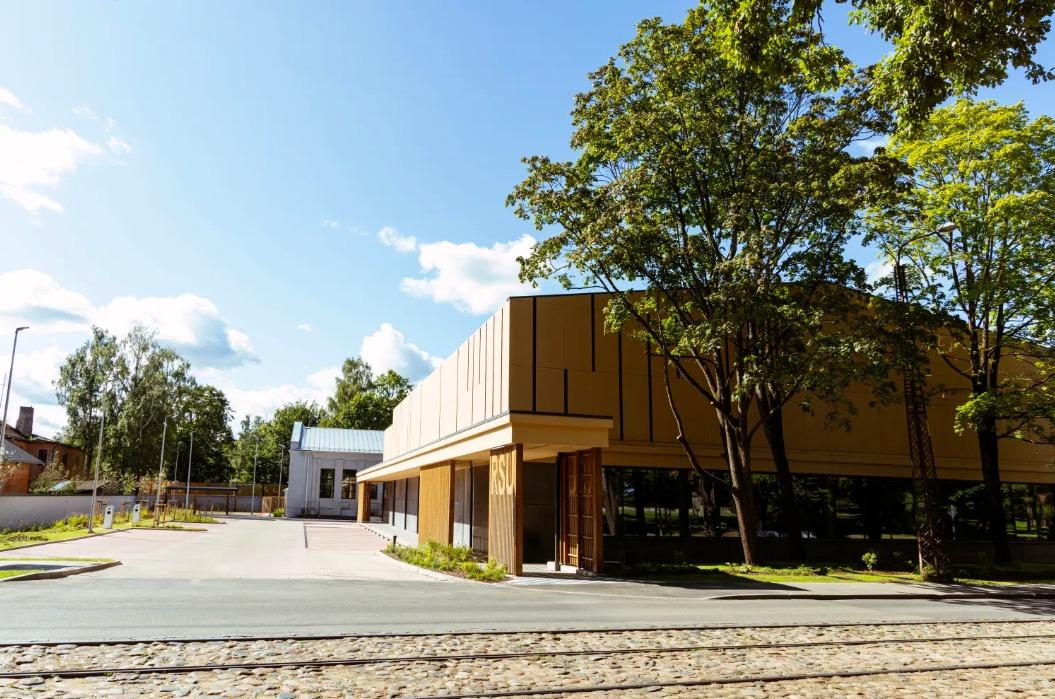
On Wednesday, 9 September, the Rīga Stradiņš University (RSU) sports complex at Cigoriņu iela 3 will be opened in the Latvian capital, RSU reports.
The €13.4 million, 3,627 m² complex will bring together studies, sports, and research in one location, providing new opportunities for RSU students, including students of the RSU Latvian Academy of Sport Education (LASE), as well as RSU sports teams, researchers, and employees.
The new complex is one of the most significant development projects in RSU sports infrastructure. It includes a sports hall for basketball and volleyball that meets international standards, a gym with strength, cardio, and functional training zones, exercise and specialised rooms for Pilates and yoga, as well as a multifunctional hall.
A significant part of the complex is also intended for studies and research – the new centre will include a scientific research laboratory for measuring human body and physical parameters, physiotherapy rooms, and a medical station. The sports games and exercise halls will also make it possible to carry out a substantial part of the study process for RSU LASE students in the new complex.
New opportunities will open up for RSU sports teams – they will be able to both train and play home games in one location. This will provide the university with its own modern environment for high-level training, competitions, and strengthening the RSU sports community.
At the opening event, media representatives will have the opportunity to tour the new sports complex, learn about its facilities, and find out more about RSU’s plans for the development of sports studies, research, and university sports.
About the RSU Sports Complex
The idea for developing the sports complex on Cigoriņu iela was developed over several years. The construction design was completed in April 2024, while construction began in December 2024. On 16 April 2025, a time capsule was ceremonially placed in the foundations of the complex.
The total cost of the project is almost €13.4 million, and its implementation has been financed using RSU funds and co-financing from the European Union’s Recovery and Resilience Facility.
Particular attention has been paid to accessibility in the complex – a lift and adapted sanitary facilities have been installed, universal design solutions have been used, and parking facilities for bicycles and electric mobility devices have also been provided.