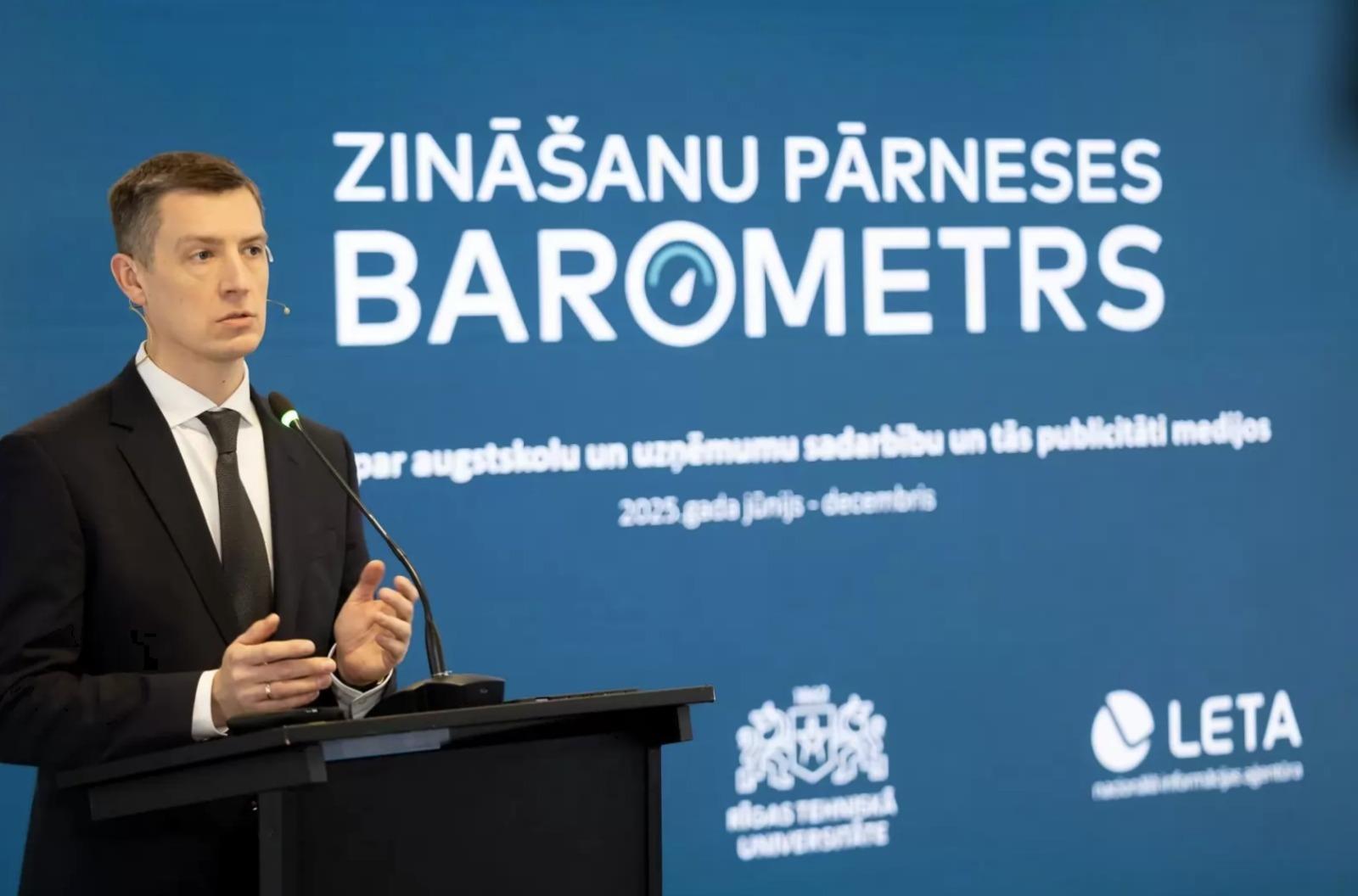
To create a fertile foundation for the growth of a high value‑added economy in Latvia, the “Knowledge Transfer Barometer” survey will be carried out for the third time in cooperation between Riga Technical University (RTU) and the Employers’ Confederation of Latvia (LDDK). This year, alongside entrepreneurs, higher education institutions will also provide their assessment of the needs and quality of collaboration between industry and academia.
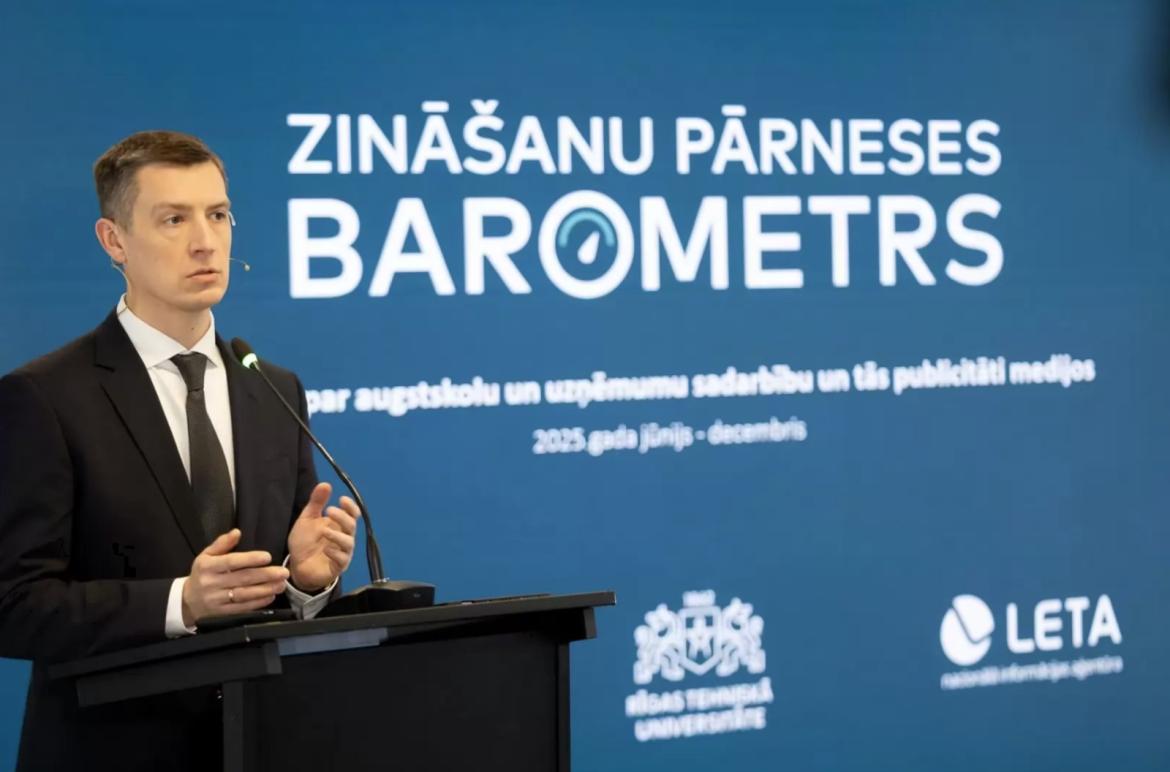
“Research‑intensive universities play a crucial role in economic growth by providing educated specialists, knowledge and technologies that enable companies to create innovative, globally competitive products and services with high added value. The study conducted over several years describes the interaction between industry and universities, examining in depth the factors that facilitate or hinder cooperation with companies of different sizes and ownership structures — state, Latvian private and foreign. The Barometer confirms that the key catalyst for cooperation is a company’s willingness to develop — yet it would also be supported by, for example, more accessible information about collaboration opportunities, broader human and financial resources, greater flexibility from universities, and so on,” emphasises Artūrs Zeps, RTU Vice‑Rector for Development and Finance.
The “Knowledge Transfer Barometer” will be implemented in two stages of data collection. First, in cooperation with LDDK, a quantitative online survey will be conducted in which entrepreneurs will assess their awareness of collaboration opportunities and their experience, identify barriers that hinder cooperation, and propose solutions for more effective collaboration. They will also be asked to explain their motivation for cooperation and outline future intentions. The survey will be followed by in‑depth interviews. This time, in‑depth interviews will also be conducted with representatives of universities to capture their perspective. In addition, in cooperation with the news agency LETA, media coverage of collaboration between universities and companies will be analysed.
Last year’s study shows that, overall, companies evaluate cooperation with universities positively — the average rating is 3.9 on a five‑point scale. Over the past year, 46% of companies reported improved cooperation experiences — universities have become more responsive in communication, react more quickly to collaboration proposals, and demonstrate a growing understanding of the need to apply research results in practice. At the same time, the Barometer highlights the need for continued improvements, including expectations for greater flexibility from universities, better understanding of business needs, clear returns, and partnership‑based collaboration approaches.
The study also confirms that cooperation is relatively more active in the field of studies, mainly through providing internship opportunities for students, while collaboration in research and innovation remains more limited.
The Knowledge Transfer Barometer is being developed for the third time to promote cooperation between universities and companies, provide insight into the current situation, and develop recommendations for strengthening collaboration.