Technologies in Everyday Life That Use Lasers and Artificial Intelligence
June 26, 2026
In everyday life, we rarely stop to consider the extent to which modern medicine relies on technologies that use lasers and artificial intelligence. One such method is flow cytometry - a technology that has fundamentally transformed the way cells in blood and other biological fluids are analyzed. Although this process usually remains invisible to patients, it is one of the foundations of fast and accurate laboratory results used in both diagnosis and treatment monitoring.
Almost everyone has encountered this technology indirectly through routine blood tests. Laboratories use it to determine the number of red blood cells, white blood cells, and platelets, as well as various immune system parameters, including leukocyte differentials and other biomarkers. Thanks to automated analytical systems, these results can now be obtained much faster than in the past - often on the very same day.
From Microscopy to Automated Analysis - How It Works
Historically, cell analysis was a time-consuming process that relied on the manual examination of microscopic preparations and cell counting by trained specialists. Today, automated technologies have largely replaced these procedures.
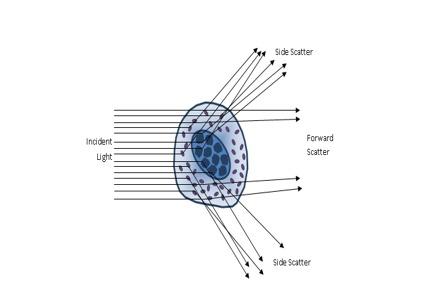
The basic principle of flow cytometry is straightforward: cells from a blood sample or another biological specimen are arranged in a fluid stream so that they pass through a laser beam one at a time. As each cell crosses the laser, the scattered light is measured, providing information about the cell’s size and internal structure.
Side-scattered light reflects the cell’s granularity (the density of its internal structures), while forward-scattered light correlates with the cell’s size (see Figure 1).
Based on these signals, it is possible to identify cell types and quantify their abundance. When fluorescent antibodies or markers are used, specific molecules located on the cell surface or within the cell can also be analyzed.
What Does This Technology Mean for Medicine?
Flow cytometry has become an essential tool in both routine laboratory diagnostics and specialized medical research. For example, many automated blood analysis systems are based on this principle.
Its most important applications include:
- Diagnosis of hematological diseases, including leukemia and lymphoma;
- Assessment of immune system function;
- Monitoring of treatment effectiveness;
- Development and testing of new medications.
Particularly valuable is its ability to detect very small populations of abnormal cells that may be clinically significant - for example, after a course of treatment when evaluating therapeutic outcomes.
The latest generation of spectral flow cytometry enables the simultaneous analysis of dozens of different markers, providing a far more detailed understanding of cellular biology and function.
Knowledge Exchange and Development in Latvia
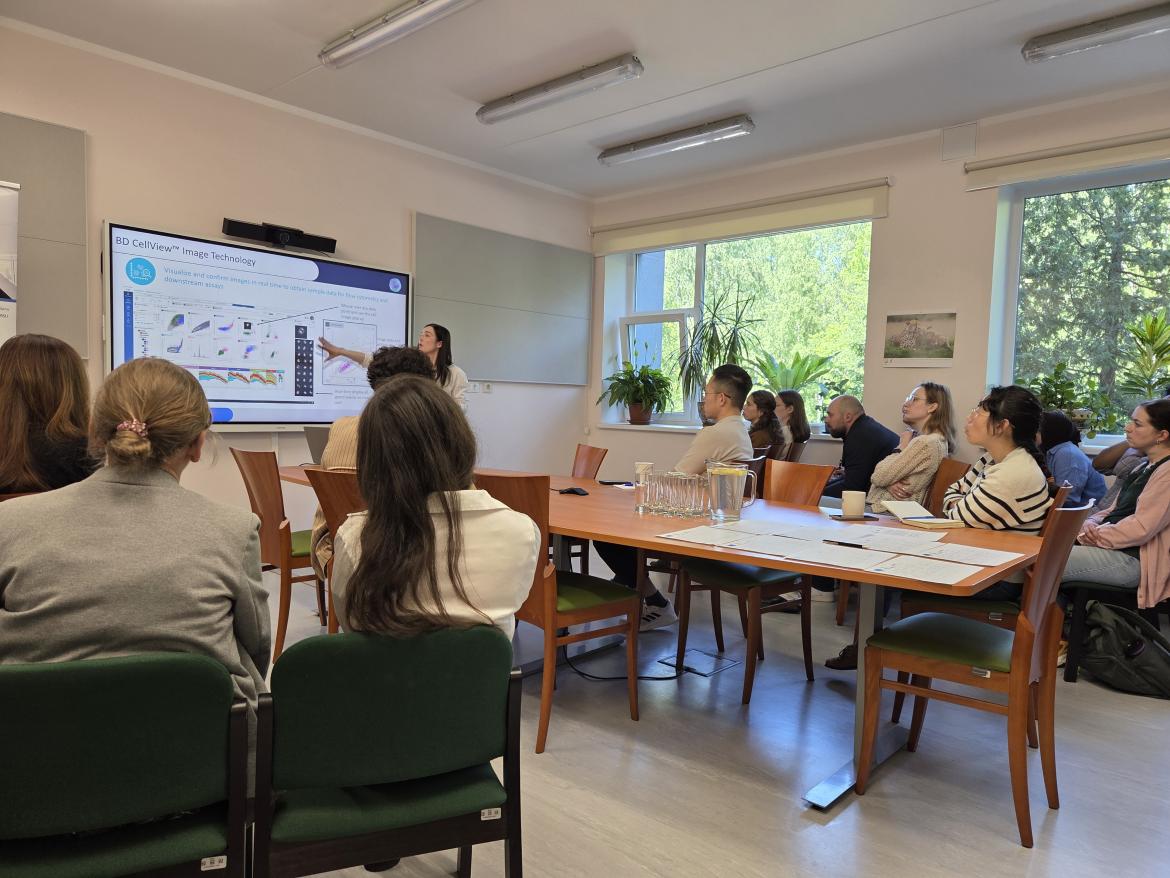
The importance of this technology, its practical applications, and future development trends were also highlighted during a flow cytometry-focused event held on May 28 at the Institute of Microbiology and Virology of Rīga Stradiņš University within the framework of the European Infrastructure for Translational Medicine (EATRIS) (https://www.rsu.lv/aktualitates/eatris-ietvaros-rsu-notiks-pasakums-par-spektralas-plusmas-citometriju-ar):
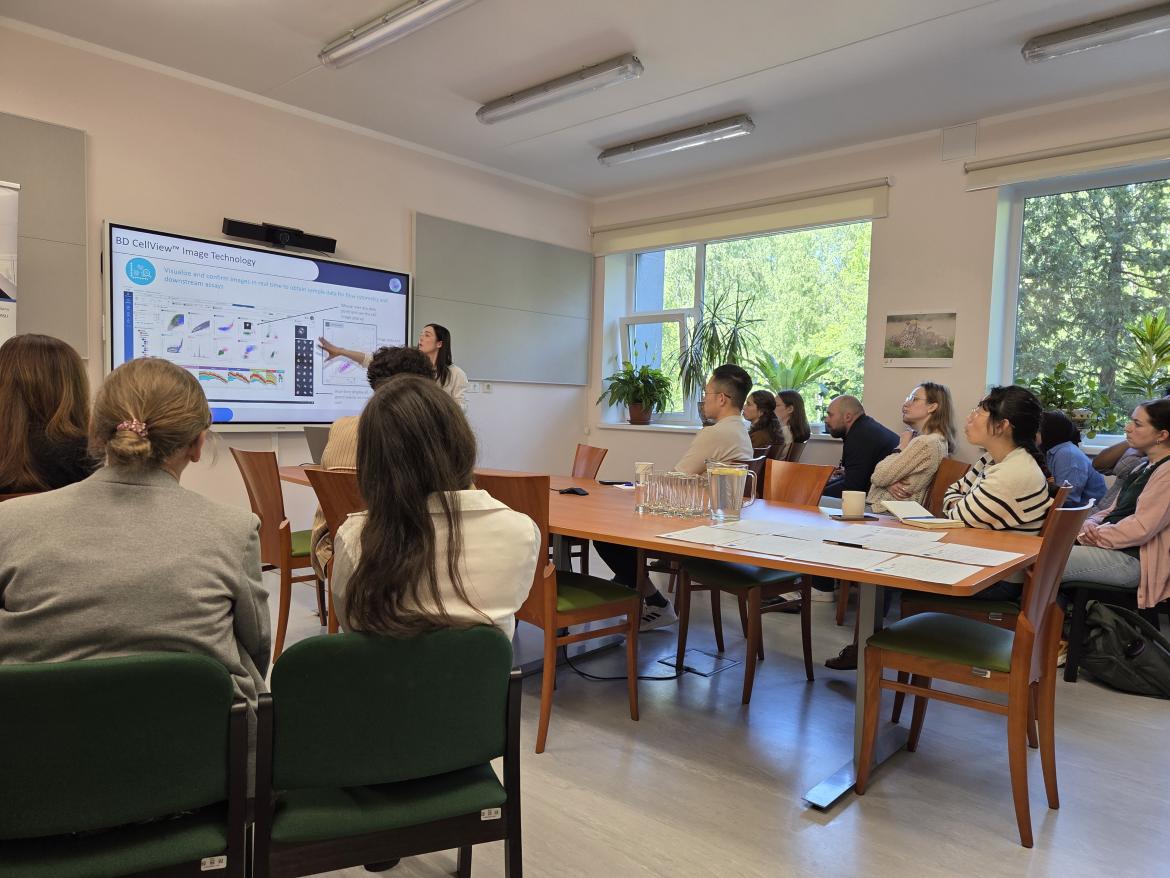
The event emphasized collaboration among researchers, clinicians, and laboratory specialists, as well as the opportunities offered by spectral flow cytometry in modern diagnostics. Discussions highlighted that the full potential of the technology can only be realized through close interaction between scientific research and clinical practice.
Although flow cytometry has already become one of the most important methods in laboratory diagnostics, its capabilities continue to expand. The technology is opening new opportunities in both research and clinical practice, helping healthcare professionals better understand disease processes and make more informed treatment decisions.
For this reason, continuous exchange of knowledge and experience among scientists, laboratory specialists, physicians, and other healthcare professionals remains essential. Such meetings foster collaboration, help identify shared needs, and create opportunities to use advanced technologies more effectively for improving patient care.
As artificial intelligence and spectral analytical methods continue to evolve, the importance of this technology will only increase, making diagnostics not only faster but also significantly more accurate and personalized.
Information provided within the framework of the project “RSU Participation in the Horizon Europe Programme” (No. 1.1.1.5/3/25/I/014).