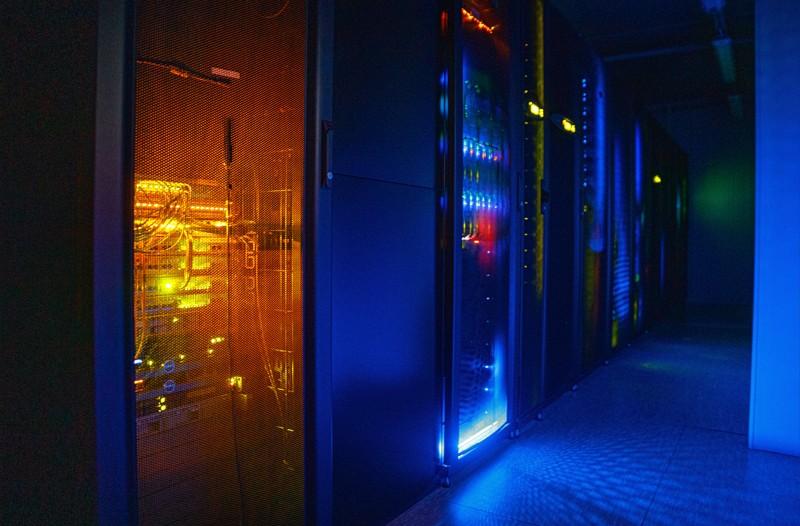
The University of Latvia (UL) Computing Center, which is part of the Institute of Computational Modeling, has increased its data storage capacity by 160 TB, enabling larger computational tasks to be performed. The methods and infrastructure for using the supercomputer have become more accessible to both the UL researchers and collaboration partners.
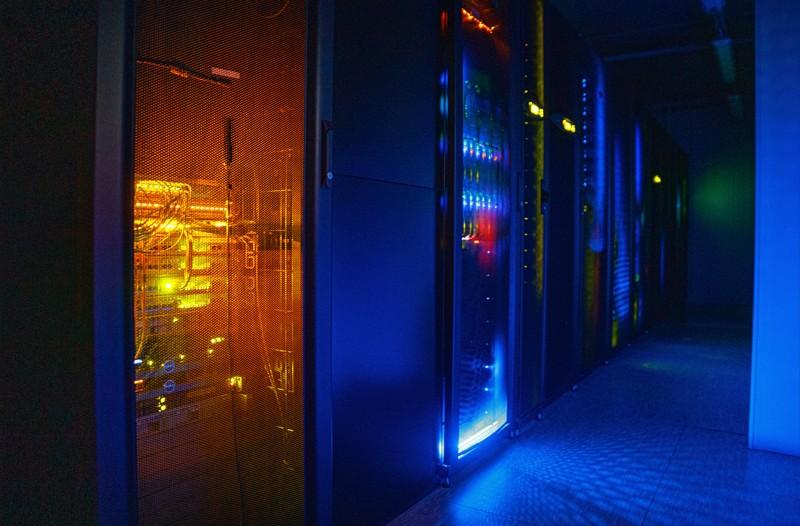
“We are committed to advancing the idea of providing the necessary supercomputer infrastructure at such a level that UL remains competitive internationally in terms of applying the latest computing capabilities. Our main task is to support research work for both scientific and industrial needs. We serve as a bridge, an environment where researchers can prepare and test computational tasks for themselves or their clients, and later transfer them to the larger European resources,” says Kārlis Muižnieks, head of the UL Computing Center.
Performing tasks 100 to 1000 times faster than on a regular computer seems like a very attractive solution, and as a result, many UL researchers are already using the supercomputer. Research is being carried out and experiments are being conducted with the possibilities offered by artificial intelligence, big data analysis, and simulation solutions in areas such as physics, ecology, geography, medicine, digital humanities, and many others.
“Our capabilities are limited, so the advantages are for UL researchers. At the same time, the center’s biggest added value is providing a service exclusively with an individualized approach for each client,” explains K. Muižnieks.
With the rapid rise in popularity of high-performance computing (HPC) or supercomputing and its ability to improve everyday life and processes, the increase in computing power requires investments in both people and infrastructure. Funding competitions like the MikroTik project competition in the fields of natural sciences, technology, and medicine, which is administered by the UL Foundation, help achieve this task.
The UL Computing Center offers a wide range of services, including high-performance computing (HPC) solutions, virtual machines for operational tasks, data storage, and monitoring. These resources are used for both academic and researcher-led industry projects to promote innovation and technological achievements. The server infrastructure can be used by any UL employee.