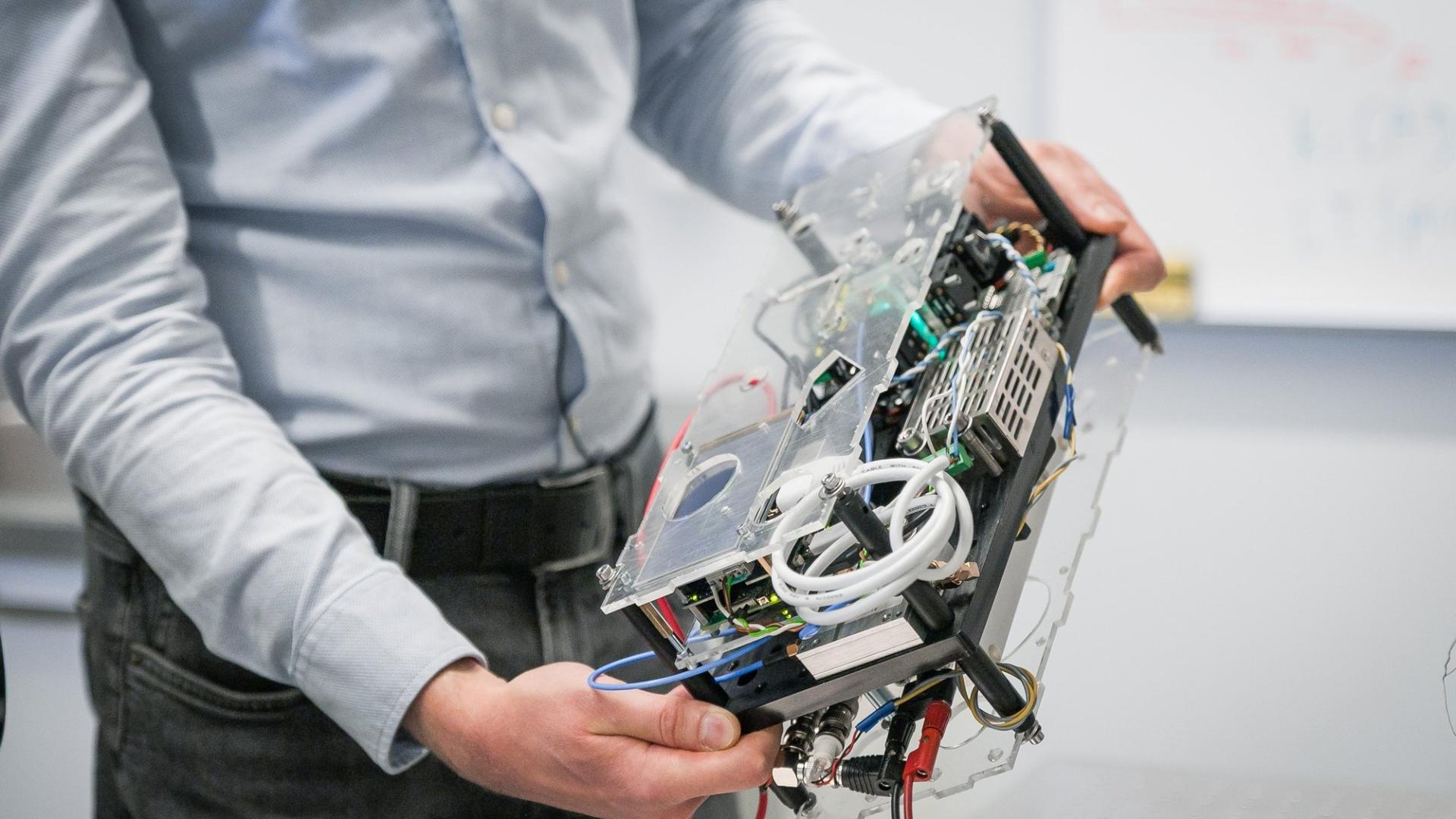
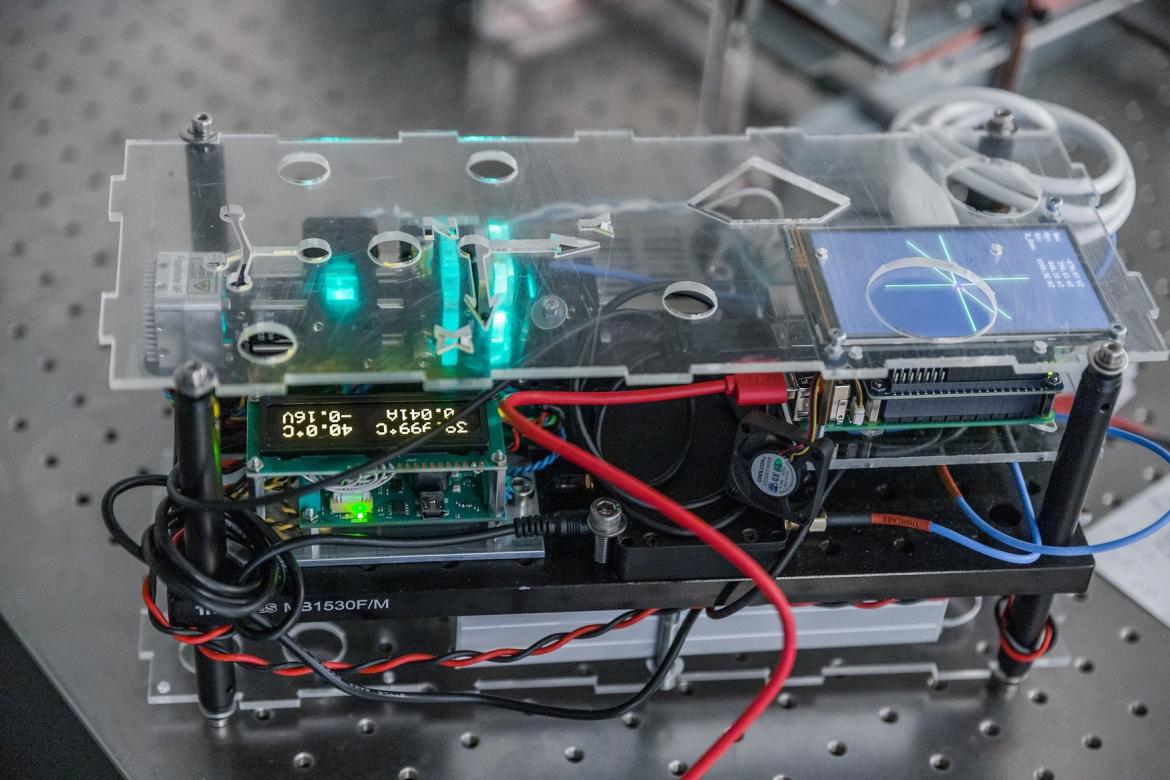
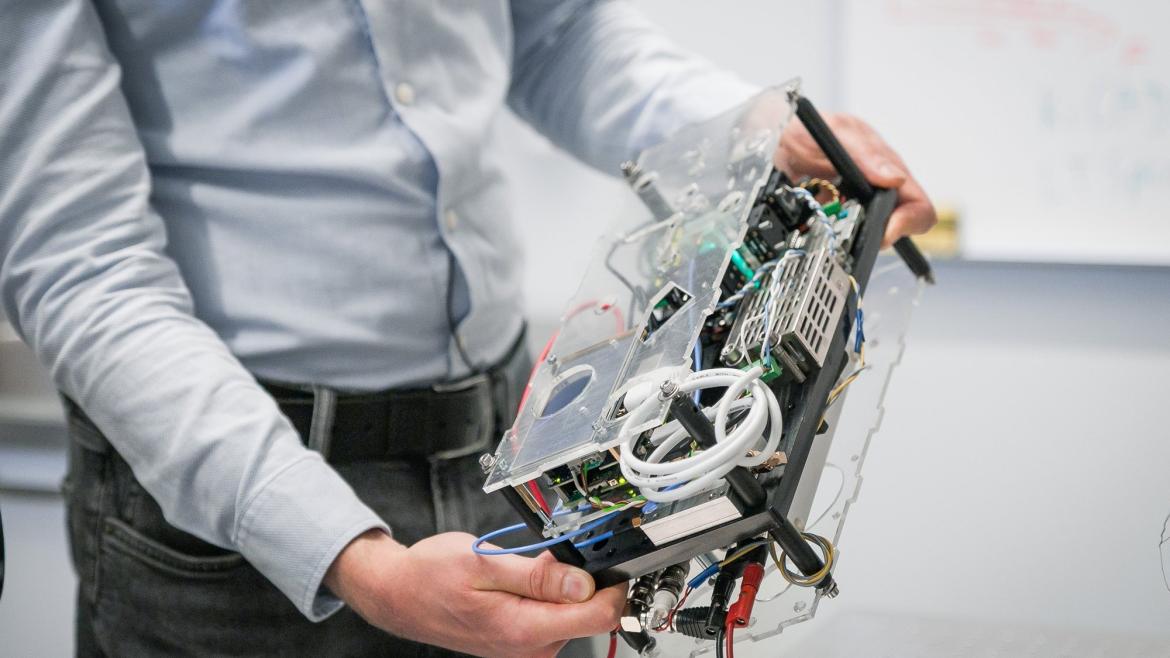
From the outside, it looks like a small, compact box that can be held in one hand, but inside it houses a quantum detector, a microwave generator, a laser, and an onboard computer. Behind its modest exterior lie more than ten years of research, quantum physics, diamond crystals, international cooperation with some of Europe’s largest defence companies, and a question that is becoming increasingly relevant today – how to determine one’s location accurately when the Global Positioning System (GPS) can no longer be relied upon.
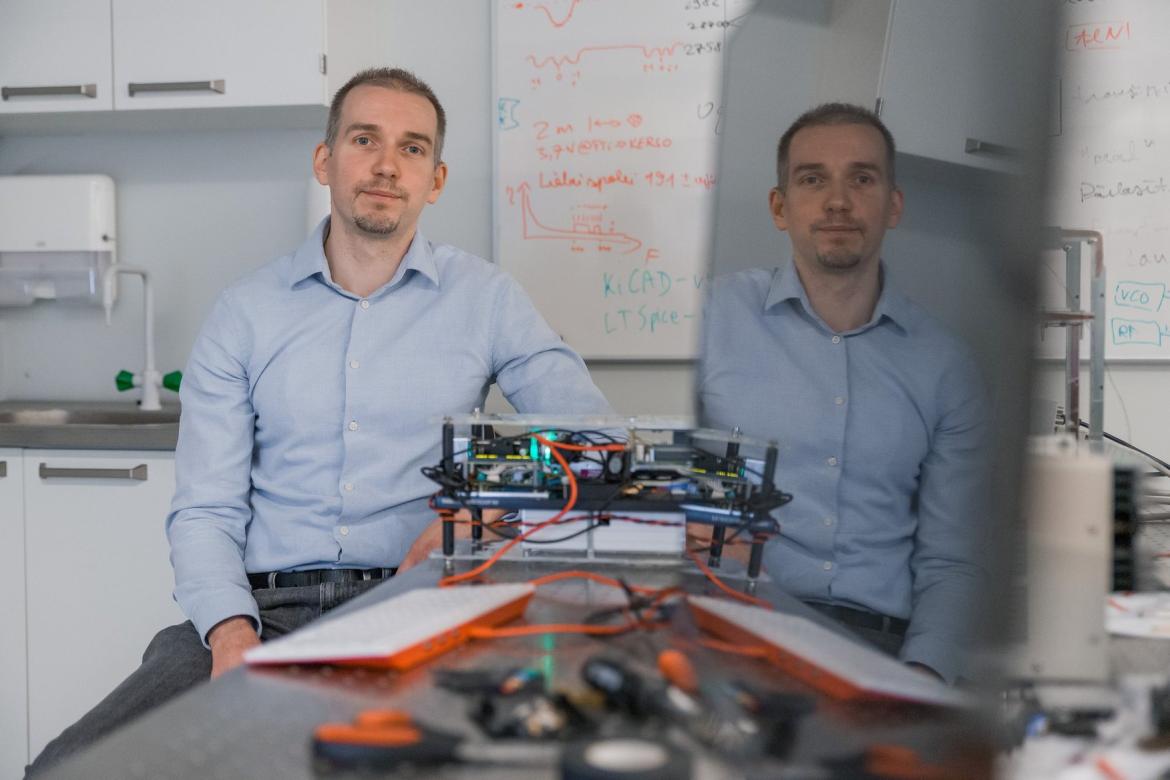
The quantum magnetometer developed at the Laser Centre of the Faculty of Science and Technology of the University of Latvia (UL) is one example of how fundamental science can be transformed into a practically usable technology. The prototype device, developed within a European Defence Fund project, is capable of determining the strength and direction of a magnetic field in three dimensions, and in the future it could be used for navigation in situations where GPS is disrupted or unavailable.
However, this story did not begin with the European Defence Fund project. To understand how UL researchers arrived at this prototype, we need to go back more than a decade.
From Fundamental Science to Technology
The story of the UL magnetometer began more than a decade ago in the laboratory, with research into quantum coherent effects – phenomena that help explain how quantum objects can exist in several states simultaneously. This is a field in which the UL Laser Centre has been working for years and has built internationally recognised expertise, consolidated in several monographs, including publications by Oxford and Cambridge University Press.
“Until quite recently, we were convinced that we were engaged in fundamental science. Suddenly, quantum technologies have become a reality,” says Professor Mārcis Auziņš, Leading Researcher at the Laser Centre.
One of the research directions involves defects created in diamond crystals, which become highly sensitive sensors in quantum physics. The UL team has been working in this field for around 12 years, and it was precisely this long-term fundamental research that made it possible to develop the magnetometer prototype, which was taken to Paris in June this year for the final demonstration of the European Defence Fund project. A significant advantage was the experience accumulated beforehand – the Laser Centre had already been studying similar quantum effects in atoms for many years. The knowledge gained from atomic research also proved useful when working with defects in diamond, as their physical properties are similar in many respects.
The story of the magnetometer’s development is closely intertwined with the professional growth of one researcher. UL researcher Reinis Lazda joined the Laser Centre during his bachelor’s studies. His doctoral dissertation, defended in early June this year under the supervision of Professor Mārcis Auziņš, “Hyperfine Interaction of the Energy Levels of Nitrogen-Vacancy Centres in Diamond with Laser and Microwave Radiation in Magnetic Fields”, summarises more than ten years of research into diamond quantum systems, which has also formed the basis for the development of the magnetometer.
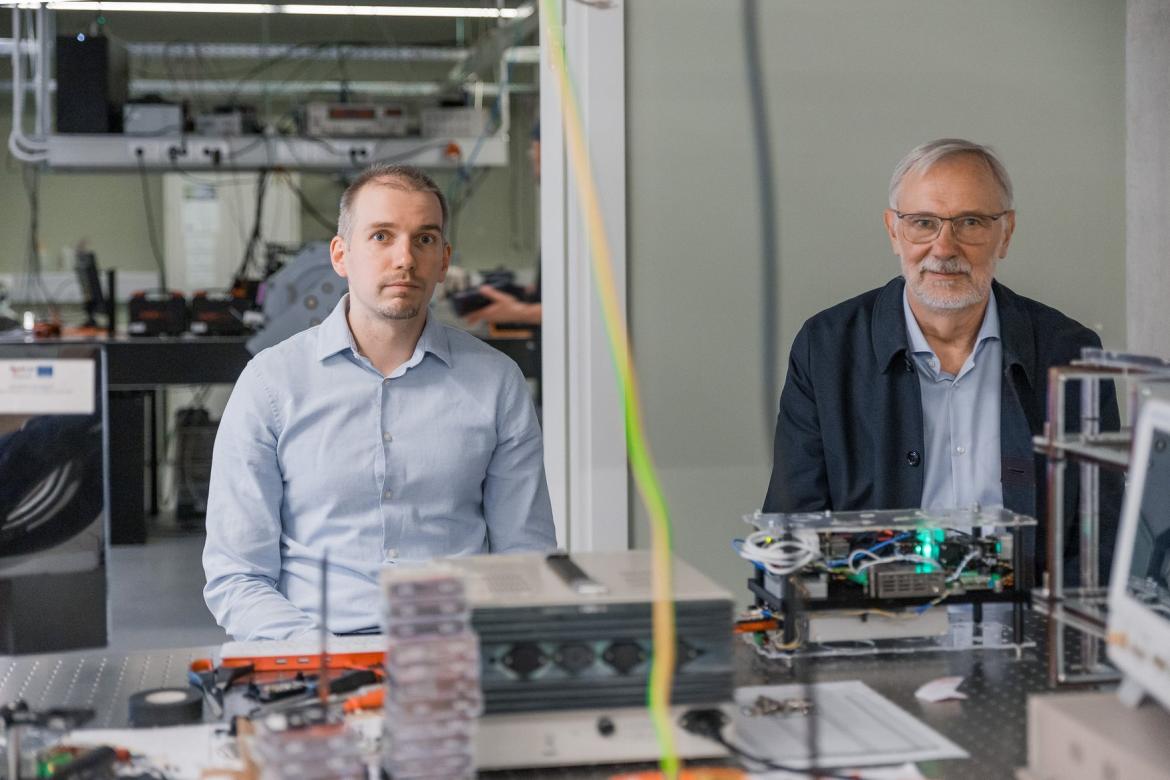
“The doctoral dissertation includes the fundamental research carried out at the beginning: how diamond glows, how finer structures appear within it, how it behaves in a magnetic field, and how the specific defect interacts with other defects in the diamond,” Lazda explains. It was precisely this fundamental research that paved the way for the first applied projects.
The first significant step towards the practical application of the technology was taken in a project with the European Space Agency, in which the UL team had to demonstrate that the knowledge gained through fundamental research could be transformed into a compact vector magnetometer for measuring magnetic fields.
After the project concluded, the Latvian Ministry of Defence also expressed interest, noting that the technology developed could be useful for other purposes as well. This led to UL being invited to participate in a broader European Defence Fund project, with total funding of €27.4 million and partners from several European countries, led by the French defence industry giant “Thales”. Although the project was allocated only three years, with a six-month extension, the UL team succeeded during this period in developing and demonstrating a functioning prototype of the device to the project partners.
“These are very serious partners – major defence companies from France, Germany and Italy, as well as several academic institutions,” Auziņš emphasises. Each participant had their own area of specialisation – from optical systems and lasers to diamond processing, microwave antennas and detection systems. “UL’s task was to build a prototype and demonstrate that it works. That meant combining all the experimental systems into a single functioning device,” Lazda explains.
A Small Diamond Doing a Big Job
To understand what makes this magnetometer so sensitive, it is necessary to look at the principle behind how it works.
At the heart of the device is a diamond crystal only a few millimetres in size. What matters most to the researchers is not the diamond itself, but the nitrogen-vacancy, or NV, centres created within it – quantum systems in which a nitrogen atom occupies the place of a carbon atom in the crystal lattice and is located next to an empty site (a vacancy in the crystal lattice). These defects are extremely sensitive to magnetic fields and make it possible to determine both their strength and direction.
“The most important thing is that defects with interesting properties can form in diamond,” Lazda explains. At the same time, diamond is durable, stable, and non-toxic – it can operate under a wide range of conditions, including extreme environments such as space, as well as at room temperature, whereas many other solutions require complex cooling infrastructure. The small crystal is not inexpensive, but the material itself is only one part of a technology that has required more than ten years of research to develop.
Over the years, the device has become increasingly compact – the first prototype delivered by UL to the European Space Agency was the size of a cabinet drawer, with a separate temperature controller and power supply beside it. The goal was to make the device as small as possible without sacrificing precision, and this balance has improved with each successive version. The prototype demonstrated in Paris was already a small rectangular box with a built-in battery that operated completely independently.
The Road to Paris
In Paris, the UL team had to demonstrate the developed prototype to project partners, representatives of the European Defence Fund, and the European Commission. However, the journey to France was not without an unexpected incident: the airline refused to transport the built-in battery as ordinary cargo because it was classified as hazardous and could only be transported with special certification. Fortunately, the device is also designed to operate from an external power source, and it was successfully demonstrated in Paris in this configuration, without the battery.
The demonstration itself was the moment when it became clear whether what had been developed in the laboratory actually worked as intended. Lazda also recalls an episode when a representative of the defence ministry of a European country approached him and, during the conversation, told him to turn the test magnet around – the arrow visible on the screen indicating the direction of the field should then turn in the opposite direction.
“I had never once thought of testing it exactly that way. I slowly turned the magnet, and the arrow on the screen really did turn with it. I had this moment of surprise – this thing is doing exactly what it is supposed to do,” Lazda recalls.
Kāpēc tieši Latvijas Universitāte?
Veiksmīgā demonstrācija Parīzē liek uzdot kādu svarīgu jautājumu – kāpēc tieši LU izdevās nonākt līdz šādam ierīces prototipam?
Pēc Auziņa domām, dalība Eiropas drošības tehnoloģiju projektos ir svarīga ne tikai konkrētā projekta rezultāta dēļ, bet arī visas Latvijas zinātnes attīstībai. "Manā skatījumā tas ir acīmredzami. Tas, ko spējam izdarīt, balstās ļoti spēcīgā fundamentālā zinātnē. Šīs zināšanas nevar nopirkt un dažu mēnešu laikā atkārtot," uzsver Auziņš. Viņš norāda, ka "Thales" ir miljardu kompānija, ar kuru LU nekad nekonkurēs finansiāli, un ka arī citi lielie uzņēmumi teorētiski varētu šādas tehnoloģijas attīstīt paši. Taču izšķirošais bieži vien ir nevis nauda, bet laiks.
Arī starptautiskā konkurence apliecina, ka kvantu magnetometru attīstība nav vienkāršs uzdevums. Lazda stāsta, ka arī Vācijas tehnoloģiju uzņēmums "Bosch" pirms vairākiem gadiem publiskojis telefona izmēra magnētiskā lauka sensora prototipu, kas balstīts uz dimanta kristāliem. Taču publiski nav zināma šī risinājuma veiktspēja, un brīvi pieejams produkts tirgū joprojām nav parādījies. Pēc Lazdas domām, tas apliecina, ka arī uzņēmumiem ar ievērojamiem resursiem ceļš no prototipa līdz gatavai kvantu tehnoloģijai nav ātrs.
Lai gan magnetometri magnētiskā lauka mērīšanai tiek izmantoti jau vairāk nekā simts gadus – no ģeoloģijas un aviācijas līdz kosmosa izpētei un navigācijai –, tieši kvantu tehnoloģijas paver jaunas iespējas arī šajā jomā. LU ieguldījums nav jauna mērīšanas principa radīšana, bet gan kvantu tehnoloģijā balstīta sensora izstrāde, kas ļauj magnētisko lauku noteikt daudz kompaktāk un ar augstu precizitāti.
Stāsts, kas turpinās
Eiropas Aizsardzības fonda projekts ir noslēdzies, taču ar Parīzi nekas vēl nebeidzas. LU Lāzeru centrā aptuveni 20 pētnieku komanda turpina strādāt vairākos virzienos, kas balstās tajā pašā dimanta sensoru tehnoloģijā.
Viens no virzieniem ir precīzu magnētiskā lauka mērījumu izmantošana kā alternatīva GPS. LU pētnieki to jau pārbaudījuši praksē – sadarbībā ar Rīgas Valsts 1. ģimnāzijas skolēniem tika izveidota magnētiskā lauka karte, kas ļāva noteikt mazas mobilas platformas – rotaļu mašīnītes jeb robota – atrašanās vietu telpā. Ideja demonstrēta arī NATO daudznacionālās brigādes organizētajā viesu dienā Ādažos un LU Zinātnieku naktī, parādot, ka magnētiskais lauks nākotnē varētu kļūt par orientēšanās instrumentu situācijās, kad GPS nav pieejama.
No tās pašas tehnoloģijas izaug arī citi pētījumu virzieni – magnētiskie sakari vidēs, kur nedarbojas radiosignāli, piemēram, zem ūdens vai alās, bezkontakta strāvas mērīšana ar dimanta sensoriem un kvantu nejaušo skaitļu ģeneratori drošai šifrēšanai.
Tālākā nākotnē no šī paša pamatpētījuma varētu tapt arī pirmais Latvijā izstrādātais kvantu dators, kura pamatā būtu atsevišķi, precīzi kontrolēti defekti dimanta kristālā. Lai gan LU Datorikas nodaļā jau ir neliels Ķīnā ražots kvantu dators, šādas pašu izstrādātas iekārtas Latvijā vēl nav.
Taču magnetometra prototips, kas aizceļoja uz Parīzi, jau pašlaik apliecina, ka gadiem ilgi fundamentālie pētījumi LU var pārtapt praksē izmantojamā tehnoloģijā Eiropas mērogā. "Bez fundamentālajiem pētījumiem mums nebūtu šīs iespējas," uzsver Auziņš. Savukārt Lazda piebilst: "Kad uztaisa prototipu un tas strādā – tas ir labākais brīdis!"
Noslēgumā Lazda uzsver, ka magnetometra izstrāde bijusi Lāzeru centra komandas darbs. Viņš pateicas LU par sniegtajām iespējām un kolēģiem par sadarbību un atbalstu, īstenojot šo un citus projektus. Īpašu pateicību viņš velta Valtam Krūmiņam, Annai Veronikai Priedei, Alisei Cirsei, Oskaram Rudzītim, Evai Graudai, Tīnai Ancei Jansonei, Monai Jani, Florianam Helmutam Gābaueram, Mārim Tamanim, profesoriem Ruvinam Ferberam un Mārcim Auziņam, kā arī Lāzeru centra vadītājam Artūram Mozeram.