Because of climate change, we are already facing and will continue to face many problems. If we do not recognise them and act according to the situation, we may experience not only deteriorating health, but also increasing refugee flows and nervous breakdown. There are also smaller things that we do not currently recognise, such as the replanning of effective public transport. How climate change affects human health, what changes await us in this regard and how our daily lives should be replanned in this context are explained to Likums un Taisnība by Professor Ivars Vanadziņš, Director of the Institute of Occupational Safety and Environmental Health at Rīga Stradiņš University.
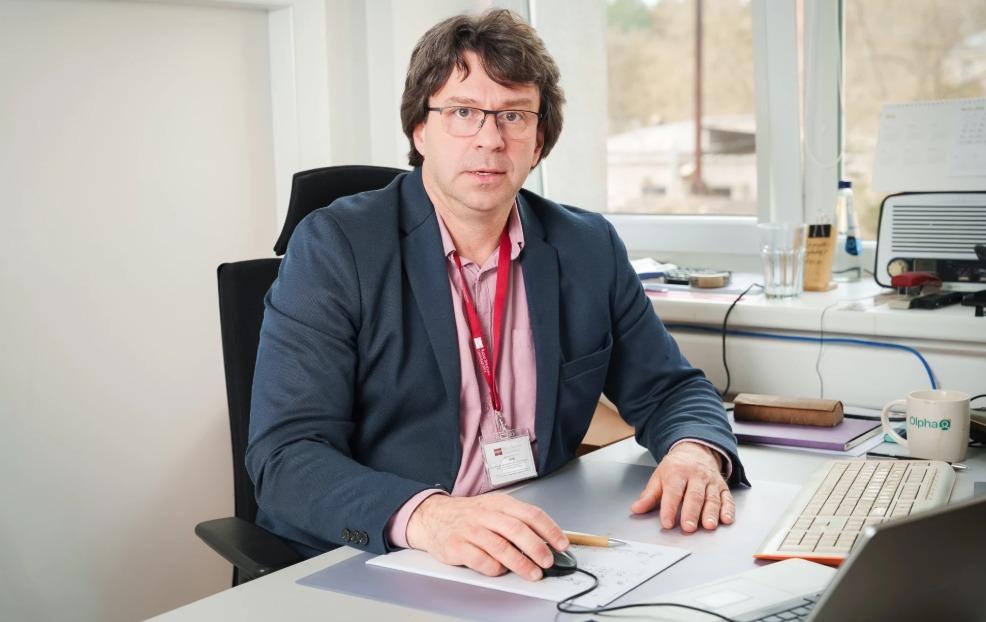
There is no reason to ask the question and philosophise about whether climate change exists or not. It is unequivocally clear that it does and will continue to exist. It has begun and will certainly continue — this must be accepted. The only question is the time frame or period in which it will take place. There are several things that people need to take into account in this regard, both in everyday life and in the working environment, explains Ivars Vanadziņš.
First of all, it is clear that in our latitudes the surrounding environment will become both hotter and colder. Last winter, too, Riga experienced six consecutive weeks of relatively cool weather, without snow or severe frost. It was a strange situation, a good example of climate change: airflows are changing, and weather conditions are becoming more extreme.
It should be taken into account that both heat and cold periods will become more frequent and longer, and we will need to adapt. In residential and working environments, this means that adaptation to the new temperatures will be necessary, and both residents and employers need to think in good time about energy consumption and building insulation, because everything will become more expensive. Discussions about whether this will happen are simply unnecessary, the professor believes.
Dust Everywhere!
The second aspect that must be seriously considered in relation to climate change is air pollution. Unfortunately, many people in Latvia still fail to notice the close interaction between these two factors. Ivars Vanadziņš explains: “When there is drought and heat, there is more dust. We observed this, for example, during the three-week heatwave, when in the final week everything was covered in dust, especially on rural roads. What does this mean for people? Anyone who has chronic conditions will experience more flare-ups, and those who do not will have a greater chance of becoming ill with something. This should be discussed more! Air pollution is one of the factors we have not talked about much in Latvia.
An estimate by the European Environment Agency shows that in Latvia, 1,700 people die prematurely from air pollution each year. If up to 150 people die in road traffic accidents in Latvia each year, then ten times more die from air pollution! We talk quite often about deaths in road traffic accidents, but much less about deaths from air pollution. Climate change will significantly alter air quality — dust and everything else that is in the air.
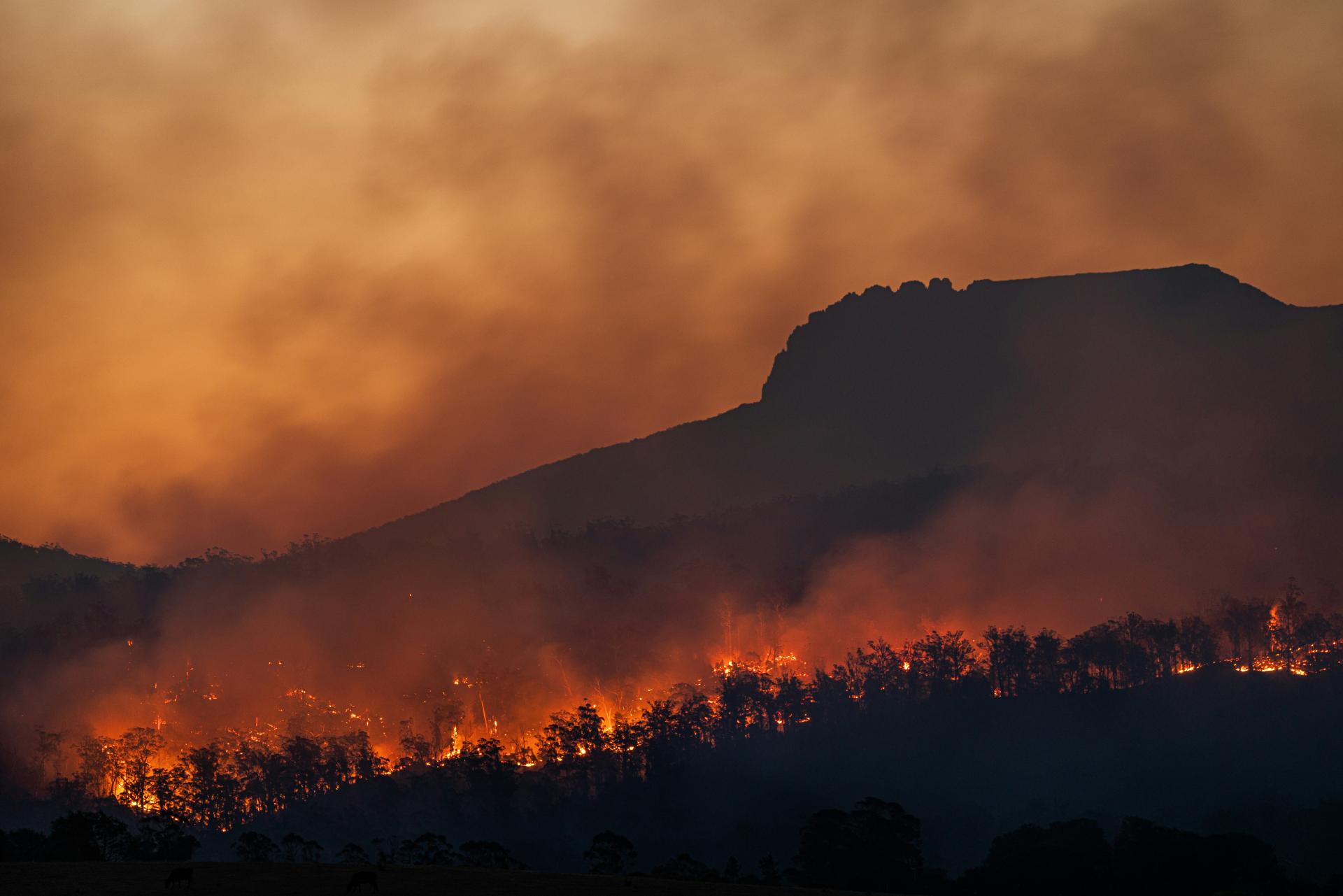
For example, if something is burning somewhere, there will be more smoke. Last summer, air quality was very good, but a couple of years ago, when forests in Scandinavia were burning fiercely and, because of the northerly wind, air quality in Latvia deteriorated, we felt it. A cloud from Sweden, 340 kilometres away, reaches us in three hours. It all depends on wind speed, but essentially it is a matter of a few hours. Such fires will become increasingly frequent. The State Fire and Rescue Service will have to devote enormous efforts to extinguishing forest fires and providing assistance. They must be prepared to deal with these emergencies with major resources.
We also have Saharan dust. It was in Moscow as recently as a month ago. We could not directly feel it, but the dust was clearly everywhere. The Sahara is 5,000 kilometres away, and its dust can easily reach us.”
Cholera, Ticks and Legionnaires’ Disease
The third way in which we experience the impact of climate change on health is related to changes in flora and fauna, biologists point out. For example, species are appearing that had not previously been observed here. In such conditions, invasive species thrive and spread more rapidly.
“For example, if something did not grow in Latvia before, it can now grow here — a tree, a plant or an animal,” says Ivars Vanadziņš. “This happens slowly and gradually, but very concretely. For example, ticks. A new species has appeared, the so-called meadow tick. It is a much greater carrier of diseases than the ticks that had multiplied here until now. A temperature increase of one or two degrees, and they enter our environment. As a result, there will be much more tick-borne encephalitis or Lyme disease. In practice, this is now inevitable.
The same applies to many other things, for example Legionnaires’ disease. Its bacterium, Legionella, mainly lives in water pipes and also likes ventilation systems. Because of climate change, we need more ventilation systems and air conditioners. This means that we not only have to install these systems, but also take care of their cleaning, disinfection and maintenance, which we tend to forget. Until now, Legionella did not live in these systems because it was simply too cold, but now the bacteria are starting to live in them; they need temperatures of plus 28 degrees. This is a problem we had not dealt with before. In Spain, there are no problems with tonsils and runny noses. Spaniards simply know how to manage all this and are surprised by our problems, which they have not experienced.
Conditions are also emerging in which new infections appear. We may encounter old, previously disappeared diseases, such as cholera or other older diseases associated with heat and humidity. Such cases occurred, for example, during the earthquake in Haiti, when people died in the earthquake and tsunami, but afterwards there were even more victims because of the cholera caused by the natural disaster. If our hospitals are not prepared for such emergencies, we will not be able to care for all patients, and many people will die because there will not be enough resources. So this is all about preparedness. If we do not prepare for these infections and extreme events, the consequences will be much more severe.
If there are more infections, we will use more disinfectants and take additional measures to address the problems, but if we do not do so, diseases will spread more rapidly.
This is a very practical matter that must be taken into account, for example, in relation to ventilation systems. I have already mentioned that many homes do not have modern ventilation systems. Newer buildings have them, but in older buildings they are very difficult to adapt, because people do not think about the fact that they need to be maintained and cleaned.”
Different Storms
Another thing we experience in relation to climate change is extreme weather. Of course, there were storms, floods and strong winds in the past as well, but they were different from today. People say that storms have always existed and are nothing unique. Of course, yes. However, they are no longer the same as before. There are no longer so-called winter storms. There are storms in winter now, but they are no longer as destructive, the professor explains.
There are more storms in summer and autumn, when trees have leaves, and therefore they cause much greater damage. They may be less powerful, but they are far more destructive to power lines and everything above ground. If many trees are not broken in winter, then in summer, when trees have leaves, this happens much more often. What does this mean? It means that employers and employees must be prepared for such events, which will now occur much more frequently. The problem is that because of a fallen tree you cannot get somewhere, or an ambulance cannot reach the location. And the second problem is that someone has to clear it all away. We want the internet and television restored within a few minutes, and if that does not happen, we start shouting.
Previously, in each region, one emergency crew was enough for Latvenergo, but now four or six will be needed to eliminate all the damage quickly. Of course, they will not have work all the time, but when something happens, it happens suddenly and on a large scale. And such crews cannot be trained in two minutes. This means that this will require major expenditure, more work and so on.
Heatstroke
“I have already mentioned that climate change creates a greater risk for those who have chronic diseases. They also have a much higher risk of developing illnesses caused by heat,” says Ivars Vanadziņš. “Heat affects all cardiovascular diseases, while air pollution affects lung diseases. There are studies showing that, for example, heatwaves in Scandinavia cause many more illnesses and increased mortality, which immediately increases the number of emergency medical calls.
This means that during these “peak hours”, hospitals need more doctors and nurses. This must be planned, and work schedules must be adapted, because emergency departments will have many more patients. In Latvia, in the healthcare sector, we often live by the principle of simply surviving, while recognising that the situation is bad. But in Europe, where there is a normal patient flow, it is understood that during these heatwaves hospitals need twice the capacity in their emergency departments. Otherwise, it is not possible. They simply need it. Mortality during this period is very high, and this affects people’s daily lives.
I recently attended a seminar at the State Labour Inspectorate on heat in the working environment, and we realised that young people do not even know what heatstroke means or how to act in such a situation. We lack the knowledge of how to act and how to be prepared for such situations.
Last year, I think, there were not so many such events, but the year before there was a long heatwave in August, with a tropical night when the temperature did not fall below plus 21 degrees at night. It seemed wonderful, but for people it was not pleasant; they felt very tired.
One of the aspects we do not think about is public transport timetables. For example, in hot weather, the manager says: we will start work early in the morning and finish at lunchtime. A person opens the Rīgas satiksme timetable and sees that the first bus is only at 6.41 in the morning. How can they get to work, for example, by seven in the morning? Municipalities need to be ready to change bus timetables quickly.”
Climate Refugees and Mental Health
“I was in Spain, in Barcelona, where it was plus 36 degrees during the day and plus 29 degrees at night for several consecutive days. People were completely exhausted. We are not suited to this. That is why many people also do not feel well psychologically, because they have not slept or rested,” continues Ivars Vanadziņš.
“This extreme heat also affects what we are seeing in the Middle East. During heatwaves, people cannot make rational decisions because the heat interferes with their ability to do so. It is completely impossible to remain calm and emotionally balanced there. In cooler regions, people are calmer and more balanced.
Speaking about migration, we place little emphasis on the problem of “climate refugees” — we talk more about war, economic and political refugees. But climate is one of the main aspects driving migration, because there are regions in the world that are gradually becoming uninhabitable. This means that people there cannot grow crops or raise livestock; everything is destroyed. This is traumatic for people. We can see that many regions of the world are becoming uninhabitable. Making them habitable requires enormous investment. A clear example is the United Arab Emirates (UAE), where it is impossible to live without vast amounts of money. They need to desalinate water, provide cooling and so on. If they did not have money, they would simply die after a short time. Without oil, they would have become extinct long ago. In the middle of the last century, only a very limited number of Bedouins lived in the territory of the UAE.”
Floods and Fungi
A Threat to the Lungs
“Speaking about dust, there is another problem. Dust consists of various particles (soil and plant particles, bird feathers and other materials), as well as various chemical compounds, such as nitrogen dioxides, which enter the lungs and can cause serious health problems, such as lung cancer.
The second problem is in the air. We have ozone and ultraviolet radiation, which create chemical reactions. As a result, photochemical smog forms and enters our lungs. This is by no means simply clean dust; it contains microparticles, soot or hydrocarbons. Most of these particles are dangerous to human health.
We are not talking here about a person immediately dropping dead after taking three breaths. These diseases develop gradually — over five, ten or fifteen years. If you live in such an environment for a long time, you do not see the immediate consequences; it seems to you that everything is fine and that there are no problems. But in reality, it means that you will die a year earlier than you would if you lived in a clean environment. It is unfair, but it is a reality we cannot ignore,” the professor concludes.
The project “Climate Course” — SIA “Izdevniecība ‘Rīgas Vilņi’” public awareness-raising campaign on climate neutrality and green energy in Latvia — is financially supported by the Emissions Allowance Auctioning Instrument.