During the spring and summer months, when everything is blooming and flowering, allergy symptoms intensify for many people. Pollen in the air can cause both mild discomfort and serious health problems.
To help people predict potential risks in a timely manner, researchers at the University of Latvia, in collaboration with partners in Europe, have developed the mobile application “PASYFO”, which predicts individual reactions to pollen concentration in the air.
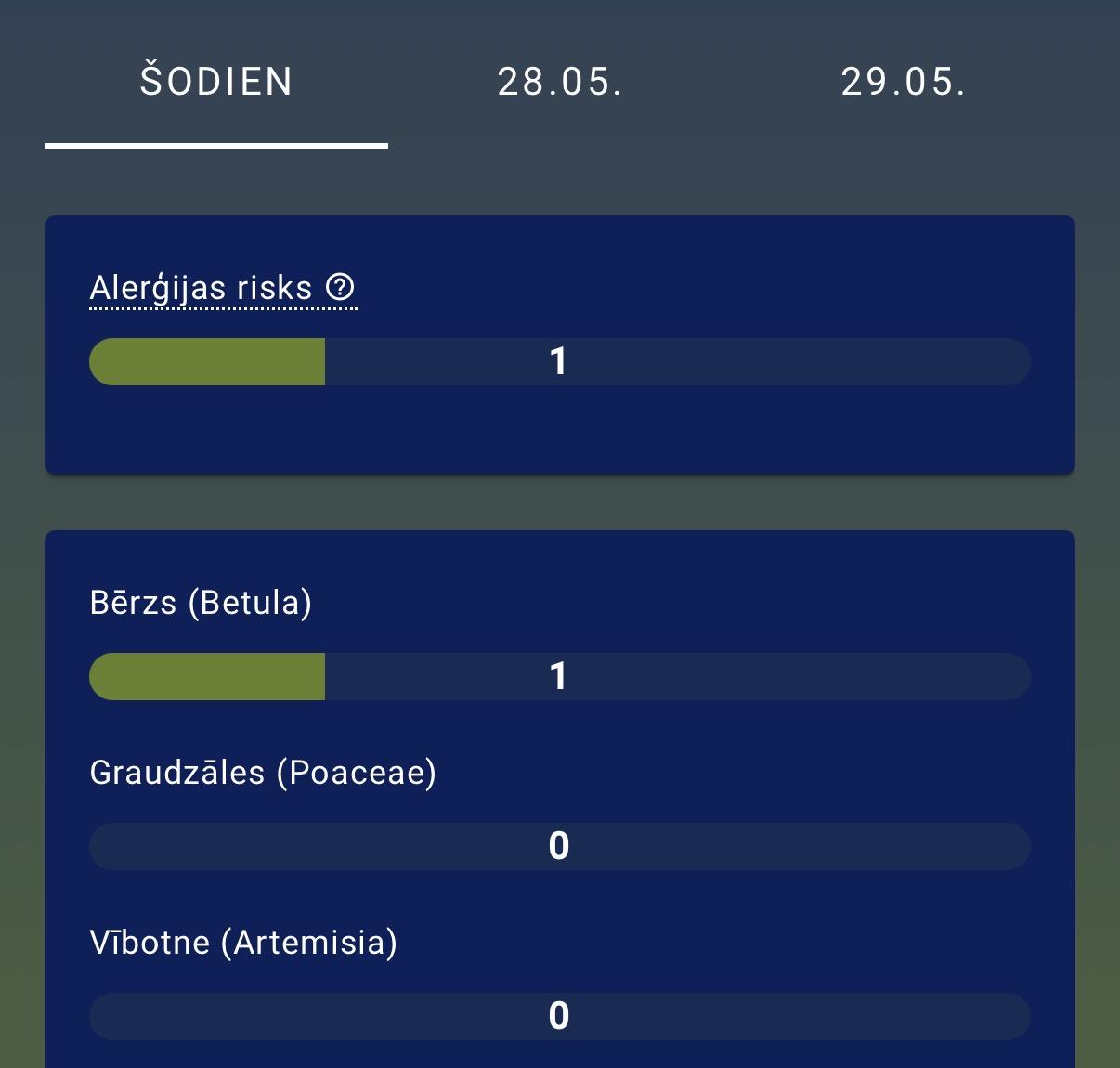
It is possible to view an allergy risk forecast
The application was developed in Latvia several years ago in cooperation with foreign colleagues of the University of Latvia. It analyzes the concentration of pollen in the air and provides personalized forecasts, helping users plan their daily life.
The leading researcher of the Faculty of Exact Sciences and Technology at the University of Latvia, Olga Sozinova, explained: "Everyone has their own reaction; for example, a concentration of ten pollen grains per cubic meter is little for one, while for another it is already a lot."
The researcher emphasized that “PASYFO” is not just an application, but a whole system. To receive a personalized forecast, the user must enter data about their well-being for at least seven days.
It is also possible to use a general allergy risk forecast, which is based on data entered by other users.
The application also provides information about allergenic plants – what they look like and when they bloom. Users can also select the allergens most relevant to them, which are included in the individual forecast. The system allows viewing pollen forecasts, information about plants, and a personalized or average-data-based allergy risk.
The mobile application is available free of charge to any smartphone user, and the authentication process is simple. After registration, users can access all main functions.
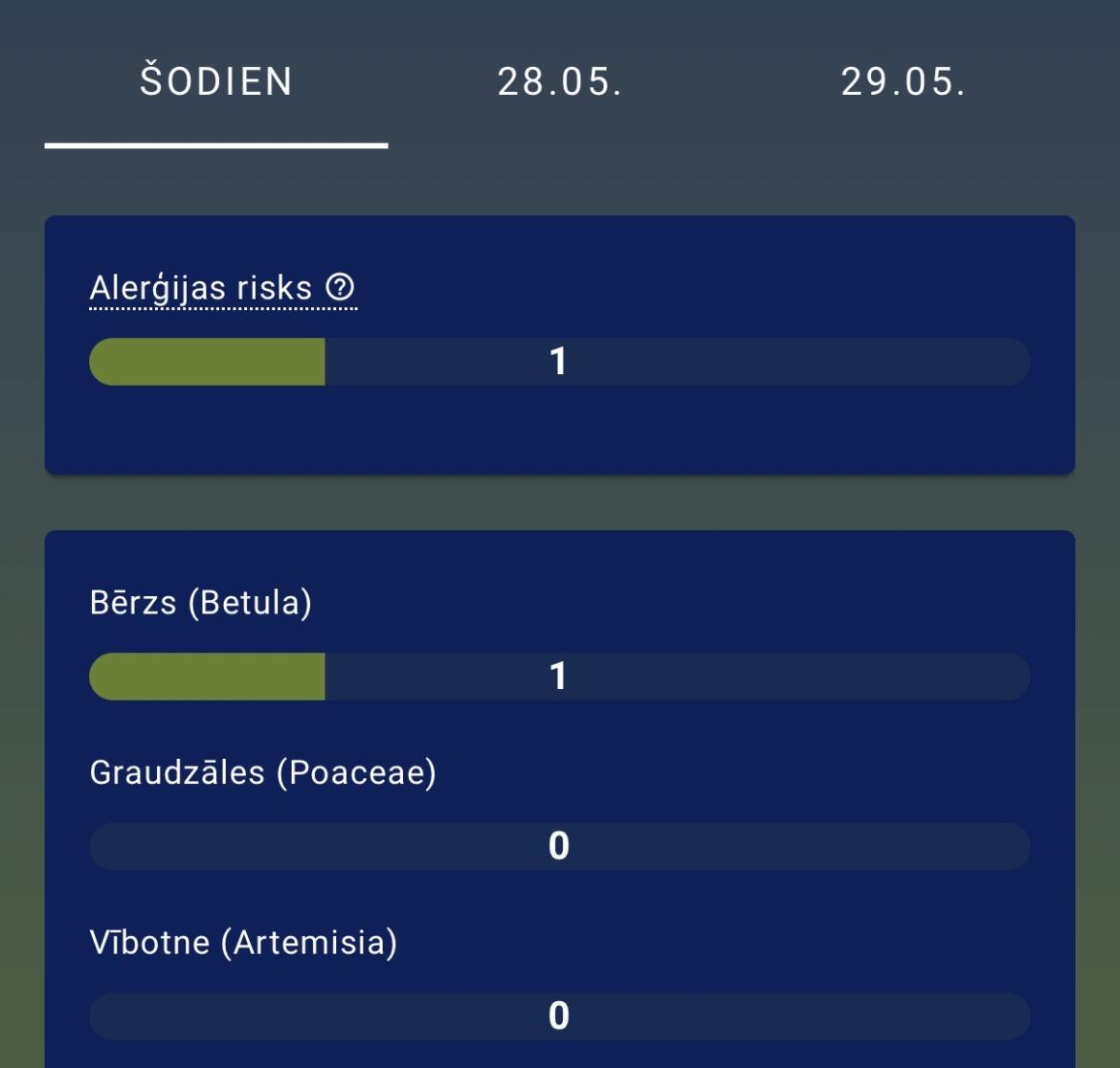
The application displays the allergy risks for the specific day and the pollen concentration. These are calculated taking into account pollen, meteorological, and air pollution data.
The color intensity in the application indicates the risk level – the brighter the color, the higher the danger. The system also takes into account pollen transport from other territories and the information entered by users about their well-being.
Allergies affect up to 40% of the population of Europe
Allergy can appear at any age and manifest at different stages of life. One of the most common forms is pollen allergy, which affects up to 40% of the population of Europe. Allergist Signe Puriņa said: “Symptoms vary from mild to very severe.” In milder cases, it may be itchy eyes, sneezing, or a blocked nose, but for some patients allergic asthma also develops. The doctor indicated that cross-reactions are also possible, for example, itching in the oral cavity when eating raw fruits, vegetables, or nuts.
As the most common seasonal allergens in Latvia, alder, birch, hazel, and various grasses are mentioned.
Specialists emphasize that it is important to record symptoms in a timely manner, their intensity, and to consult about them with a general practitioner or an allergist. Puriņa acknowledged that patients and doctors evaluate the application positively, as it helps to understand symptoms, predict potential risks, and plan daily activities. The application is especially useful for patients who use medications episodically, as the personalized forecast helps to prepare in time for possible allergy manifestations.
At the same time, it is reminded that the information available in the application is intended for personal use only and does not replace a doctor’s consultation, allergy tests, or prescribed treatment.