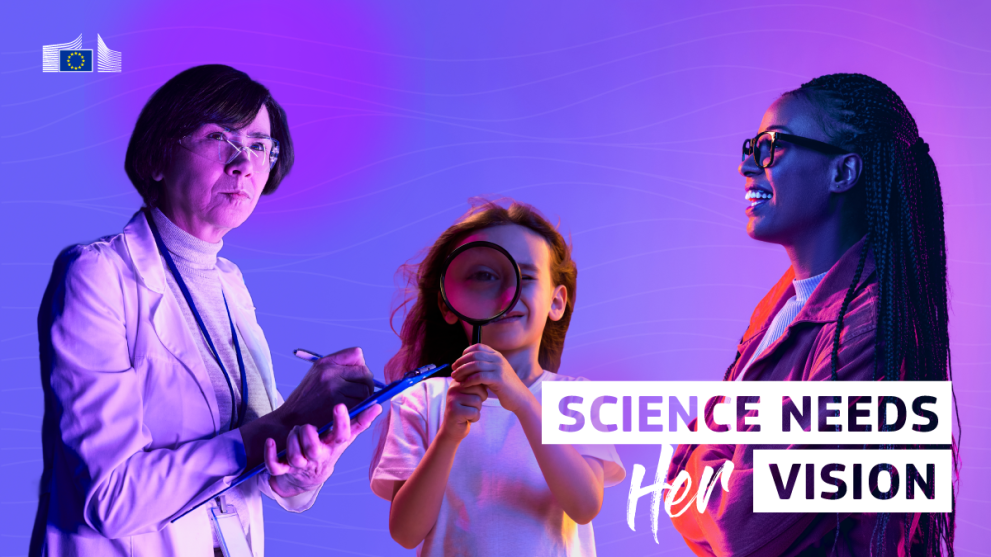
The International Day of Women and Girls in Science is a great opportunity to celebrate their achievements and highlights the need to encourage and support more young girls and women to get involved in research.
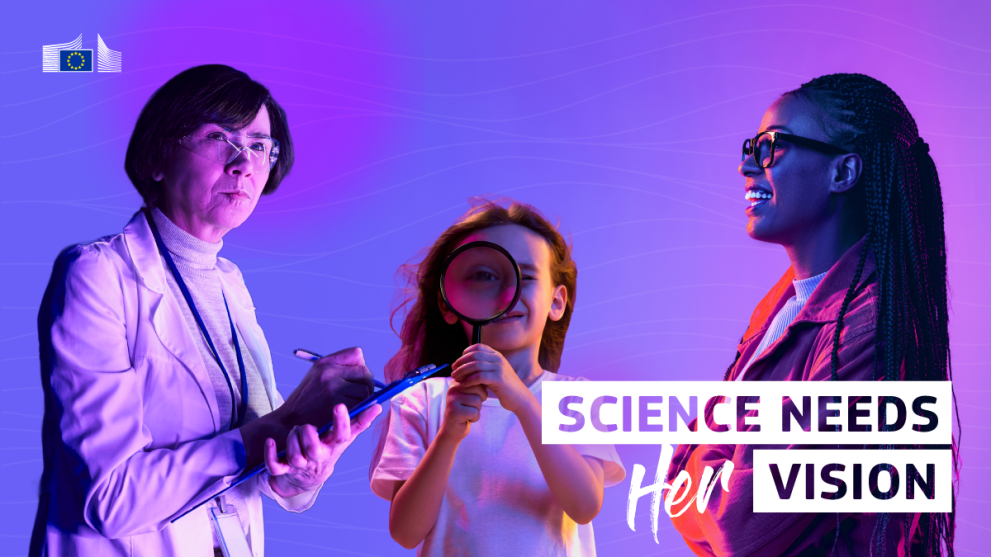
Every scientific discovery, breakthrough, and innovation we celebrate has been shaped by brilliant minds.
However, the minds with more opportunities to shine have predominantly been male. While women constitute 48% of doctoral graduates in the EU, they represent only one third of the total number of researchers in Europe. According to the UN, female researchers also tend to have shorter, less well-paid careers.
Though progress has been made, women remain underrepresented in many fields, in senior academic and decision-making positions. These disparities are driven by challenges such as unconscious bias, a lack of mentorship, and limited access to resources - barriers that continue to hinder the full participation of women in research and innovation.
The International Day of Women and Girls in Science on 11 February is both a celebration and a call to action to inspire young girls and women around the world, to ignite their curiosity and creativity - and to reflect on how best to support their scientific aspirations.
The European Commission is committed to upholding gender equality - one of the core values of the EU.
Gender equality plans
Gender equality is a priority of the European Research Area (ERA), with actions focused on driving institutional change in research careers at all levels. In 2022, this commitment was strengthened further, with all higher education establishments, research organisations, and public bodies from Member States and Associated Countries applying for Horizon Europe funding now required to implement a Gender Equality Plan (GEP).
These plans must address several areas, including work-life balance, gender balance in leadership and decision-making, gender equality in recruitment and career progression, integration of an inclusive gender dimension into research that acknowledges intersectionality, and measures against gender-based violence.
Learn out more about Horizon Europe guidance on GEPs and frequently asked questions.
EU-funded projects strengthen the gender equality balance in STEM
Strengthening women’s participation in Science, Technology, Engineering and Mathematics (STEM) is not only a matter of equal opportunities and social justice, but also crucial to meet pressing societal challenges, such as the green and digital transitions. According to the “She figures 2021” report, women remain underrepresented among doctoral graduates in most narrow STEM fields.
To tackle this imbalance, the EU is funding research and innovation projects aimed at increasing young girls’ participation in STEM activities, improving the recruitment, retention and promotion of women in science across the EU and beyond.
The Horizon Europe project STREAM IT tackles barriers for underrepresented groups in STEM, focusing on young girls, creating inclusive educational tools. The project aims to provide widely applicable solutions for various stakeholders, including workshop series for supporting girls to orient towards STEM, hands-on activities at science centres and museums, mentoring programme, and establishing collaborative networks on national and international level.
To further boost interest and female participation in STE(A)M (where “A” stands for creative thinking and applied arts), while deconstructing gender stereotypes, three EU-funded projects - Road-STEAMer, The SEER and SENSE - are collaborating to develop and deliver a roadmap for science education in Horizon Europe, in synergy with the EU’s Erasmus programme.
STEAMBrace aims to address the existing gender gap in R&I by leveraging the potential of STEAM education and encouraging women’s participation. The project plans to achieve this by fostering networking among stakeholders, data collection, and training. STEAMBrace also strives to establish a European-wide alliance on STEAM education.
Find out more about STREAM IT, Road-STEAMer, The SEER, SENSE and STEAMBrace.
Meet some of the inspiring women behind European R&I
EU actions to eliminate gender inequalities in research and innovation have already yielded significant results, as seen in the stories of several remarkable women in science.
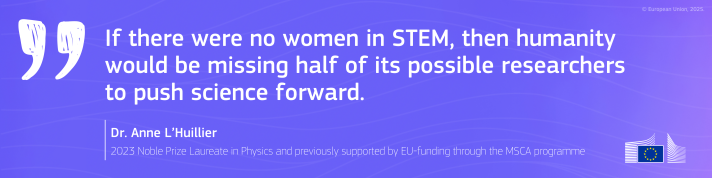
One such example is Dr. Anne L’Huillier, the 2023 Nobel Prize Laureate in Physics, who works on the interaction between short and intense laser fields and atoms. She credits the MSCA programme’s early support for kickstarting her career.
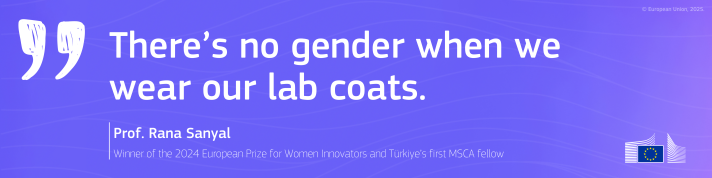
Prof. Rana Sanyal, the winner of the 2024 European Prize for Women Innovators and a leading expert in biotechnology, is another prime illustration of the vital role EU funding plays in supporting women researchers.
Alba García-Fernández and Erika Pineda Ramirez are other two EU-funded women researchers dedicated to developing more effective treatments for cancer patients. In honour of the International Day of Women and Girls in Science, they offer inspiring advice for the next generation of female researchers.
“The contribution of women in science is invaluable. We have so much talent and ideas to offer. As Marie Skłodowska-Curie once said: 'I was taught that the way of progress was neither swift nor easy.' So, my advice is: believe in yourself and go after what truly excites you. Stay curious, keep learning!” - Alba García-Fernández, MSCA fellow.