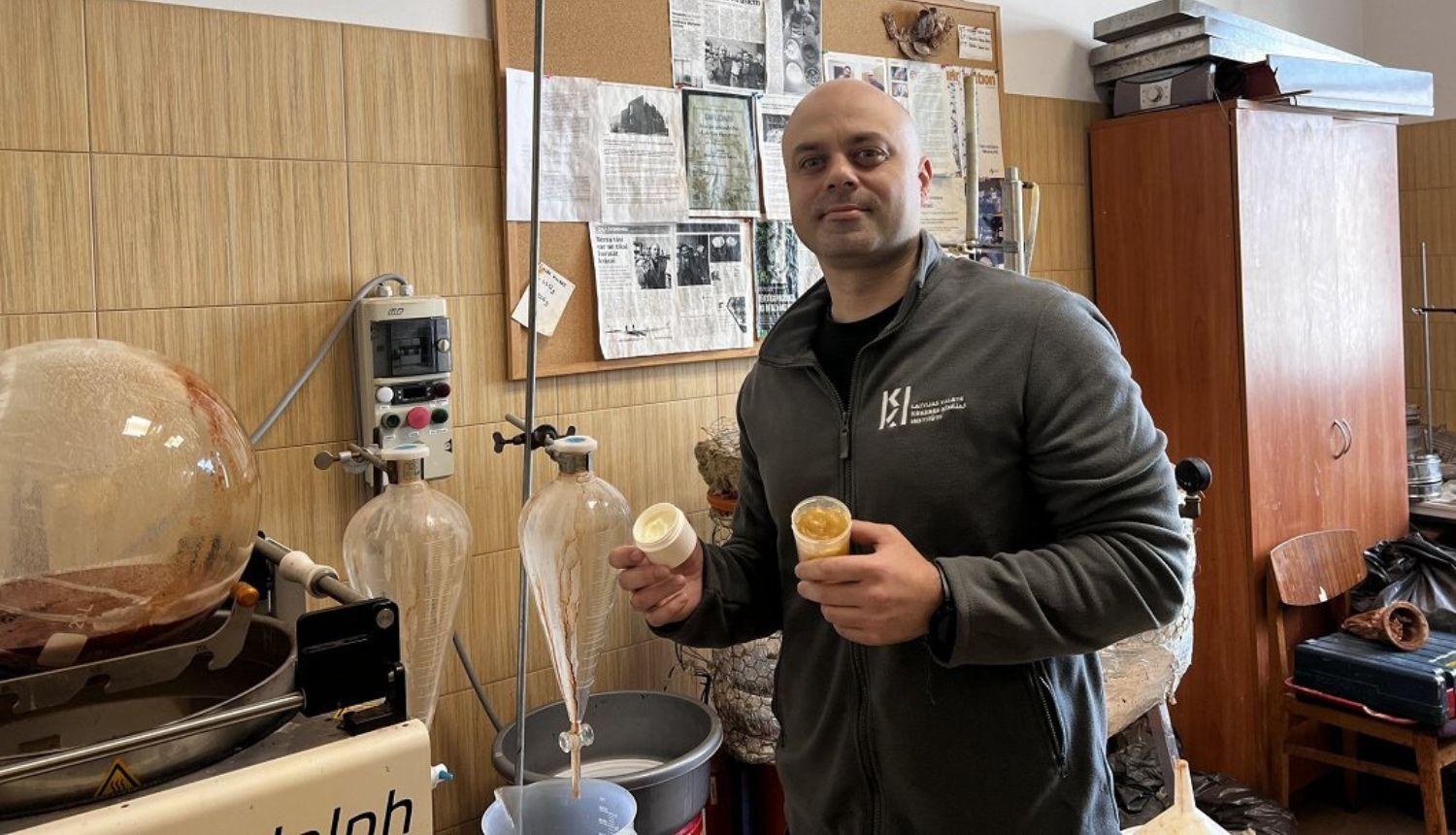
It moisturises the skin, heals wounds, and its ingredients are so healthy for humans that the cream could even be eaten. This is how researchers at the Latvian State Institute of Wood Chemistry describe the innovative birch bark cosmetic cream currently in development. The project, launched this year, builds upon earlier research conducted several years ago, during which Latvian scientists made unique discoveries and created innovative raw materials and products.
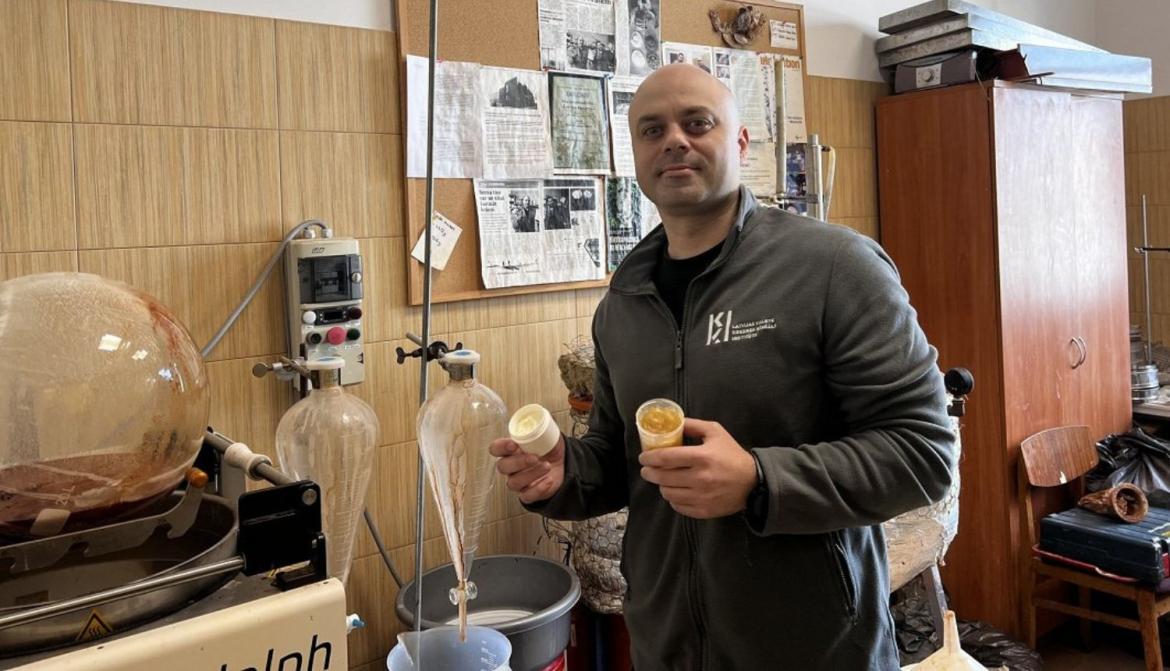
"This is a straightforward process by which we can eventually obtain a cream, or a Pickering emulsion. So, we blend," explains Aigars Pāže, leading researcher at the Latvian State Institute of Wood Chemistry, as he adds water to a honey-like mass, or oleogel – a mixture of sunflower oil and birch bark extract particles. The prototype hand cream is prepared using nothing more than a regular kitchen blender.
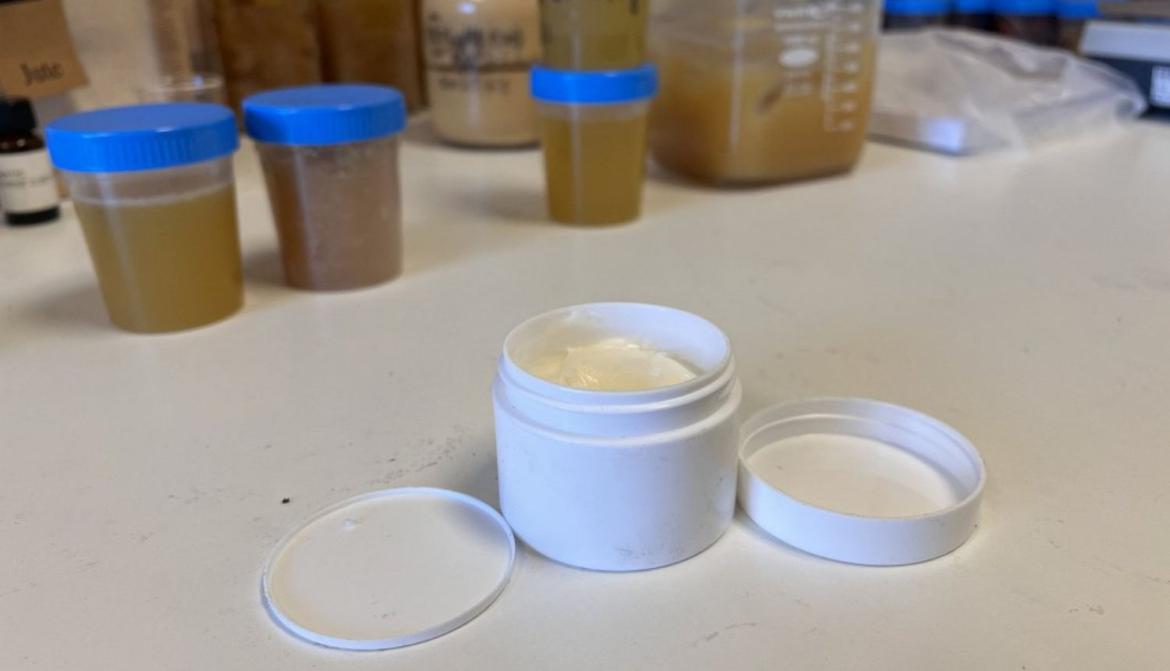
"Here we get a creamy substance. You can see right now a white cream mass that can be used as a base for creating different types of creams," Pāže notes. On his table are several containers filled with a thick, rich, butter-like substance resembling room-temperature butter: "This consists of only three components, so its stability still needs to be improved. But you can already see the main principle – we can obtain a stable emulsion. Later, other ingredients can be added, perhaps to enhance moisturising properties."
The birch bark particles are so fine that they cannot be seen or felt on the skin. At the same time, they ensure a stable harmony between oil and water.
"Birch bark, in terms of its chemical structure, is a rare natural raw material, consisting almost entirely of two components, one of which is highly valuable and surprisingly multifunctional birch bark extract. These extracts are unique in that their largest proportion is made up of a single chemical compound called betulin. Collectively, they possess antioxidant, preservative, emulsifying, and gelling properties, as well as a wide spectrum of biological activities beneficial to human health. One of the most notable is wound-healing for the skin, which has been demonstrated and internationally confirmed in extensive clinical studies," Pāže emphasises.
Producing a cream from birch bark takes about four days. The project, which will run until the end of April 2028, aims to develop and assist a cosmetics manufacturer in creating three creams – for hands, face, and sun protection – suitable for people of all ages.
Although birch bark is already used in cosmetics, the ecological product being developed at the institute is unique, Pāže stresses:
"We are researching how to replace the traditional synthetic – and often harmful – emulsifiers used in the cosmetics industry with an ecological alternative derived from birch bark extracts. In our case, we have developed methods to process these extracts into wonderful particles in a highly efficient, simple, and cost-effective manner. This makes them perfectly suitable as an emulsifier for producing eco-bio cosmetic creams. I believe this represents the next level of cosmetics – the next generation of raw materials – which is what we are working on."
For cosmetics companies, the most important thing is to understand what consumers actually need. How to achieve it, and with which innovations, comes second. This is the perspective shared by Lotte Tisenkopfa-Iltnere, founder and CEO of Madara Cosmetics:
"I definitely believe it is highly valuable to create innovations based on solutions found in nature. This is important because sustainability is becoming increasingly relevant, both in consumers’ awareness and due to regulatory requirements. There are many different innovations, but not all of them hit the target – in the sense of being able to provide the exact right solution to the right audience at the right moment."
As for this birch bark cream, consumers can expect to see it on store shelves in just over two and a half years.