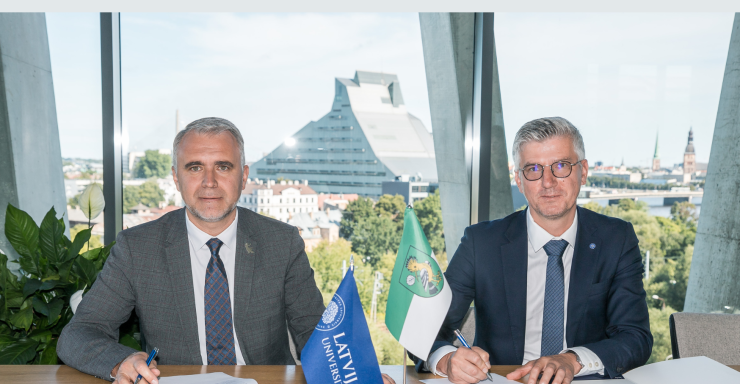
In collaboration with the University of Latvia, Daugavpils University coordinates the Latvian National Node of the GUIDE consortium, which serves as an instrument for promoting scientific integration in Europe by providing open access to high-quality research infrastructure.

Various scientific and development bodies, such as the OECD, have recognised that today there is a lack of a single data source that would help conduct a comparative analysis of the well-being of children and young people across Europe. Some European countries, such as France, Denmark, and Germany, regularly conduct longitudinal studies on children and young people. Although they are widely recognised, the data obtained cannot be compared because they are fragmentary, i.e. covering different questions, conducted at different times, in different age groups and only in a few countries. The GUIDE (Growing Up in Digital Europe), included in the ESFRI roadmap, will be the first comparative European cohort study on the well-being of children and young people from birth to 24 years of age. It will form the basis for the development and improvement of child, young people and family well-being policies across Europe, it will provide a better understanding of social processes across Europe, including Latvia, and will allow for comparisons between different countries.
By participating in the GUIDE consortium, Latvian researchers will have the opportunity to contribute to an ambitious ESFRI roadmap study, expanding cooperation and increasing scientific capacity. Latvian policymakers will obtain reliable and comparable data, which will allow them to adopt best practices and ensure targeted use of funding in child and youth welfare policies. The total duration of GUIDE will be 25 years.
GUIDE is an accelerated cohort survey covering 9-month-old infants (cohort 2, starting in 2029) and 8-year-old children (cohort 1, starting in 2027). Both cohorts will be surveyed using a common questionnaire and data collection methodology, regularly until the age of 24. By surveying children from birth to 24 years of age, GUIDE will be an important complement to the existing ESFRI/ERIC infrastructures (ESS, SHARE, GGP). Research shows that early life experiences have a significant impact on later life course, so this cohort study is important to explain the patterns of life. The GUIDE consortium is made up of experts from various fields (sociology, psychology, economics, health sciences and social pedagogy, etc.), which ensures the interdisciplinary nature of the project.