
LU leading researcher Tatjana Pladere receives the “Optica Ambassador” title

Author
Labs of Latvia

February 27, 2026

science communication

The leading researcher at the University of Latvia (UL), Tatjana Pladere, has received the “Optica Ambassador” recognition awarded by the international professional society Optica to outstanding young leaders in the field of optics and photonics. T. Pladere is the first representative from the Baltic states to receive this distinction during the 11 years of the program’s existence.

Tatjana-Pladere.png
Latvijas Universitātes Eksakto zinātņu un tehnoloģiju fakultātes Optometrijas un redzes zinātnes nodaļas vadītāja un vadošā pētniece Tatjana Pladere
Foto: BalticPictures.lv

T. Pladere is the Head of the Department of Optometry and Vision Science at the Faculty of Science and Technology of the University of Latvia and a leading researcher whose scientific interests include mechanisms of visual perception, display technologies, and research methods for studying them. In 2021, she obtained her doctoral degree in Physics and Astronomy, defending her dissertation titled “Evaluation of Visual Efficiency on a Volumetric Multiplane Display.”

Alongside her academic work, she is actively involved in international professional organizations, promotes science, and supports young researchers.

In January of this year, T. Pladere received the University of Latvia Excellence Award “Young Scientist of the Year 2025,” recognizing her leadership, impact, and achievements in the field of vision science.

The “Optica Ambassador” title is awarded to young professionals who not only demonstrate excellence in their professional achievements but also actively contribute to the development of the professional community — providing mentorship, organizing educational activities, strengthening international collaboration, and inspiring the next generation. The 2026 “Optica Ambassador” cohort includes young professionals from the United States, Canada, the United Kingdom, Ireland, France, Germany, India, and Latvia.
 

Recommended articles

science communication

“Round Seems Sweet, Angular Seems Sour”: How Perception Shapes Our Sensory Experience

Our senses are constantly interacting, while our attention and thinking are also influenced by the environment and technology. In the programme "Latvia in Science", produced in cooperation with "Rietumu Banka", Professor Jurģis Šķilters, Head of the Perception and Cognitive Systems Laboratory at th…

Delfi.lv

October 15, 2026

science communication

Guidance Document on Science Communication and Research Culture

In October 2026, Science Europe, the association of European research organisations, published the guidelines “Science Communication and Research Culture”, aimed at strengthening the role of science communication within the research system and fostering public trust in science. AUTHOR(s): Rose…

Latvian Council of Science

October 14, 2026

science communication

A Conversation with a Person of the Future: Professor Bertels’ Bold Idea for Preserving Ever-Growing Volumes of Data

Do you remember using floppy disks to transfer data more than 20 years ago? Today, they seem like a distant relic of the past. Technology is evolving at an extraordinary pace, and many have wondered: what technology could withstand this constant change and remain useful for an exceptionally long ti…

Mariona Baltkalne

October 13, 2026

science communication

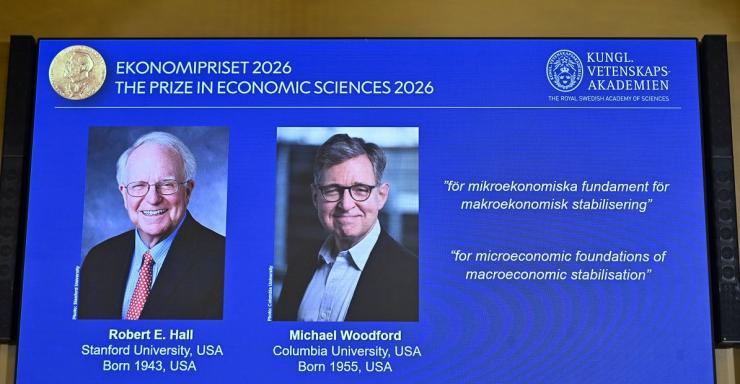
Nobel Prize in Economic Sciences Awarded for Research on Macroeconomic Stabilization

This year, the Nobel Prize in Economic Sciences was awarded to two researchers whose work helped explain how economic models can be rebuilt on microeconomic foundations rather than macroeconomic relationships, thereby restoring the role of stabilization policy. Their research demonstrated how the d…

Uģis Lībietis | Ieva Strazdiņa | Albīne Hlopņicka | LSM.lv

October 13, 2026