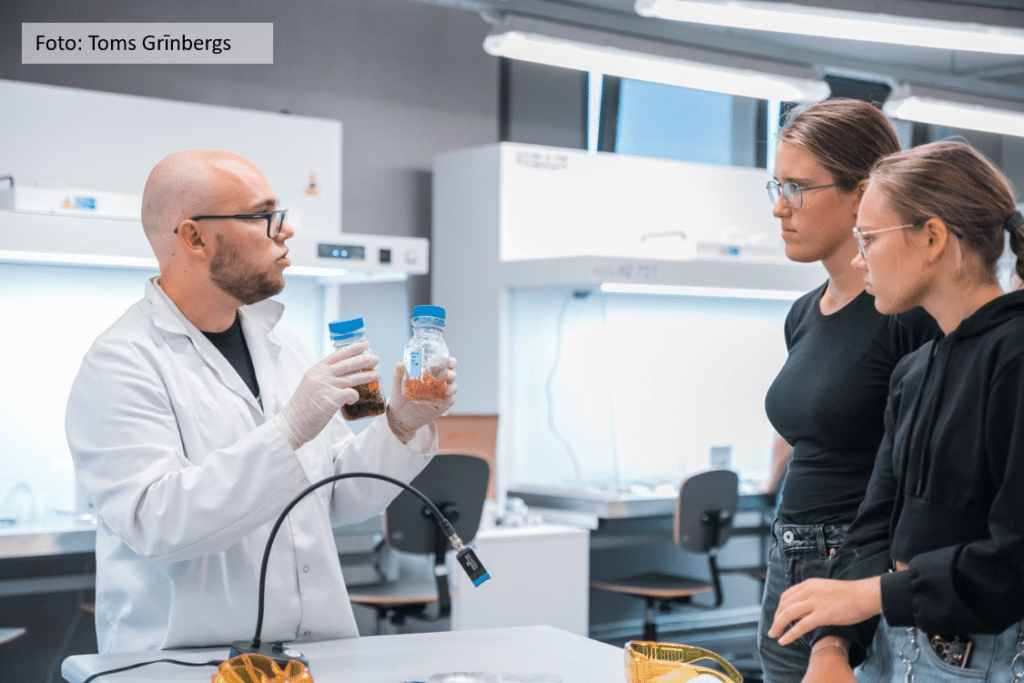
Dāvis Dūcis is a doctoral student and research assistant at the Faculty of Medicine and Life Sciences of the University of Latvia (UL). Dāvis works at the Latvian Collection of Microorganism Cultures, and his doctoral research focuses on whey valorisation using wild-type microorganism strains. Dāvis is also Chair of the UL Doctoral Council and an active participant and organiser of student events. To learn more about biology, doctoral studies and his sources of inspiration, we invite you to meet Dāvis in our “Meet the Young Scientist!” interview series.

Your research focuses on using microorganisms to obtain valuable products. How did you become interested in microbiology, and what led you to choose this field of study?
Interestingly, when I was younger, I would never have imagined that I would one day become a microbiologist. However, this path grew naturally out of my interest in nature, the environment and the processes happening all around us – including those taking place at a level that cannot be seen with the naked eye. As a child, I imagined that I would become a veterinarian, a nature conservation specialist or an archaeologist. Over time, my choice became clearer: I realised that veterinary medicine probably wasn’t for me, after watching far too many veterinary shows on Animal Planet. When it came to choosing between archaeology and nature conservation, the Young Geographers’ School helped me make up my mind, as I discovered that nature conservation appealed to me more. So, after finishing school, I enrolled in the Environmental Science programme at the Faculty of Geography and Earth Sciences.
My decision to pursue biology came unexpectedly – during a volunteer workday at the Botanical Garden, where I saw two biology professors (the Director of the Botanical Garden and the Rector of the University of Latvia) passionately debating the best way to remove cut tree trunks, while also demonstrating just how down-to-earth biology professors can be. When I started studying biology, I decided that through zoology I could contribute to nature conservation and soil preservation by researching soil mites. During my master’s studies, however, I moved into agrobiotechnology – with the idea of shifting from species conservation to improving species and finding a field where I could maintain my enthusiasm while continuing to grow professionally.
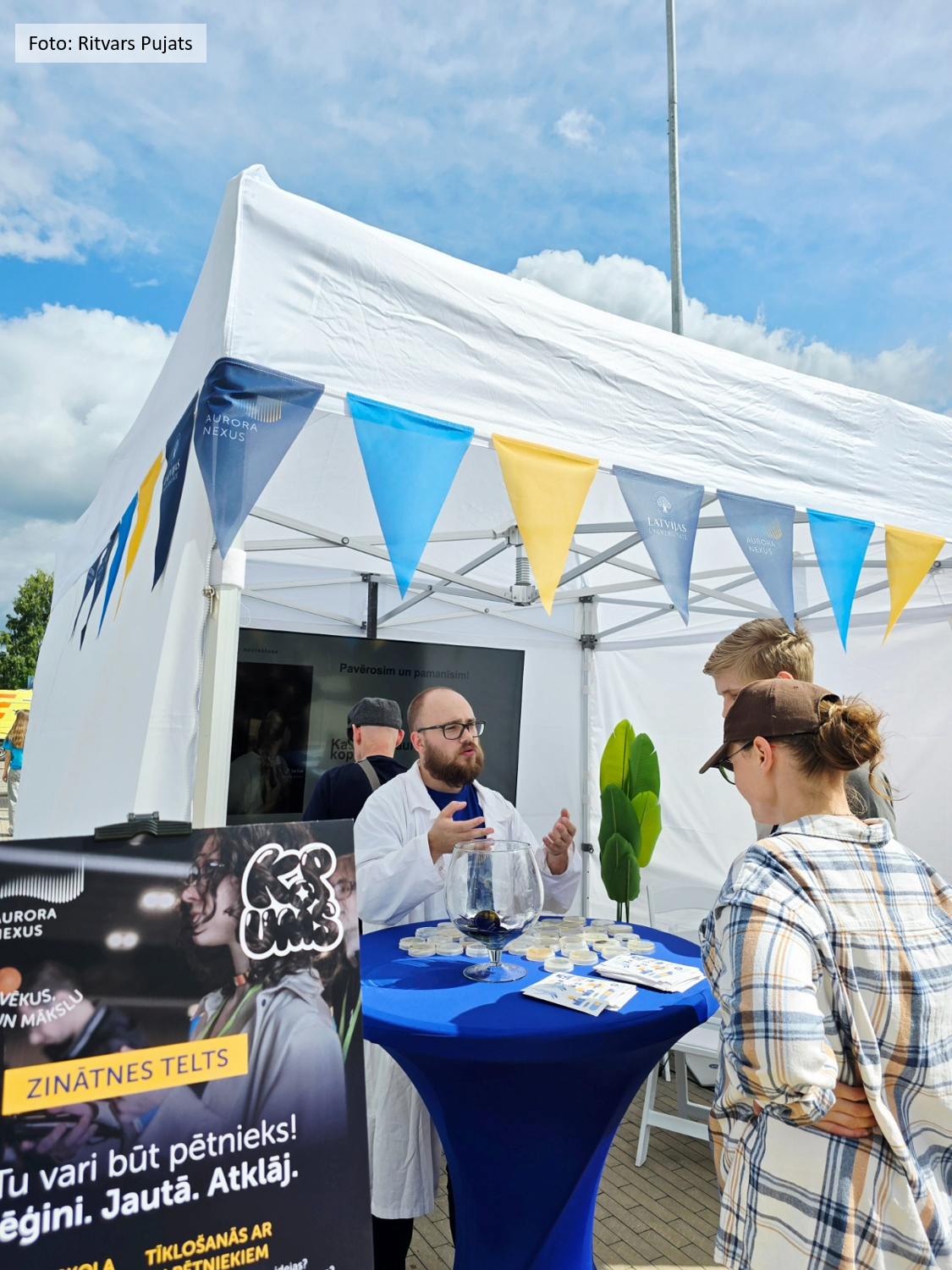
After completing my studies, I was offered the opportunity to join the Latvian Collection of Microorganism Cultures, even though I was not yet a true microbiologist at the time. Looking back, I realised that although I had studied very different subjects at different stages, they all had one common thread running through them – microbiology. It also brought together my childhood interests: nature conservation through the preservation and valorisation of microorganisms, archaeology through the search for new organisms in soil samples, and veterinary medicine through the development of probiotics to improve animal health.
How would you briefly explain why your research is important to society?
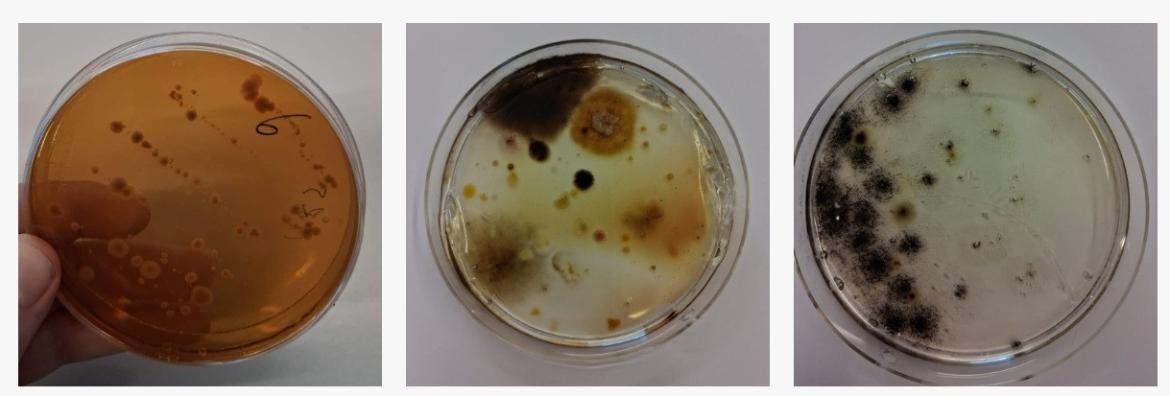
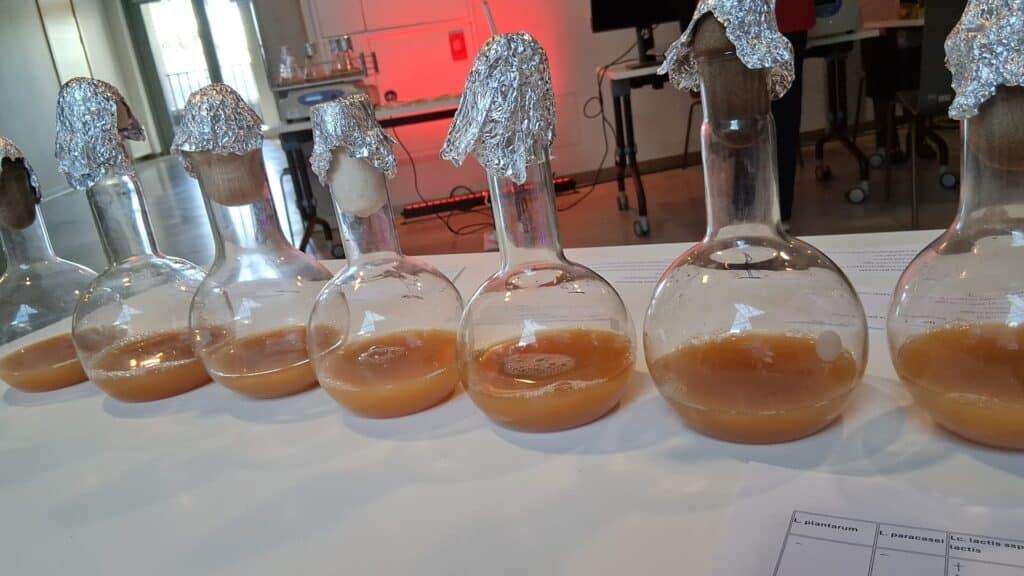
Cheese whey is produced in very large quantities by the food industry – approximately nine litres of whey are generated from one kilogram of cheese. If it is not properly managed, it can cause significant organic pollution in wastewater. At the same time, whey is not simply a waste product – it contains lactose, proteins and fats that can serve as a source of nutrients for valuable microorganisms. Lactic acid bacteria are particularly important, as they can transform these nutrients into peptides that can subsequently be used to develop new cosmetic or food products.
By studying these microorganisms, it is possible to identify strains that could potentially be used in the future to develop probiotic products or biological wastewater treatment solutions. The research helps shift the perspective on food industry by-products – from seeing them as a problem to recognising them as a resource, while also promoting the circular economy and more environmentally friendly solutions.
What motivates you in research?
What motivates me in research is tackling interesting problems and searching for solutions. I believe that, theoretically, every problem can be solved – or at least that it is possible to understand and resolve some part of it. Often, a complete solution is limited by a lack of technology, prior knowledge or an appropriate perspective. That is why I have always been drawn to exploring lesser-known fields and connecting new knowledge with previously identified problems. Even if newly acquired knowledge does not immediately solve a specific problem, it may prove useful for other ideas in the future. I am also motivated by the opportunity to meet knowledgeable people who have gone through similar processes of discovery and can suggest solutions, approaches or sources of knowledge that help further develop research ideas.
Biologists are sometimes divided into “green” and “white” biologists. Tell us where your research on wild microorganisms fits in, and what “colour” of biologist are you?
If we look at the traditional definitions of “green” and “white” biologists, I would be a distinctly “white” biologist who pretends to be a “green” one in my free time. This colour distinction comes from the fact that a “white” biologist is a researcher who spends most of their time in the laboratory, while a “green” biologist spends their time in nature, collecting data from forests, meadows and other environments.
In my opinion, the division into “green” and “white” biologists is quite outdated nowadays. Increasingly, biology requires combining both approaches: collecting samples in nature, observing the environment or identifying organisms, and then using molecular biology methods in the laboratory for more precise identification, such as genetic analysis.
So, if I had to say what “colour” I am, I would say a mix of white and green, with a touch of yellow to represent whey and lactic acid bacteria. Playing around with the colour picker in Google, I came up with this colour code: #DDE6A3.

Scientific work often goes beyond the stereotypical image of a highly specialised expert who sees nothing beyond their laboratory or the pages of books in a library. You are also actively involved in working with students and organising events (such as International Microorganism Day 2025). Why is it valuable for scientists to socialise, network and actively communicate with one another?
Science as a whole can be a rather solitary pursuit. In our daily work, when thinking about scientific ideas, we often end up talking only to ourselves and examining information we have obtained from research or learned from the knowledge available to us. By socialising with other scientists, we can train our minds to absorb new information and perspectives. Sometimes, it is not necessarily the idea you come up with as a scientist that will ultimately lead to the most logical outcome. The perspectives and ideas of other researchers can help you see a problem from a different angle and arrive at a better solution.
You have been active in the Student Council of the UL Faculty of Biology (BFSP) for several years and served as its Chair in 2020. Tell us about your experience in BFSP and the University of Latvia Student Council! What role does student self-government play in student life, and what were your priorities as Chair of BFSP?
I’ll start from the other side: student self-government gives you an opportunity to step outside the everyday routine of studying while remaining part of your academic community. That was also what motivated me to get involved in student life. It was fascinating to learn about the motivations and scientific work of like-minded colleagues, which you can discover through various student-organised events.
As Chair of BFSP, I had the opportunity to work during a particularly challenging period – right at the time of the COVID-19 outbreak. Therefore, my priority was to keep the team stable and ensure the continuity of our traditions. In fact, everything worked out, although, for me personally, the biggest disappointment was losing the biologists’ summer ball. This eventually evolved into what is now known as Bionedēļas, as it was not possible to create socially safe conditions, and the original tradition was not particularly popular among younger biology students.
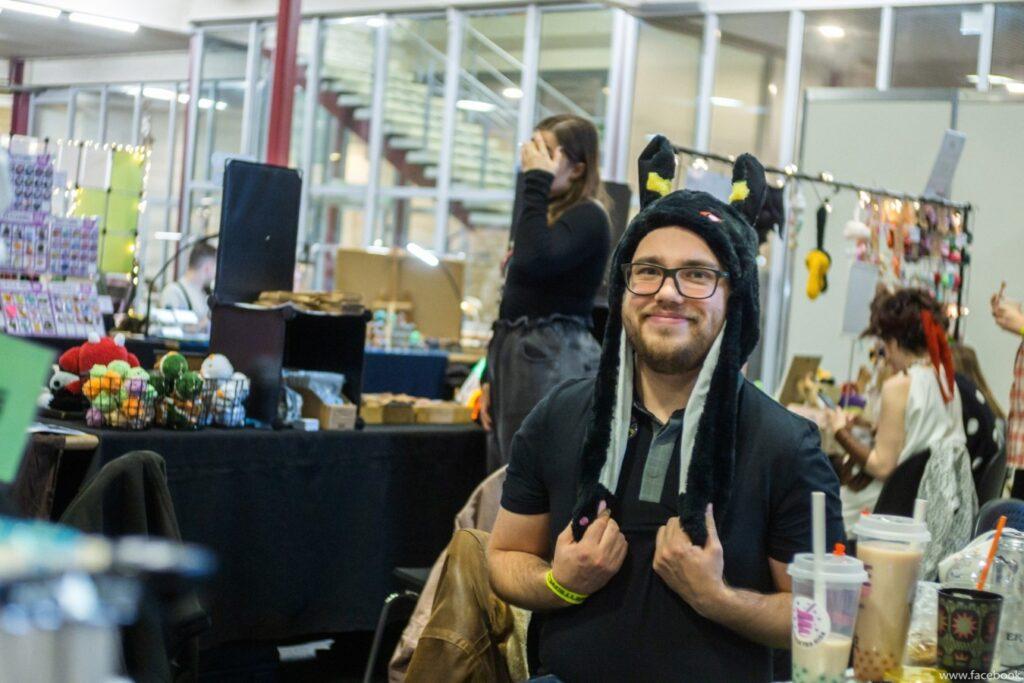
Through my involvement in BFSP and the University of Latvia Student Council (LUSP), I finally had the opportunity to overcome the shyness I had struggled with when I was younger and even take on the role of lead organiser at events. When I was younger, I would not even have considered participating in organising an event, and being its host would have seemed almost unimaginable. This experience taught me that events do not necessarily have to be led by extroverts. When organising an event, it is also important to have a well-planned strategy and to find a confident, outgoing person to take on the role of the main speaker.
LUSP gave me the opportunity to become more involved in representation through the UL Eco-Council and the Latvian Student Union. This primarily allowed me to meet many interesting people, including Gunta Kalvāne, who did a great job of promoting doctoral studies...
What motivated you to join the Latvian Young Scientists’ Association (LJZA)?
After working at the same university for a long time, you can develop a kind of comfort bubble that allows you to operate freely and confidently within a familiar environment. You know all the specialists in your field, and it is always easy to communicate with one another. Overall, it is a positive environment. However, when you have been working in the same environment for more than five years, stagnation can set in – everything is familiar, routines have developed, and the more complicated problems have already been solved. Everything starts to feel less interesting, so, in order to make everyday life more exciting, I started looking for organisations that might interest me. As luck would have it, the LJZA Summer School 2024 was held near where I was living at the time, and I thought, “Why not give it a try?” And here I still am.
You have participated in LJZA planning retreats several times. These annual events bring together the association’s most active members to work intensively on issues important to young scientists, while also strengthening their skills in science communication and advocacy. What do you remember most from these LJZA events?
The ethics working groups organised by Laila Silamiķele. I would never have imagined how interesting it could be to tackle academic ethics issues together with knowledgeable people. It convinced me that an Ombudsperson is an important part of the higher education environment – someone who helps resolve complex situations and promotes an academic environment based on ethics, integrity and mutual respect. I recommend that every LJZA member experience this at least once!
What is the most interesting scientific fact you have learned recently?
It turns out that in warmer countries, date palm seeds also have applications in food production. They are used in various yoghurts, cheeses and creams as value-added food ingredients, improving their prebiotic properties and increasing antimicrobial activity. This can help products maintain their quality for longer after processing, while also changing their taste and texture. It makes you wonder whether a new type of product could be developed using this food waste, although another dilemma would be where to get enough of the seeds!
What would you like to say or recommend to students who are currently considering pursuing a PhD?
I would recommend that every student take a year-long break between their studies before starting a PhD. This can help ensure that, by the time you begin your doctoral studies, you have a stable position on a research project or at least an opportunity to get to know experts in your field, which can help you better understand what you genuinely want to learn.
And find the best possible supervisor! You will be working with an expert in your field for at least three years, someone who can help you grow into a true scientist.