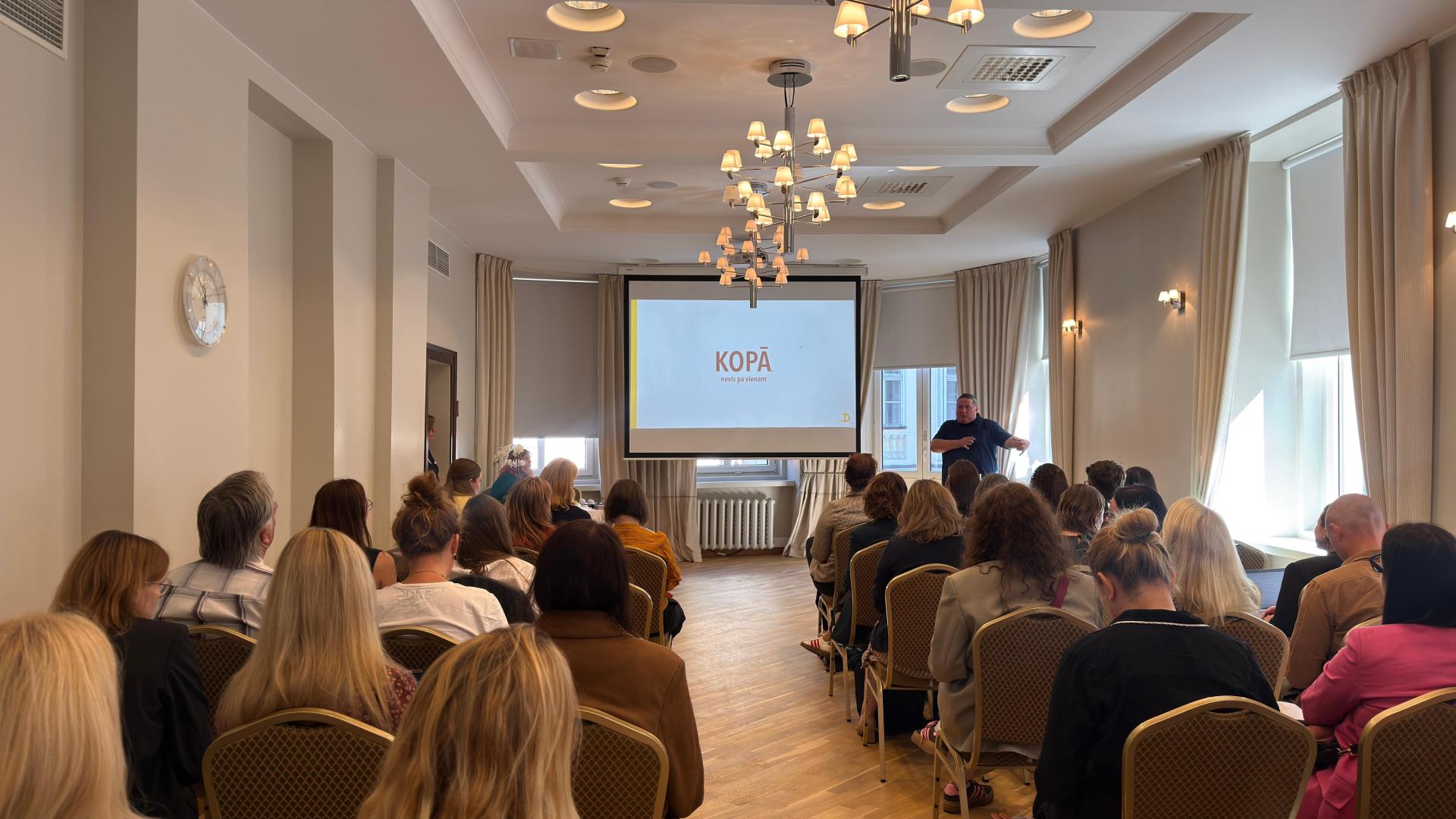
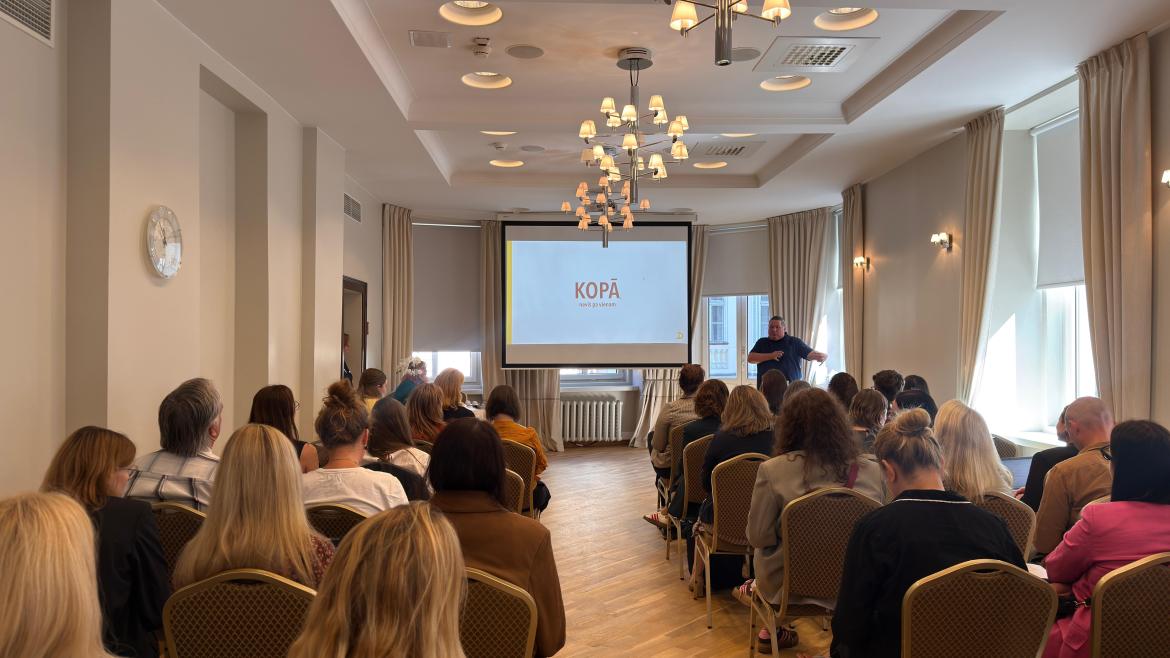
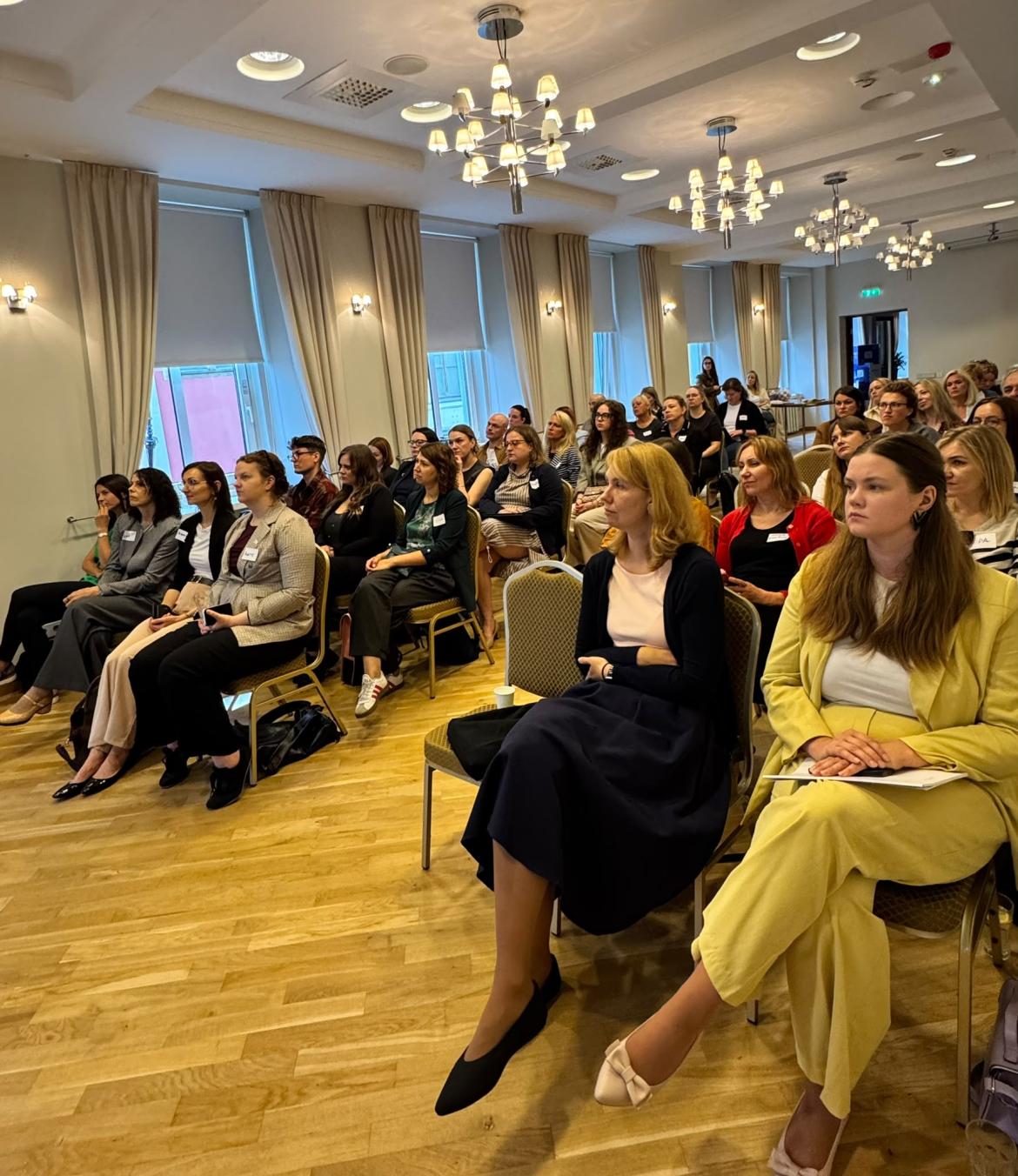
The public’s ability to distinguish research from opinion and disinformation largely depends on how understandably science is communicated. This was precisely the main question for which more than 40 communication professionals from public institutions, universities, and scientific institutes sought a common answer at the workshop “Together for Science”. The workshop was organized on 19 August by the Ministry of Education and Science (MES) in cooperation with the Latvian Council of Science (LCS).
Addressing the participants, Liene Levada, Director of the Department of Higher Education, Science and Innovation at the Ministry of Education and Science, emphasized the role of communication specialists in science, stating:
"In an era where information about everything is available to everyone, and where artificial intelligence seemingly has the power to turn each of us into an astrophysics expert overnight, communication and the fight against disinformation are more important than ever."
Science communication is not a matter of institutional visibility. It is part of the state's strategic communication, based on verified facts, evidence, and trust in science. This was emphasized by Nika Aleksejeva, disinformation researcher at the Digital Forensic Research Lab (DFRLab) of the think tank Atlantic Council, who noted that, especially in times of crisis, the task of science is not to persuade, but to create trustworthiness. Silence in such moments is not an option, as information vacuums are quickly filled by purveyors of disinformation.
Science has become part of our everyday lives even when we do not notice it, while television programmes, books and films have made science-related topics more accessible to the wider public, noted communications strategic planner Zigurds Zaķis. At the same time, he emphasized that trust in science cannot be built through campaign-style activities: this work must be developed over the long term, focusing on cause-and-effect relationships rather than trends, and it is the responsibility not only of communicators but of all parties involved in science.
How to do this in practice was explained by science journalist Sandra Kropa, who has been producing programmes about science for more than twenty years. Research should be communicated in a fact-based manner, but in a way that inspires people to learn more, addressing each audience in a way that it can understand. Meanwhile, Dr Arko Olesks (Arko Olesk), Associate Professor at Tallinn University, shared Estonia’s experience in developing a science communication strategy.
As one of the most prominent upcoming examples of science communication, Liene Bērziņa, Public Relations Specialist at the Latvian Council of Science, mentioned Researchers’ Night. On 25 September, Researchers’ Night 2026 will take place at more than 35 locations across Latvia, offering an opportunity to explore science in an engaging way. This year’s European Researchers’ Night slogan, “Discover the Nature of Science!”, invites participants to experience science in all its diversity by visiting laboratories, taking part in experiments and creative workshops, meeting scientists and asking them questions. All activities are free of charge. The Researchers’ Night 2026 programme is already available on the interactive map and is being gradually expanded.
In the practical part of the workshop, participants mapped the target audiences and communication objectives of their institutions, thereby creating a shared understanding of the state of science communication in Latvia. At the conclusion of the workshop, participants expressed support for regular meetings and closer mutual cooperation, including the development of joint messages, the exchange of experience, and practical support for researchers who wish to explain their work to society.
The workshop and the communication activities of European Researchers’ Night 2026 are funded by the EU Funds project No. 1.1.1.1/1/24/I/001 “More Efficient Implementation and Management of Latvia‘s Science Policy”