news & events
News

news

archive

research youth collaboration

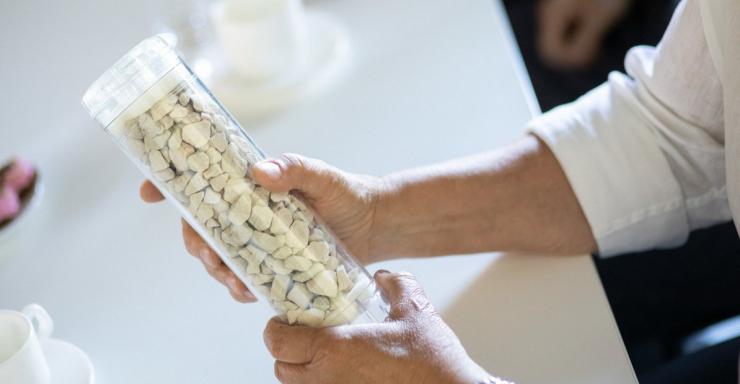
Use of Hogweed in Biomaterials

In Latvia, Sosnowsky’s hogweed (Heracleum sosnowskyi) has for decades been regarded as one of the most problematic invasive plant species. It threatens local ecosystems, poses risks to human health, and requires continuous control efforts. This widely recognised issue became the focus of a scientif…

Latvian State Institute of Wood Chemistry

February 4, 2026

research

Global Competitiveness Challenges and Solutions to Be Analysed at the University of Latvia Scientific Conference

Researchers from the Faculty of Economics and Social Sciences (FESS) of the University of Latvia (UL) will present the latest insights into strengthening global competitiveness at the 84th International Scientific Conference of the University of Latvia, to be held from 14 to 16 April. Strengthening…

Faculty of Economics and Social Sciences of the University of Latvia

February 3, 2026

research competition opportunity

Call for Applications for Access to Advanced NMR Research Infrastructure within the MR LATVIA project

The project “Development of Magnetic Resonance in Latvia” (MR LATVIA) announces the opening of a Call for Applications for access to its advanced nuclear magnetic resonance (NMR) research infrastructure. The call will be open from 2 February 2026 until 31 August 2027, offering researchers and innov…

Latvian Institute of Organic Synthesis

February 2, 2026

space

“Deep Space Energy” plans to generate electricity on the Moon

Space technology startup “Deep Space Energy” is developing a new power generator for space that uses heat produced by radioisotopes derived from nuclear waste, enabling electricity generation even when sunlight is not available. With this technology, the company aims to accelerate lunar exploration…

Labs of Latvia

February 2, 2026

research research

Early Detection of Plant Stress and Opportunities for Its Mitigation

The impact of climate change on agriculture is becoming increasingly evident; up to 40% of global crop production is lost each year due to abiotic stresses such as drought, heat, and rapid temperature fluctuations. These losses are growing annually, posing serious challenges to both global food sec…

Latvia University of Life Sciences and Technologies

January 29, 2026