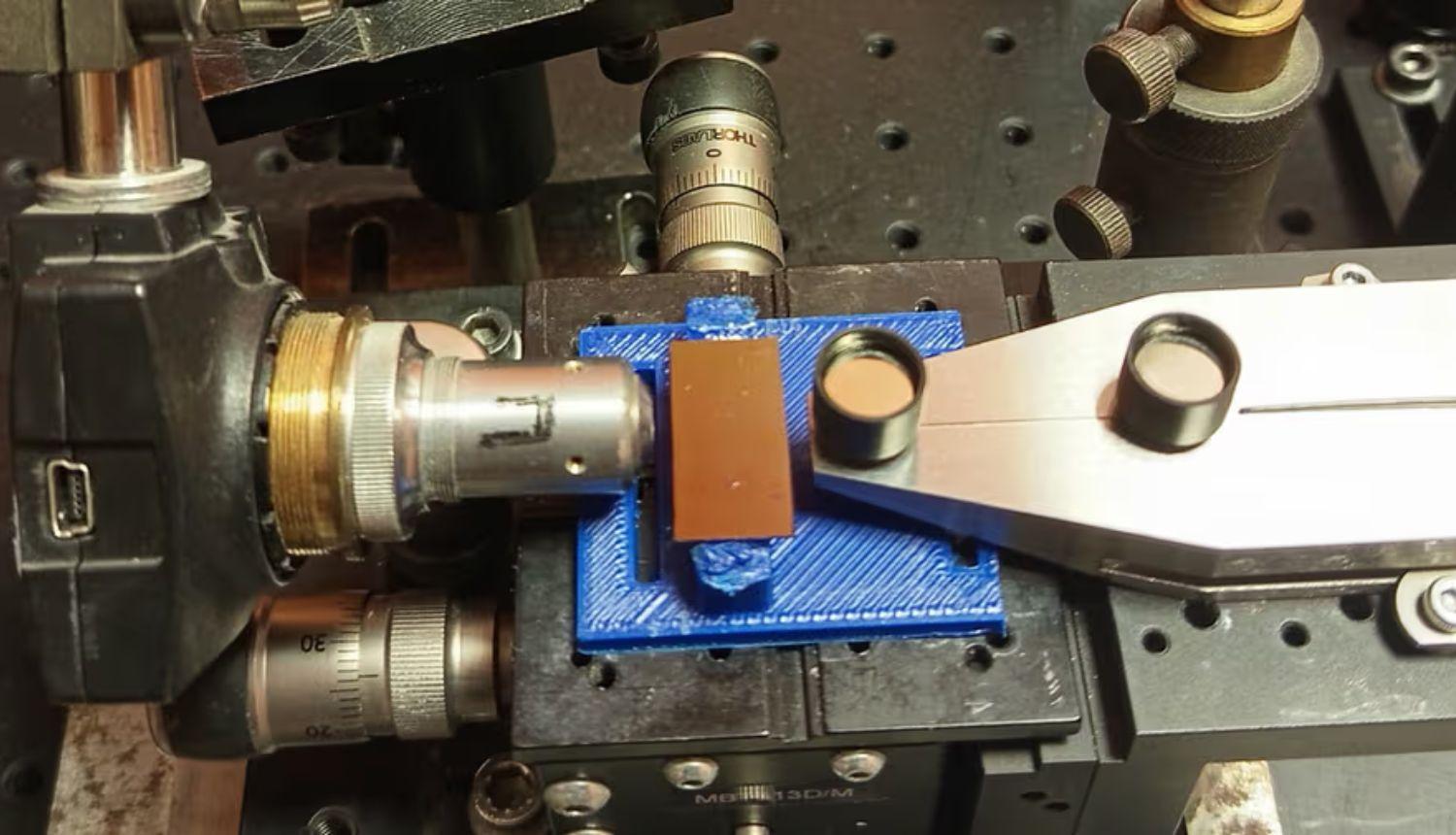
The Latvian deep-tech company AP4PIC is developing polymer-integrated photonic microchips, including the design and fabrication of microchip components. These systems use organic materials with active optical properties. Put simply, these are microchips that process and transmit information using light instead of electrical signals. The company grew out of research conducted at the Institute of Solid State Physics of the University of Latvia and is now working on the first technology prototypes in cooperation with Riga Technical University. In the future, this technology could be used by large data centres, significantly reducing the energy required for their operation.
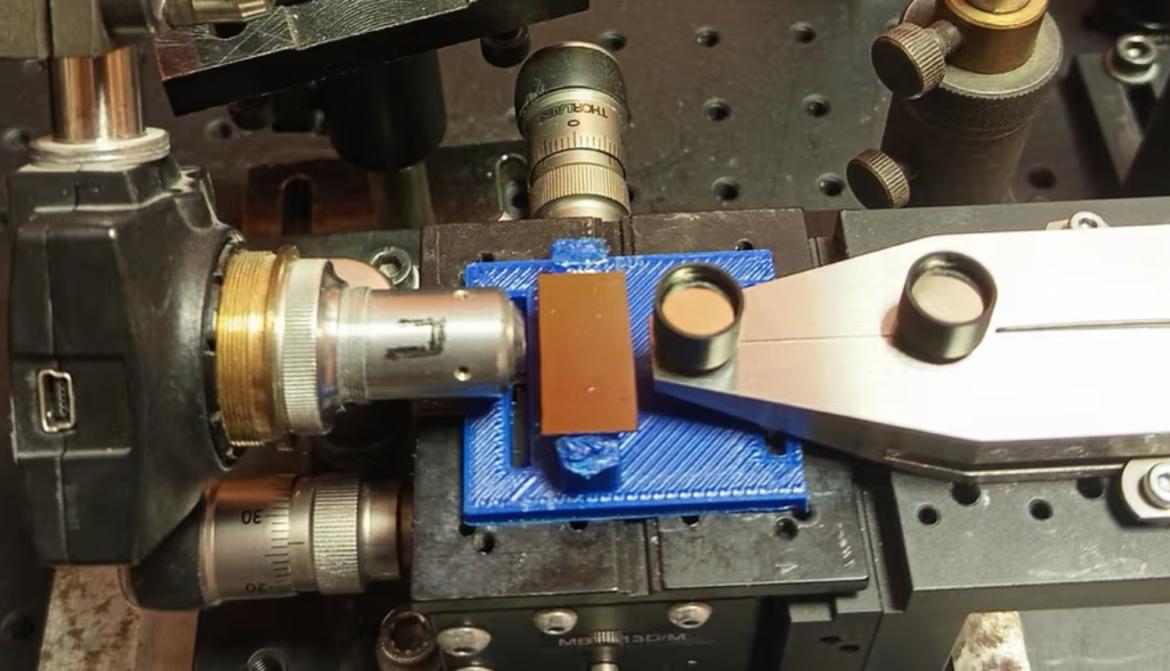
"We all use devices every day – phones, computers, smartwatches. They all operate thanks to microchips that process information electrically. At AP4PIC, we’re developing a technology that replaces electricity with light," explains the company’s CEO, Aivars Vembris.
This field is known as integrated photonics – a technology in which information is processed and transmitted using photons, or particles of light, instead of electrons. AP4PIC’s special focus is polymer-integrated photonic systems – a more affordable and versatile solution that can significantly reduce energy consumption.
The origins of the technology lie in long-term research carried out at the Institute of Solid State Physics of the University of Latvia, where the properties of polymers and their applications in photonics have been extensively studied. When this research reached a high scientific level and demonstrated real commercial potential, AP4PIC was established in 2024 as a spin-off company.
Behind this seemingly technical topic lies a convenient benefit – energy efficiency. Modern data centres, which power artificial intelligence and cloud services, consume enormous amounts of energy.
"It is estimated that in the coming years, AI alone could account for up to 10% of global energy consumption,” says Vembris. “If our technology can reduce this consumption even by a few per cent, the global impact would be enormous."
While integrated photonics is rapidly evolving worldwide, AP4PIC is currently the only company in this field in Latvia. Vembris notes that there are several significant players globally, but most rely on inorganic materials such as silicon.
“Many companies work with silicon platforms, but our polymers enable microchips with broader functionality. They make it possible to achieve what is technically impossible with other materials. Moreover, polymers are more compatible – they are easier to integrate with different solutions,” he explains.
Potential future clients include not only major technology companies producing components for data centres but also manufacturers of various optical sensors. Polymer-integrated photonic systems enable the creation of precise, energy-efficient, and adaptable optical sensors with broad applications in biomedicine and in environmental and industrial monitoring, where high sensitivity and speed are essential.
AP4PIC is currently working with Riga Technical University to develop the first demonstration prototypes – microchips that can be presented to potential clients. At the same time, the company is building strategic contacts with major technology manufacturers and startups in the fields of biophotonics and sensing.
"As a company, we are developing and refining this technology, and in the future, we plan to manufacture microchips tailored to specific client needs. Since our technology is not a mass-produced product but a client-focused solution, it’s important to build these connections now while keeping a close eye on developments worldwide," says Vembris.
The company has secured several scientific grants to support technology development and has also joined the Latvian Investment and Development Agency’s incubation programme for science-intensive companies.
"The financial and organisational support provided by the programme allows us to concentrate on development. We can purchase equipment and materials, conduct measurements, and, most importantly, grow without bringing in external investors too early. This allows us to maintain independence and develop at our own pace," Vembris explains.
Speaking about state support, Vembris emphasises that LIAA programmes are well-suited to science-based startups, especially those still in the early stages of development. He also values the networking and knowledge-exchange opportunities that help the company understand how similar players are evolving in Latvia and across Europe.
AP4PIC aims to develop market-ready solutions over the coming years and become one of the regional leaders in polymer-integrated photonics. The team is confident that technology developed in Latvia can make a meaningful contribution to the global transition toward more energy-efficient and sustainable computing solutions.