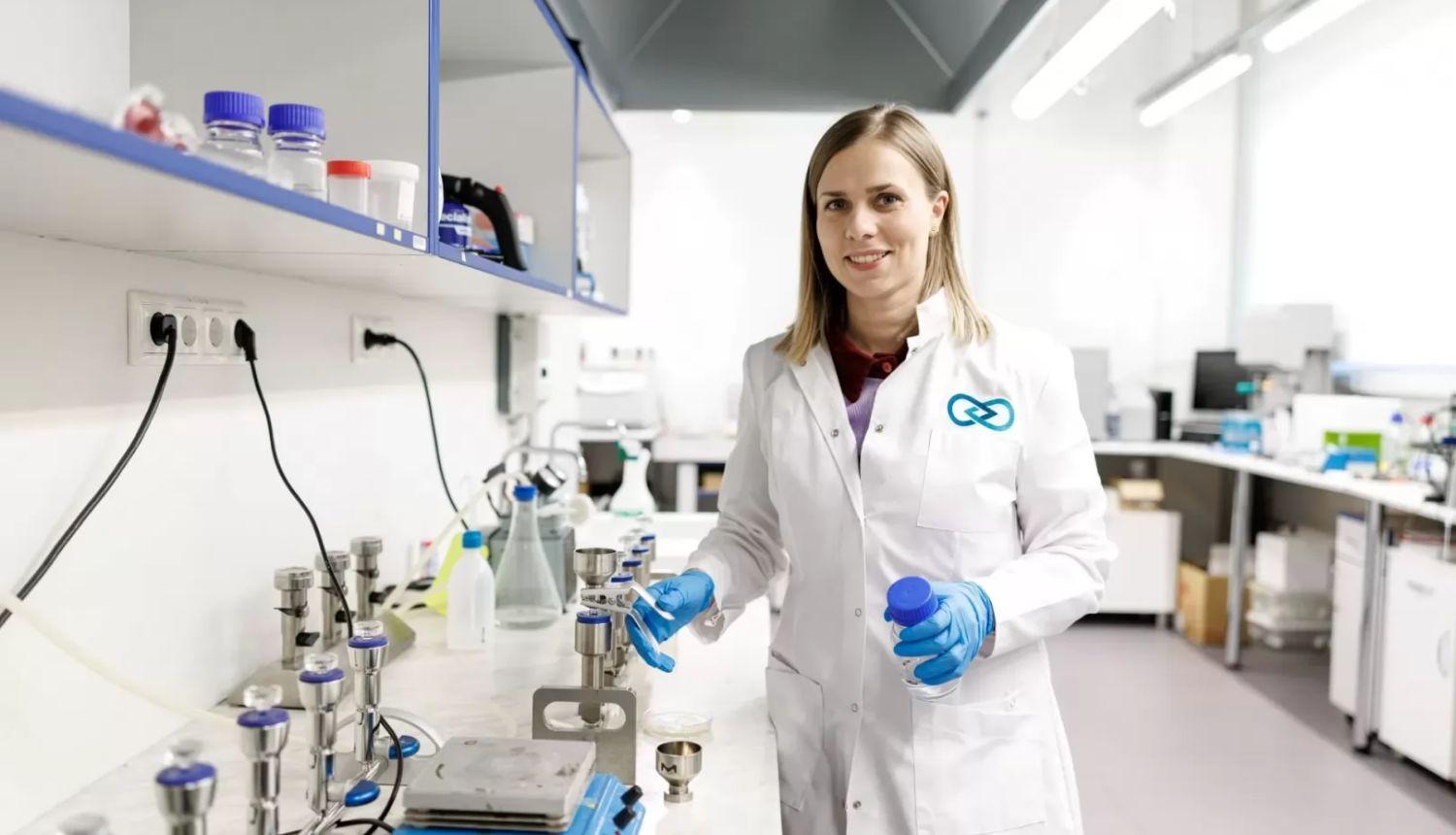
Antimicrobial resistance, the ability of microorganisms to survive and even thrive in conditions that would usually destroy them, is one of the greatest public health threats worldwide. Scientists and engineers at Riga Technical University (RTU) have developed and patented an innovative sink disinfection device that prevents the proliferation of microorganisms. The device is intended for use in medical institutions; therefore, its effectiveness has been tested in a hospital environment and is being further refined in close cooperation with healthcare professionals.
The invention, which can be integrated into sinks, disinfects wastewater outlets, preventing the growth of microorganisms, the formation of biofilms, and the spread of microorganisms into indoor spaces. The inner surface of the device’s outlet pipe is coated with titanium dioxide; when exposed to ultraviolet radiation, this coating initiates photocatalysis. Photocatalysis is effective even in breaking down and degrading persistent compounds. In addition, a specially designed mechanism ensures one-way fluid flow, preventing gases from the sewage system from entering the room and thereby reducing potential health risks.
“Studies show that sinks can be one of the possible sources for the spread of antimicrobial-resistant microorganisms, and traditional disinfection solutions do not always provide sufficient protection,” explains Brigita Dejus, Lead Researcher at the Institute of Water Systems and Biotechnology of RTU’s Faculty of Natural Sciences and Technologies. “In hospitals, contamination by various pathogenic microorganisms can primarily develop on sink surfaces and connections, while biofilms may form inside pipelines. The presence of such microorganisms in a hospital environment increases the risk of infection for patients.”
The innovative device is a continuation of a large-scale research project implemented several years ago. From an initial vision of improving hospital infrastructure, researchers and engineers have arrived at a potential solution to an acute problem. In developing and testing the prototype, RTU researchers are collaborating with industry representatives and with researchers from the Scientific Institute of Pauls Stradiņš Clinical University Hospital, who are conducting an anthropological study better to understand the needs and experiences of medical staff when using the innovative solution. The solution is also being tested in a hospital setting, and the needs of medical personnel are taken into account as it is further developed.
The device has already been patented in Latvia. The inventors are RTU Rector Professor Tālis Juhna; leading researchers at the Institute of Water Systems and Biotechnology, Brigita Dejus, Mārtiņš Strods, and Basanti Ekka; as well as Deputy Head of the Innovative Product Development Unit, Kristens Raščevskis, and Senior Industrial Designer, Pēteris Sala.
RTU has currently submitted an application for a European patent. At the same time, with financial support from the “Biomedical and Photonics Research Platform for the Creation of Innovative Products” (BioPhoT, Platform No.: IVPP-EM-Innovation-2024/1-0002), the team is preparing to commercialise the solution and introduce it to the market. BioPhoT is part of the state research programme “Innovation Fund – Long-Term Research Programme” funded by the Ministry of Economics, coordinated by the Latvian Institute of Organic Synthesis and implemented by science universities and research institutes.