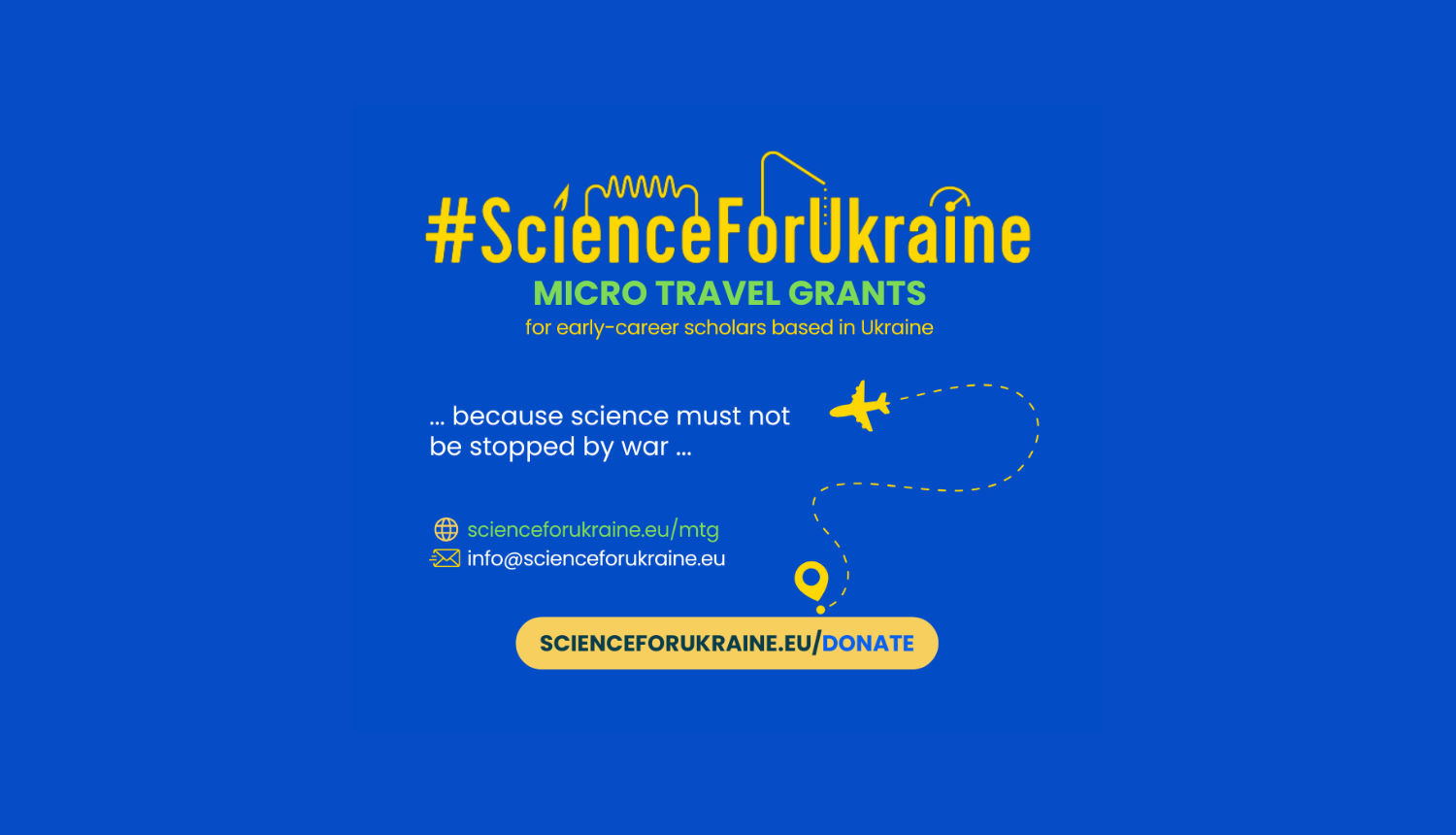
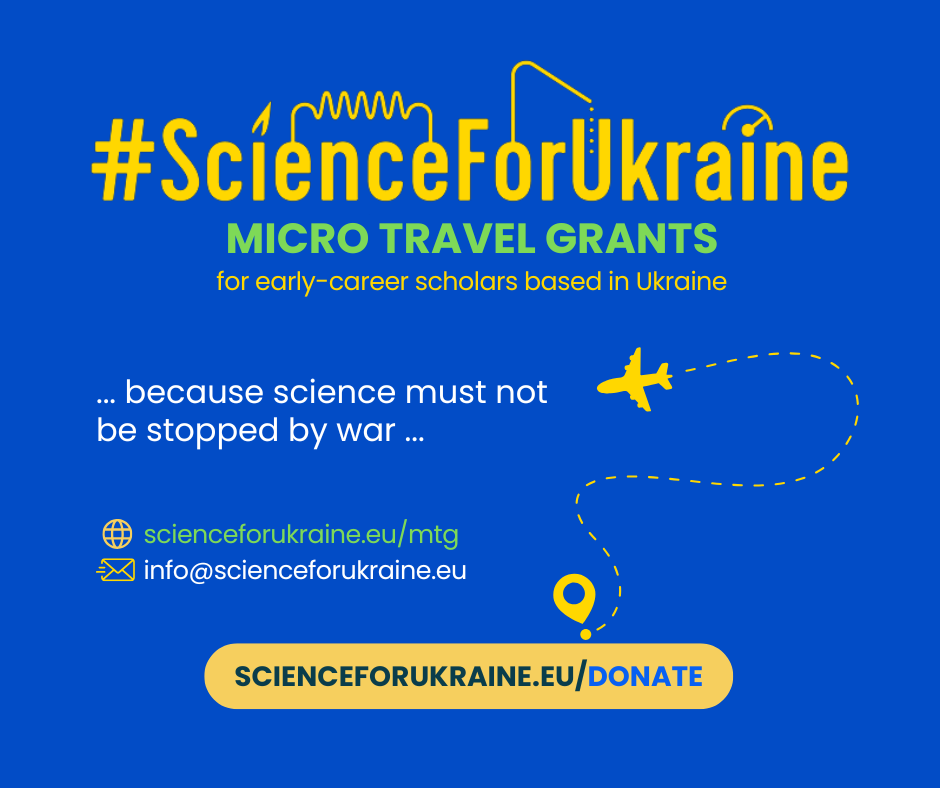
NGO #ScienceForUkraine has relaunched its Micro Travel Grant (MTG) Programme, open for applications from February 2, 2026, with redesigned rules and a renewed focus on supporting early-career Ukrainian scholars. The programme, which reimburses up to EUR 500 for in-person participation in international academic events, is now open to doctoral candidates and researchers within five years of their PhD.
The redesigned MTG continues #ScienceForUkraine’s commitment to keeping Ukrainian scholars connected to the international academic community. Since its launch, the programme has enabled scholars to sustain professional networks, present their work, and remain part of global academic exchange despite the disruption caused by war. By maintaining these connections, the programme helps ensure that Ukrainian voices, knowledge, and perspectives remain part of global scientific dialogue.
Sanita Reinsone, the lead of NGO #ScienceForUkraine and Associate Professor at the University of Latvia, stresses the wider importance of the programme: “For many Ukrainian scholars, international conferences are not only about research – they are about staying connected, visible, and part of the global academic community. The Micro Travel Grants have already supported many in continuing their academic paths under extremely difficult conditions. Beyond our MTG programme, I strongly encourage academic institutions and associations across Europe and beyond to pay attention to scholars who struggle to travel because of war, and to find ways to support their continued presence in international academic life.”
According to the updated rules, the MTG is now limited to early-career scholars affiliated with Ukrainian institutions and supports in-person conference participation. Galyna Ryabukha, MTG Programme Lead from the BETA Technological Centre (UVIC-UCC) in Spain, explains the reasoning behind the new focus: “We receive far more applications than we can fund. With a very limited budget, we had to make a difficult but necessary decision. By focusing on doctoral students and early postdocs, we can support those who need it most at a critical stage of their careers.”
The Micro Travel Grant Programme is run entirely by volunteers. All funds used for grants come from donations, and 100% of the donated money goes directly to supporting young Ukrainian scholars.
#ScienceForUkraine invites individuals, institutions, and academic communities to contribute through targeted donations and help keep young Ukrainian scholars connected and their work visible in the global academic community (scienceforukraine.eu/donate).
About #ScienceForUkraine
#ScienceForUkraine is a non-profit, volunteer-run NGO supporting the Ukrainian academic community since the beginning of Russia’s full-scale invasion. Its mission is to help ensure the continuity of Ukrainian science and strengthen its presence in the international research arena.
More information:
scienceforukraine.eu/mtg
scienceforukraine.eu/donate
Inquiries: info@scienceforukraine.eu