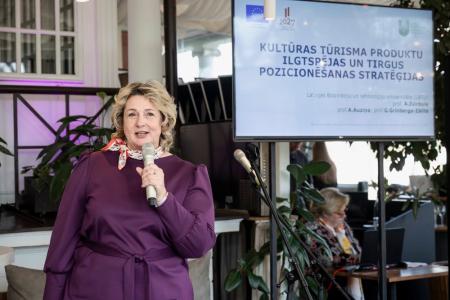
On 23 March, during the General Assembly of the Latvian Restaurant Association (LRB), which brought together professionals from the tourism and restaurant service sectors, representatives of the Investment and Development Agency of Latvia (LIAA), as well as tourism industry experts, the study “Strategies for the Sustainability and Market Positioning of Cultural Tourism Products” was presented. The study was developed within the Tourism Product Development Programme.
The study highlights that the creative industries, including the tourism sector, are becoming one of the fastest‑growing branches of the global economy. They are closely linked to innovation and the development of modern technologies, while combining the potential of culture, entrepreneurship and smart development. This sector creates high value‑added products and services that strengthen both economic growth and cultural identity.
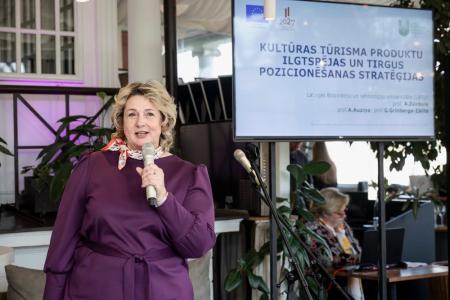
The study’s lead researcher, Professor Andra Zvirbule, addressing industry professionals, noted:
“When developing tourism clusters for specific tourism products, it is essential to consider not only the product’s creation, implementation and development aspects but also the sustainability of the product and its associated business model. Such an approach requires an integrated view of the regional aspects of the tourism product, the needs of all stakeholders, and the ability to effectively manage the business processes of the tourism product.”
The study positively acknowledges the state’s support for the creation of new tourism products and emphasises that a sustainable and well‑coordinated tourism policy enables the full use of cultural resource potential, increases destination attractiveness, enriches visitors’ cultural experiences and reduces seasonality. It also stresses the importance of public–private partnerships, which foster synergy between tourism and culture while stimulating innovation. Cooperation between the public and private sectors is considered a key prerequisite for the sustainable growth of cultural tourism.
Within the framework of the study, specific cultural tourism product concepts and their market positioning strategies were developed, covering gastronomic tourism, fashion and design tourism, as well as various combinations of cultural tourism products.