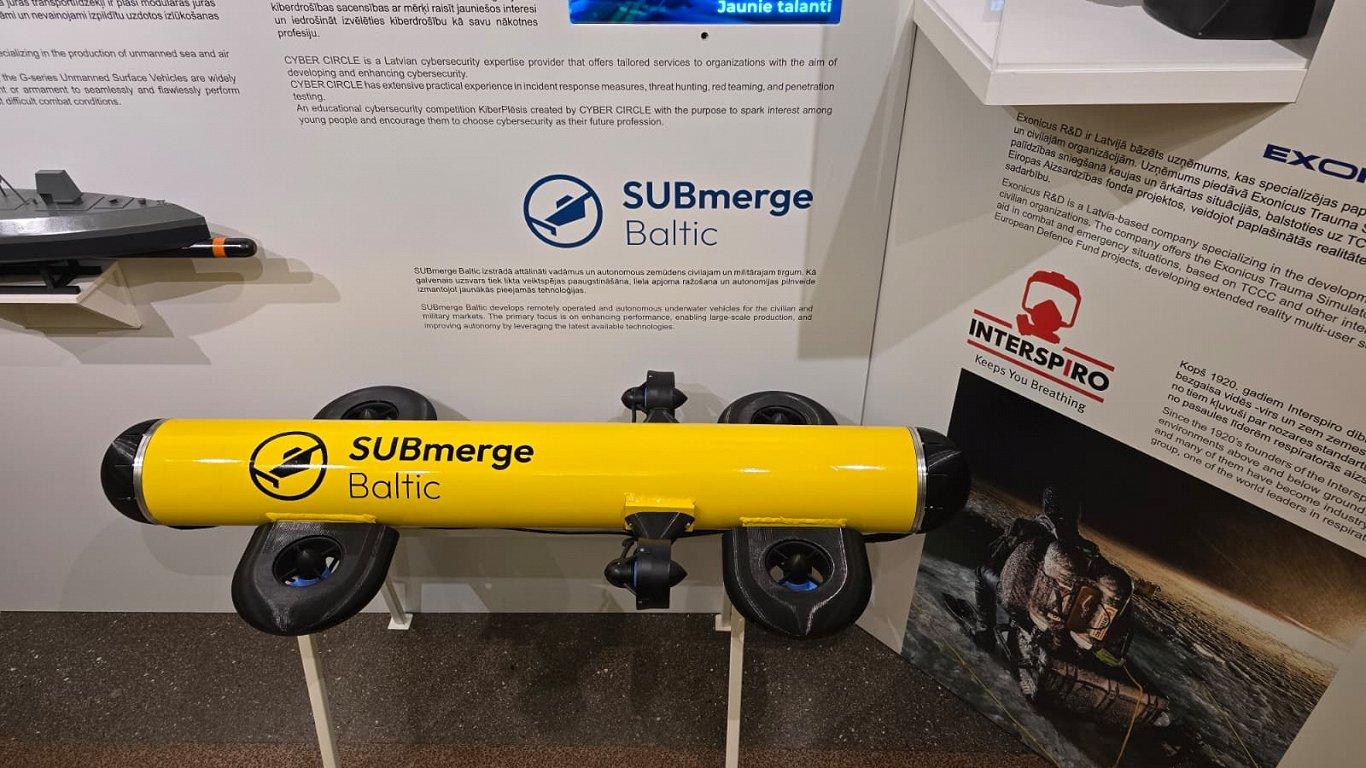
In the Latvian startup "Submerge Baltic", underwater drones have been developed for military and civilian needs for three years. The company employs eight people, mainly engineers, and the underwater drones can be used both in the oil industry — to monitor offshore extraction — and for defense purposes, such as mine clearance operations.
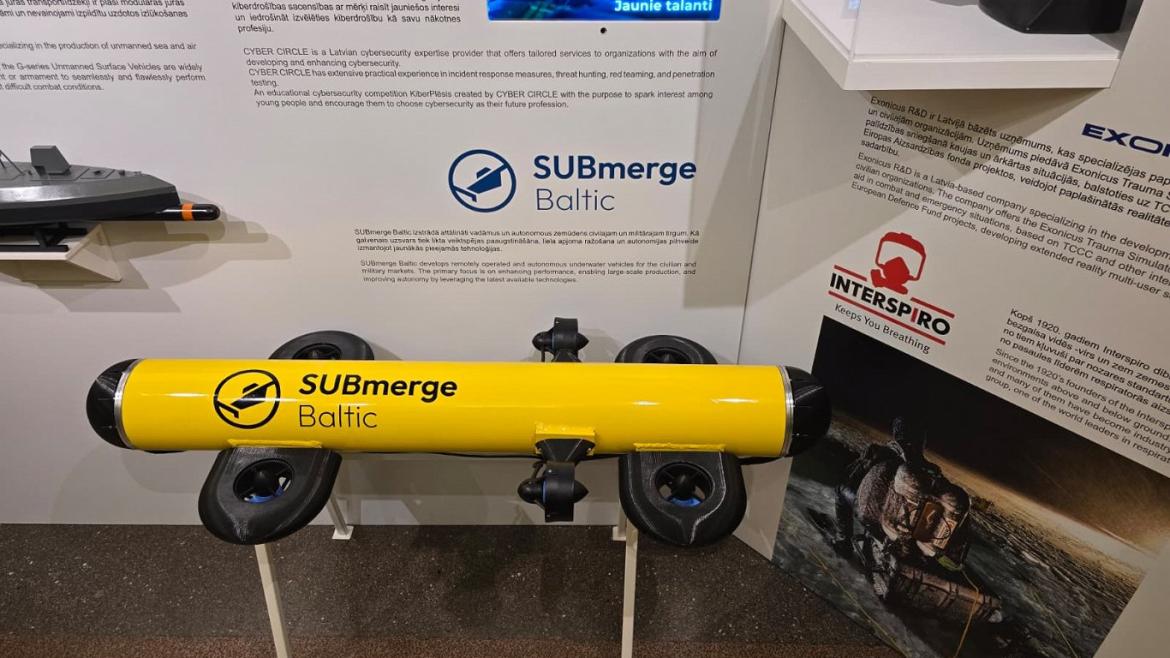
The company's co-founder, Kārlis Bērziņš, showed Latvian Radio a video of the bright yellow underwater drone — which can range from one to three meters in length and weigh up to 30 kilograms — being tested in a pool, a river, and the sea. He explained that developing such drones is expensive.
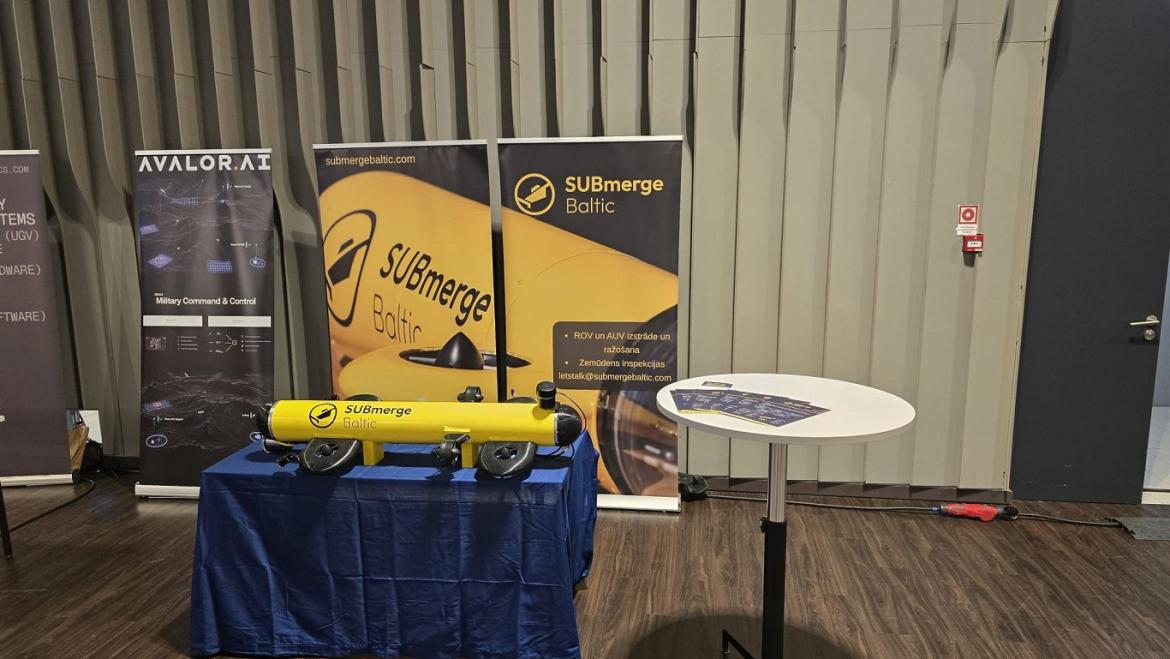
"In terms of the mission, we can adjust the battery size, the size of the payload — whether it's a sonar, another type of sensor, or a different operational device. Waterproofing is crucial. You also have other limiting factors, like pressure. The main thing is to keep the drone’s density similar to that of water. And you have to keep in mind that the underwater environment is far more dangerous and hostile than the air. This means that every component needs to be much more durable.
That also means the drone ends up costing roughly a hundred times more than an equivalent aerial drone," explained Bērziņš.
Initially, the underwater drone was designed to detect water pollution, but its functions have since expanded — now it can perform underwater surveys and help prevent various types of disasters. Bērziņš shared that one of their main current goals is to reduce costs and lower the price of the drone.
"A critical sensor for the drone costs €50,000. That means we need to spend a significant amount of money just to build one drone — and that’s just for one sensor. Then you also need a boat and a variety of operational equipment. It all adds up, and the process becomes quite expensive.
We are also looking for ways to localize the supply chain so that we can build the drones with components sourced from the Baltics and Europe. Another approach is by adding a software component. By using modern machine-learning algorithms and different navigation methods, we can develop cheaper navigation sensors — since navigation sensors actually account for about 70% of the drone’s total cost.
So, by building our own navigation sensors, we can lower the price of the drone. And by optimizing the software, we can bring the cost down even further," Bērziņš explained.
Over the past three years, the company has attracted €400,000 in investments, with funding coming from the Latvian Investment and Development Agency, the Central Finance and Contracting Agency, and grants from the Ministry of Defence.
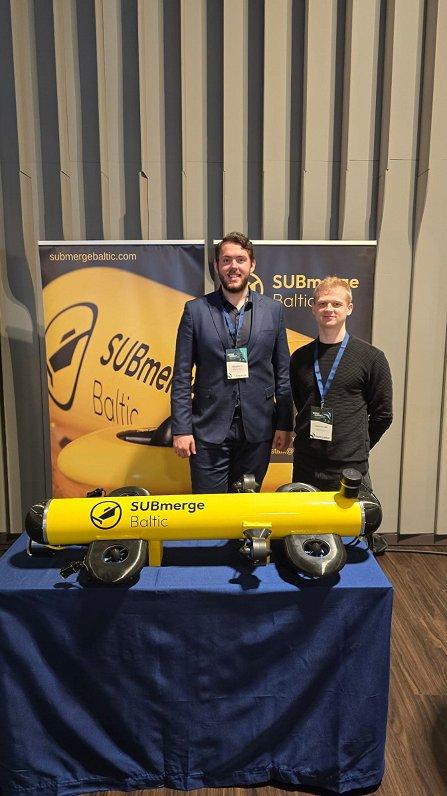
Bērziņš said: "Getting grants is definitely easier, especially if you’re working in the tech field and your company is creating innovations that could benefit the whole world. We’re all technical people with higher education, so we also have this innovation and research perspective. I myself graduated from the RTU Engineering High School. My classmates went on to Cambridge and now work on Wall Street. That means our intellectual capacity and resources are much greater, and we can tap into that. We also have a strong connection with the university, both through faculty members who are part of our team and through former students. This allows us to bring in top-level specialists."
One of Submerge Baltic’s goals is also to export its underwater drones.
"For example, with oil pipelines, we can prevent cracks before they happen, identify problems early, and recommend maintenance.
Right now, we’re expanding our business in Azerbaijan, working with one of the world’s largest oil companies. We’re very grateful to the Ministry of Defence — they’ve been extremely supportive during testing. The tests have been successful, and now we’re in talks about potential purchases.
The same goes for Ukraine — yes, we’re trying to support Ukraine in this war. It’s mutually beneficial: they’re willing to contribute their expertise and tell us exactly what’s needed, we build it, and then deliver it. We’ve already been testing in Kyiv, carrying out mine-clearing operations in different bodies of water," Bērziņš explained.
The Submerge Baltic startup plans to invest €1.5 million from public and private capital into underwater drone development over the next two years.