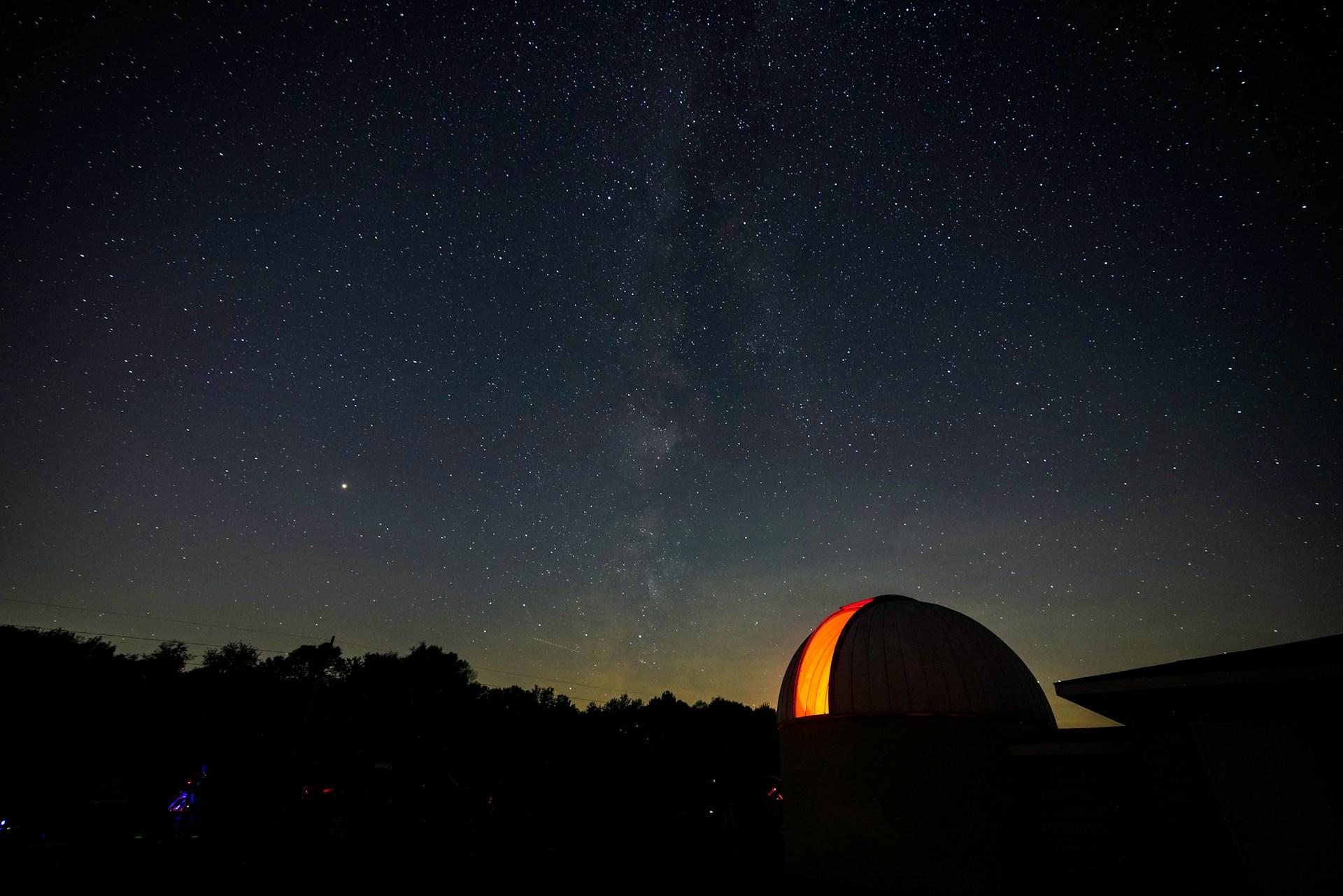
At the University of Latvia’s Baldone Astrophysical Observatory, significant discoveries have led to two main‑belt Solar System asteroids being named this spring in honour of individuals who have made notable contributions to Latvian science and society. The celestial travellers now bear the names of physicist, educator and astronomer Mārīte Eglīte, and distinguished Latvian astrophysicist Zenta Alksne.
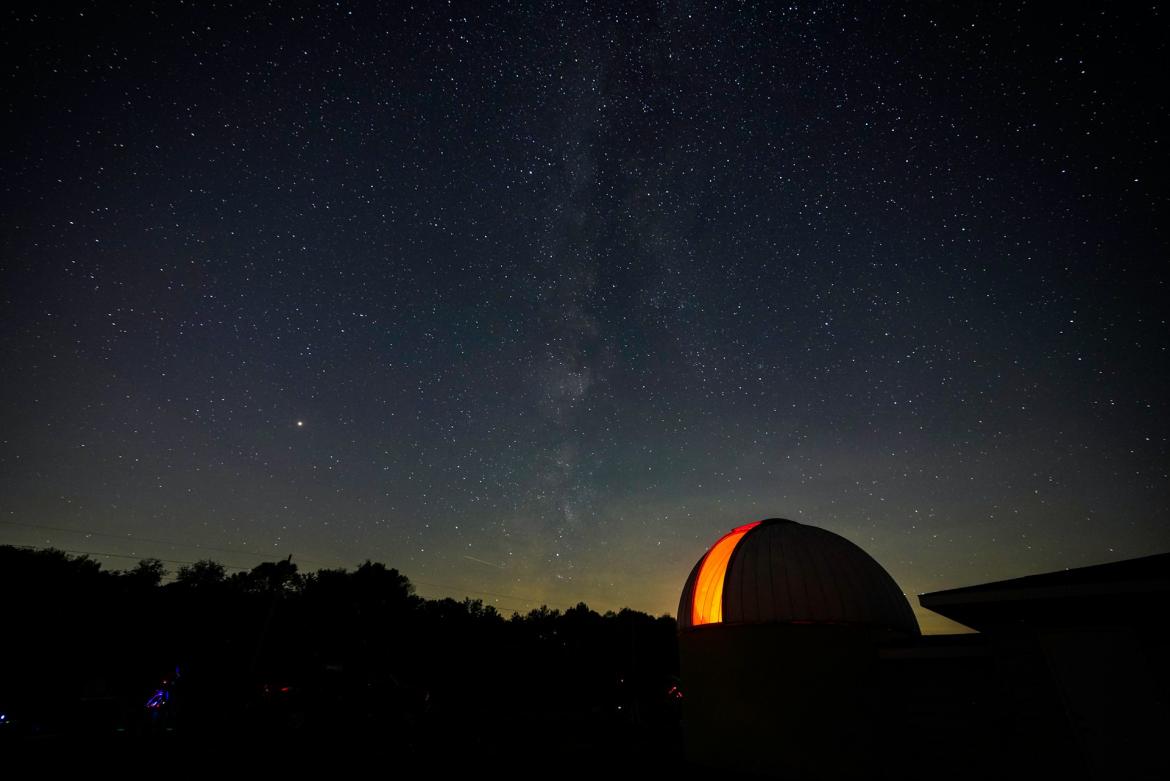
Both asteroids were discovered using the Baldone Schmidt telescope by Ilgmārs Eglītis, Senior Researcher at the University of Latvia’s Institute of Astronomy, while precise coordinate measurements were provided by Kazimieras Černis of Vilnius University. The International Astronomical Union (IAU) has approved the names of these celestial bodies, thereby honouring the contributions of both distinguished figures to science and education.
The two asteroids, each approximately 1.3 kilometres in diameter, are located in the main belt between Mars and Jupiter. Although they can be observed only with powerful telescopes, their names will now be recorded in international astronomical history, symbolically preserving the legacy of Latvian women scientists.
The asteroid (733173) Mārīteeglīte, first observed in 2008, orbits at a distance of about 2.94 astronomical units from the Sun and completes one revolution in 5.7 years.
Mārīte Eglīte (1951–2016) was born in Riga and studied at the Faculty of Physics and Mathematics of the University of Latvia. During her studies she turned to astronomy and began working at the Baldone Observatory, researching stellar spectra. Throughout her career she combined scientific work with teaching, serving for many years as a physics, mathematics and astronomy teacher in Jūrmala and Baldone. Thanks to her initiative, a full astronomy course was reinstated in the school curriculum, and under her guidance students achieved outstanding results in national and international competitions. Alongside her pedagogical work, she also contributed to scientific research, particularly in the field of carbon stars, publishing several studies and identifying new correlations in this area.
“With this name I honour my wife — for her patience during the many lonely nights while I was away at the Baldone Observatory. Mārīte and I shared 43 harmonious years of marriage until her passing after nine months of serious illness. She gave me two daughters, Vija and Zane. May the light of her beloved stars shine for her on her journey beyond,” says Ilgmārs Eglītis.
The asteroid (845241) Zentaalksne, discovered in 2017, orbits at an average distance of 2.61 astronomical units from the Sun and completes one orbit in 4.2 years.
“This asteroid is named in honour of an outstanding Latvian astrophysicist — Dr. Zenta Alksne, whose work made a major contribution to the study of a peculiar group of late‑type stars known as carbon stars. With her involvement, more than 350 carbon stars in our Galaxy were discovered at the Baldone Observatory, forming the basis for the decision of the International Astronomical Union’s Red Stars Working Group to entrust Baldone with compiling a new Galactic Carbon Star Catalogue (CGCS). The catalogue was published in 2001 and continues to be widely cited in scientific literature. Therefore, this asteroid is not only a scientific object but also a tribute of gratitude and respect,” notes Ilgmārs Eglītis.
Zenta Alksne (1928–2011) was one of Latvia’s most significant astronomers, whose scientific work greatly advanced the study of carbon stars. She studied both in Latvia and at Moscow State University, later working within the Latvian Academy of Sciences system, where she developed research on red giants and carbon stars. Zenta Alksne authored and co‑authored several fundamental monographs whose importance in astronomy endures to this day. She was also an active science communicator, publishing extensively and participating in international organisations.