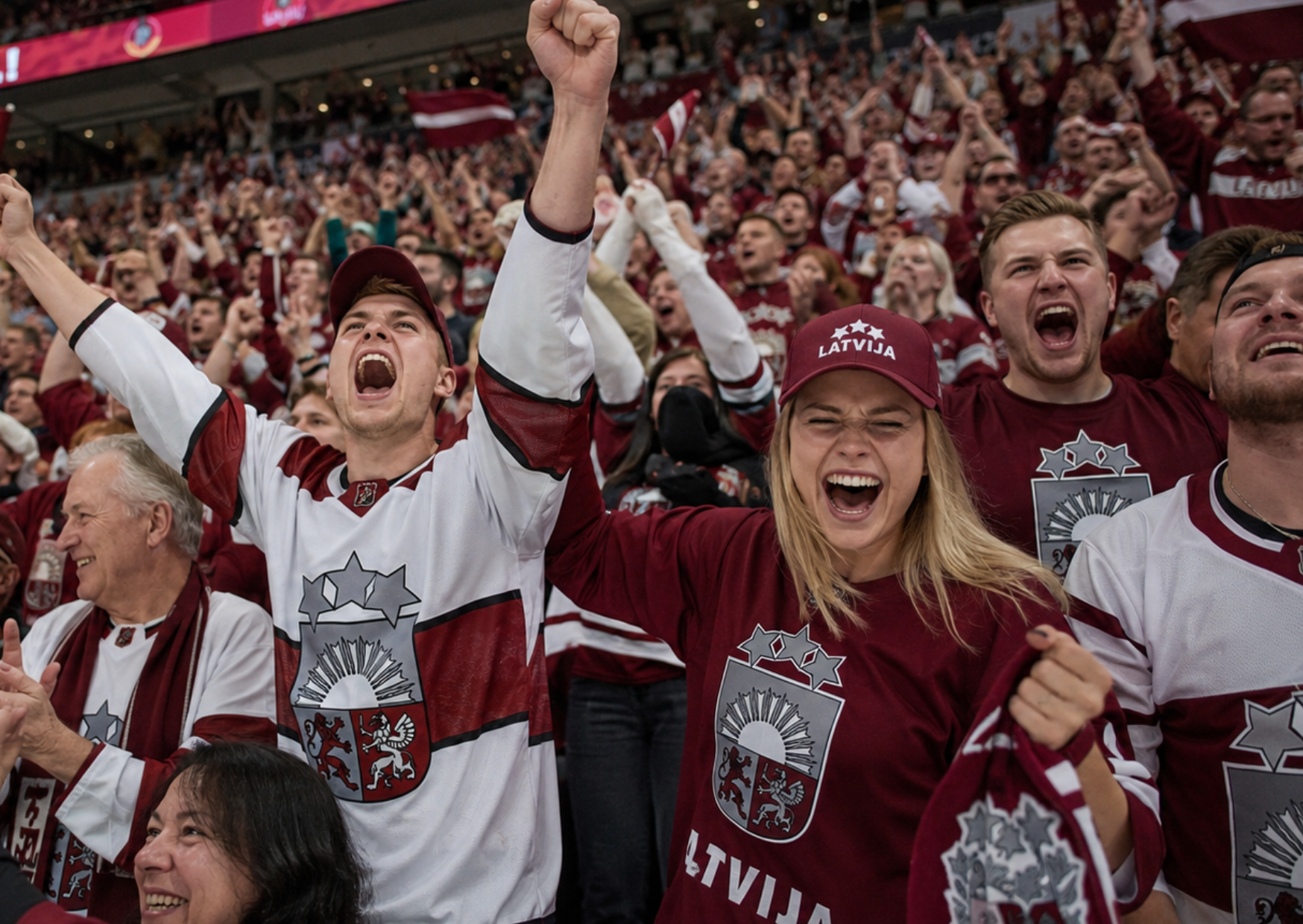
Living in different information spaces, generational differences and clashes of values are often cited as reasons why people feel divided and alienated in society. Moreover, the Awakening is mentioned as a benchmark of society’s ability to unite for common goals, raising the question of whether we would now be capable of being as united as people were more than 30 years ago. “We have everyday democracy and social groups with sufficient capacity and strength to assert their interests,” explains sociologist Mārtiņš Kaprāns, emphasising that cheering for sporting events should not be underestimated in building social cohesion.
Belonging to a group
In contemporary sociology, the sports fan movement is viewed not so much as emotional support for one’s team, but as an important mechanism for promoting social cohesion.¹ For example, sporting events and cheering together bring together people who might never meet in their everyday lives and create shared experiences that strengthen mutual trust and are a very important aspect of building so-called social capital. This is one of the cornerstones of ensuring stability in democratic societies, where interpersonal relationships, shared activities, traditions and public events form a network of trust that enables society to cooperate more effectively.²
The World Bank and the Organisation for Economic Co-operation and Development (OECD) also emphasise in their research that societies with high social cohesion are more successful in overcoming economic crises, natural disasters and security challenges. People who trust one another and feel that they belong to a community are more likely to engage in voluntary work, help others and participate more actively in democratic processes.³
Supporters of social identity theory often discuss the fact that, when forming their identity, people base it not only on individual experience, but also on identifying themselves as members of groups — in other words, belonging to a group significantly affects our self-esteem and emotional well-being.⁴
Proud of sport – proud of culture
This is also why fans perceive athletes’ achievements as a shared accomplishment, often describing them with the words “we won”, thereby strengthening their sense of belonging to the country. University of Latvia researcher Renārs Felcis noted that survey results show that Latvia’s success in international sport is a good reason for us to feel proud of our country.
Moreover, pride in sporting achievements is particularly pronounced among men and people of Latvian ethnicity.
“Most residents are proud (very or somewhat) of Latvia’s sporting achievements; however, there is greater ‘caution’ in this regard among people of other ethnicities, as a relatively small proportion are very proud of Latvia’s sporting achievements. At the same time, those who are proud of sporting achievements are also proud of achievements in art and literature, and therefore in various fields of culture,” Felcis noted.
In 2023, a survey of more than 38,000 respondents in 29 countries also concluded that, in residents’ assessments, pride in sporting achievements is associated not only with pride in achievements in art and literature, but also in science and technology, and also goes hand in hand with pride in the country’s history.
Researchers have concluded that, in Latvia as well, greater pride in belonging to Latvia is associated with greater pride in Latvia’s sporting achievements.
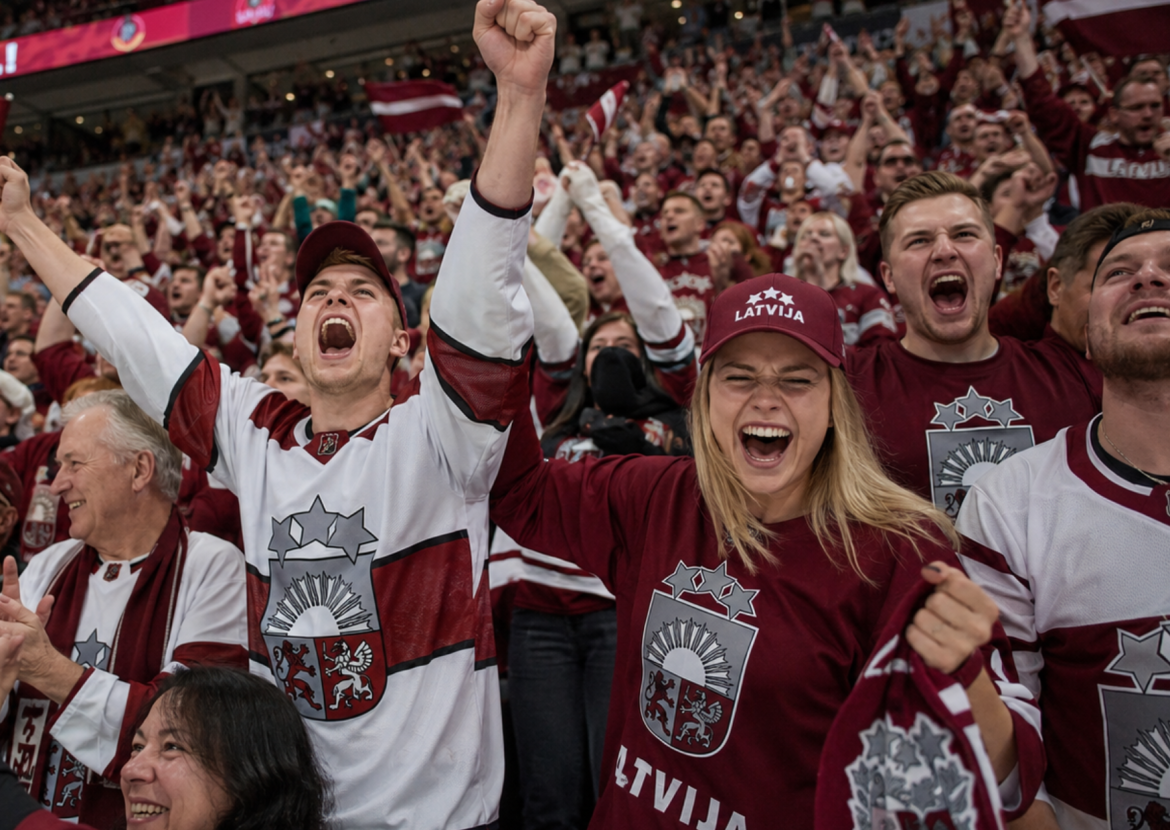
Such feelings, which we have experienced more than once, particularly in 2023, when we welcomed the athletes as national heroes after the Latvian national ice hockey team won the bronze medal at the World Championship, have been written about by numerous researchers, including the French sociologist Émile Durkheim, who analysed the so-called concept of “collective effervescence” in greater detail as early as the beginning of the 20th century.⁵ It arises at moments when a large number of people simultaneously experience the same emotions and participate in a shared ritual.
Today, the most typical examples of these rituals are singing the national anthem before a match or celebrating a victory together, which creates a strong sense of emotional unity that temporarily becomes more important than social, economic and political differences. May 2023 was a time when we felt this particularly strongly, and watching the games together or displaying pride in the country on social media created a shared emotional experience that strengthens national identity much more effectively than many political or information campaigns.
Following and supporting athletes’ achievements and progress is more than an emotional experience or a way of spending leisure time. It is an essential component of social cohesion that strengthens national identity at a time when political polarisation is increasing in many democratic countries. Sport enables people of different views, generations and social groups to experience shared emotions and identify with a common goal and values.
REFERENCES
1. https://www.academia.edu/16635459/The_Effects_of_Team_Identity_Formation_and_Sport_Team_Identification_on_Mental_Health_Cognition_Behavior_and_Physiology
2. https://communistcaucus.com/wp-content/uploads/2021/12/Bowling-Alone.pdf
3. https://www.oecd.org/en/publications/how-s-life/volume-/issue-_9870c393-en.html
4. https://www.researchgate.net/publication/348648205_Tajfel_and_Turner_Intergroup_Conflict_Theories_1997
5. https://durkheim.uchicago.edu/Summaries/forms.html