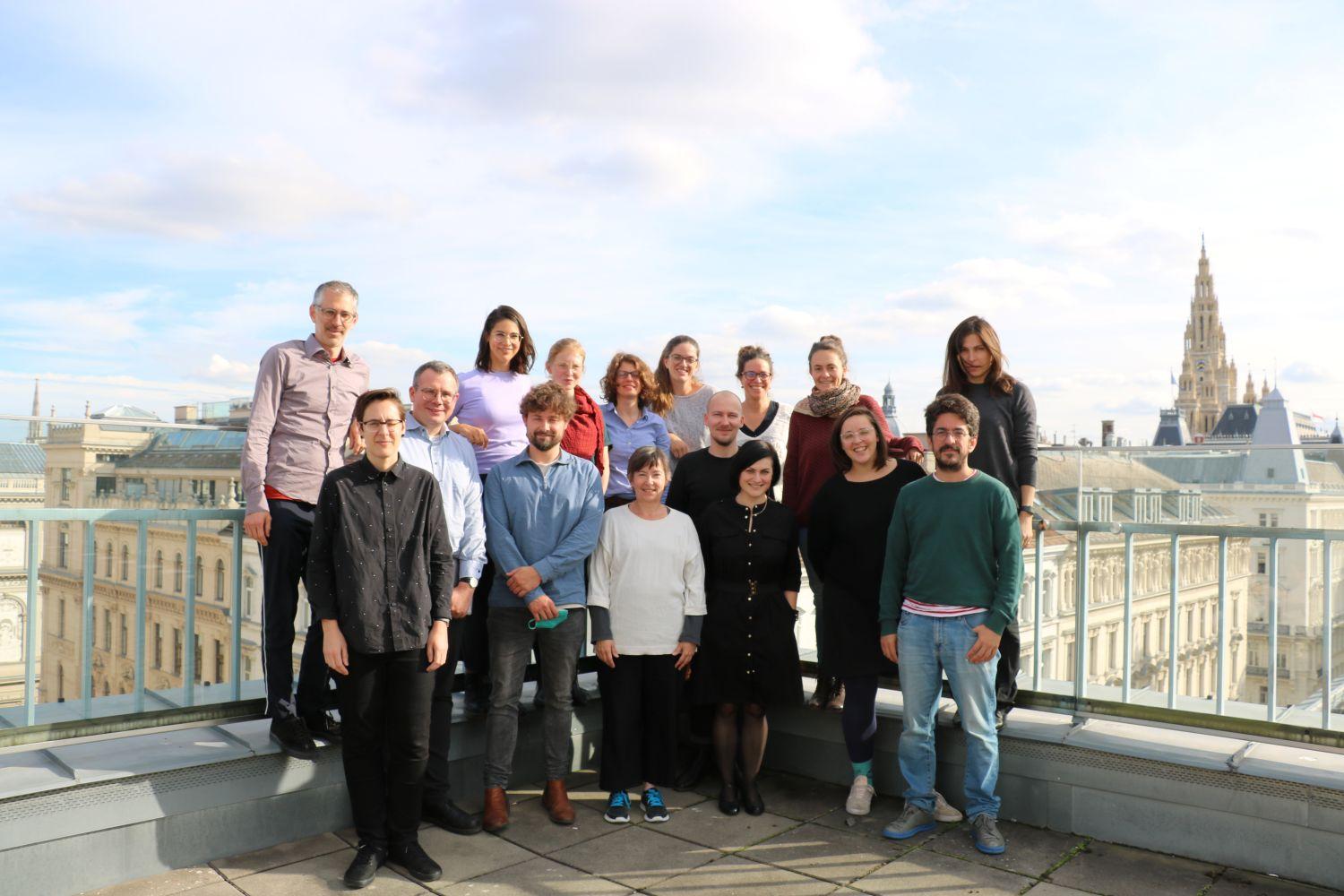
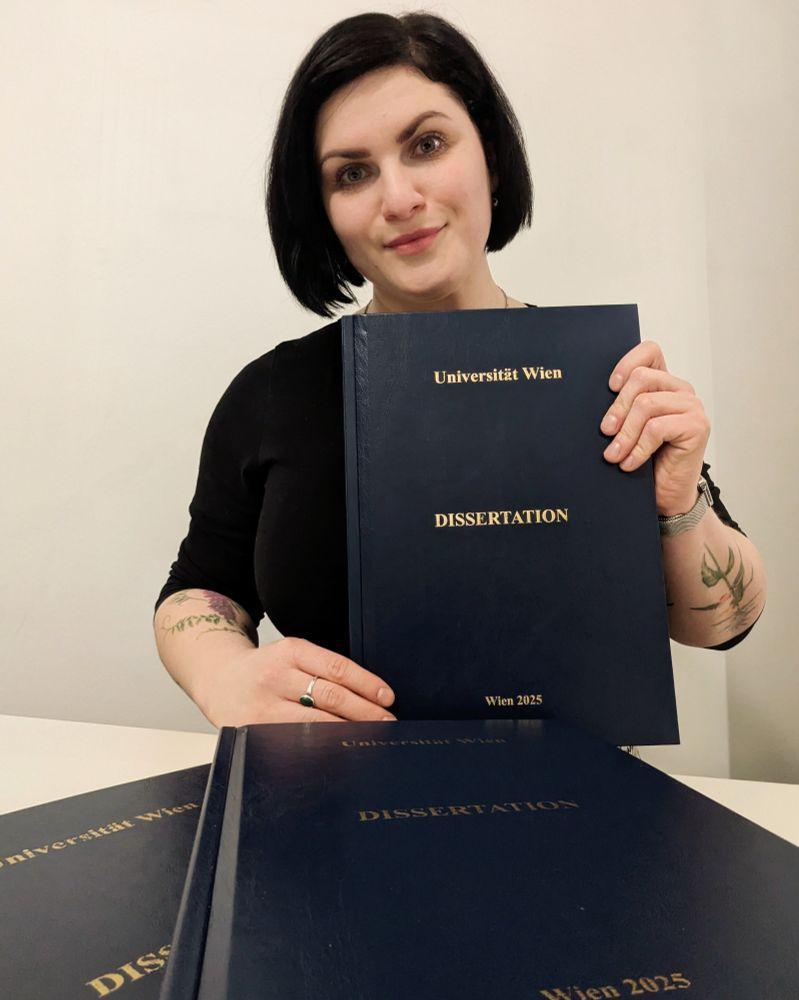
What really happens in a residential care home? What is everyday life like for people in a place that society often views only through stereotypes? To find answers to these questions, social anthropologist and researcher at the Faculty of Social Sciences of Rīga Stradiņš University (RSU) Anna Žabicka conducted research for several years at a rural social care centre in Latvia. This experience became the basis of her doctoral dissertation, which Anna successfully defended at the University of Vienna this summer.
Anna’s research is not the work of a typical desk-based researcher. To understand rural depopulation, demographic trends, and ageing processes, she conducted participant observation – living in a small rural care institution and sharing everyday life, afternoon coffee rituals, crises, and moments of loss with the care home’s residents and staff.
“The only way to truly understand people’s everyday lives is to be with them,” says Anna. In social anthropology, this is known as participant observation – a qualitative research method that involves not only interviewing people but also living in their environment for an extended period, becoming familiar with their daily routines, relationships, and experiences.
In a conversation about the invisible side of science, Anna Žabicka talks about her global career loop, the behind-the-scenes realities of research, and why the final stage towards obtaining a doctoral degree resembles a sadomasochistic high.
A Study That Began More Than a Decade Ago
Anna’s path in the academic world is an interesting one. Her first degree is in environmental science, and for some time Anna worked as a biology teacher. Her decision to enrol in the RSU master’s programme in anthropology in 2012 was spontaneous, yet fundamental.
“Stradiņš completely disrupted the path I had been following up to that point. Here I found what truly interested me, and that is medical and health anthropology,” Anna recalls. “For me, RSU always feels like coming home, because this is where my journey as a researcher began and where my closest colleagues are.”
After studying at RSU, Anna obtained a second master’s degree in social anthropology from Wayne State University in Detroit, USA, and later began doctoral studies at the University of Vienna, where her research focused on ageing, care, and the future of rural communities.
Eight Months in One Residential Care Home
The beginning of the research coincided with the Covid-19 pandemic, which significantly complicated access to social care centres. After many refusals, Anna found a municipal social care centre in rural Latvia where she was given the opportunity to become a volunteer and live alongside the care home’s residents.
From the summer of 2020 until the spring of 2021, she spent eight months there, later returning regularly in the following years as well.
“This is not the kind of research where you go for a single interview and then leave. People need time before they trust you. Sometimes it took four or five months before people began speaking to me completely openly.”
At the care home, Anna participated in everyday life – she drank coffee with the residents, helped with shopping, organised film evenings and cooking classes, went mushroom picking, and was simply present.
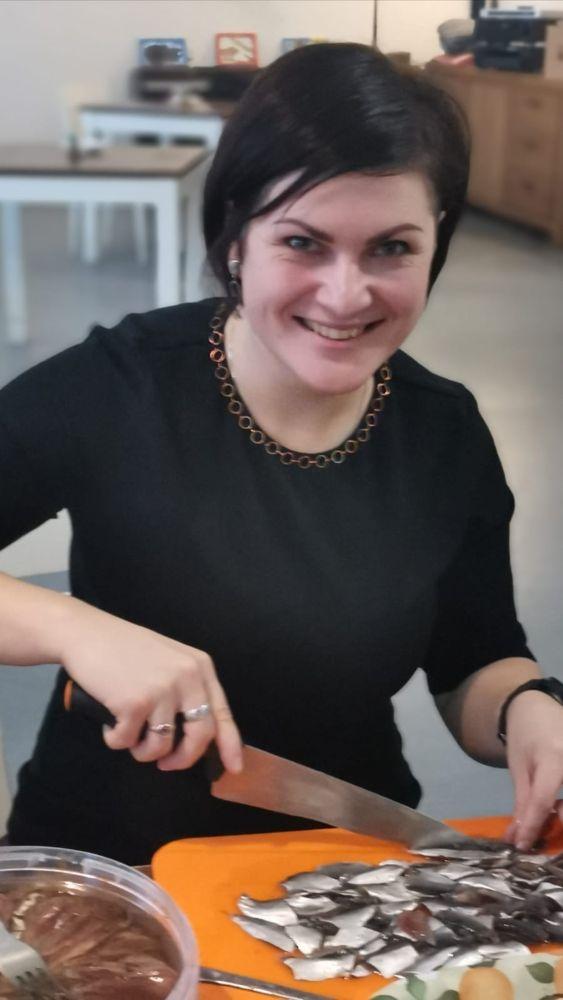
“I was interested not only in what people said, but in how they lived. How friendships developed. How people argued, reconciled, celebrated birthdays, fell in love, coped with loss, and shaped their everyday lives.”
Life, Not Just Care
In her doctoral dissertation, All Roads Lead to the Pansionāts: State Care as a Socio-Spatial Fix in an Emptying Rural Latvia, Anna examines how long-term social care institutions become a significant part of life in rural communities when many areas of Latvia are experiencing population decline and population ageing.
The main conclusion of Anna Žabicka’s dissertation challenges the widespread view in Latvia’s public and political discourse that care institutions are merely an economic burden and consumers of taxpayers’ money. The study examines ageing not as the ultimate form of the country’s emptying, but through the prism of care, relationships, and community processes. It reveals that a residential care home is one of the most stable and significant employers in rural areas, as well as an important contributor to maintaining formal and informal economic circulation. “We often perceive a residential care home as a place where life ends, but in reality, life continues there.”
A Researcher’s Responsibility Does Not End with the Dissertation
Although the doctoral dissertation has been defended, Anna still regularly returns to the care home.
“I would not want to be in a situation where I take what I need for my degree and then leave. Without these people, this research would not have been possible.”
Before defending her doctoral dissertation, the residents and staff of the care home were the first people to whom she presented the results of her research.
“It seemed important to me to give something back to the people who had entrusted me with their everyday lives.”
A Researcher’s Gratitude to Bartenders and Antidepressants
In the conversation, Anna Žabicka does not hide how difficult the path to a doctoral degree is. Writing a dissertation is a lonely, lengthy, and intellectually challenging process in which the feeling of unfinished work never goes away.
“Overall, it is a kind of sadomasochistic high,” she laughs. She then continues very openly: “In the acknowledgements section of my dissertation, I also mention a neurologist, a psychiatrist, antidepressants, a psychotherapist, and sleeping pills. This is what people usually leave unsaid. The work was constantly going round in my head, and I had severe sleep problems. At the same time, I also expressed my gratitude to bartenders. Every moment has its own helper.”
This experience has not diminished Anna’s love for science. Her supervisor in Vienna, Tatjana Thelen, noticed that even before the defence, Anna continued to speak about her research with tremendous enthusiasm and warmth, rather than with a desire to forget it as quickly as possible.
Looking to the Future
Anna currently continues her work at the RSU Faculty of Social Sciences and is involved in new research projects analysing societal change, demography, and everyday practices.
She is involved in the LALIFE project, which examines everyday practices and demography under conditions of geopolitical uncertainty in Latgale, and this autumn she will embark on new field research.
Her areas of interest include medical anthropology and the social dimensions of health. Anna acknowledges that Latvia has a vast number of critically and extensively under-researched topics – from the social causes of alcoholism to the processes generated in society by the arrival of workers from so-called third countries.
Her story demonstrates that research in social anthropology is not merely theory. It means having the ability to remain alongside people over an extended period, immerse oneself in their everyday lives, and help society recognise processes that often go unnoticed but are essential to understanding our shared future.