Adolescent mental health has become a firmly established topic in post-pandemic discussions among educators, families, the media, and healthcare professionals. Almost everyone knows a story about a young person who feels exhausted and unmotivated, no longer wants to go to school, spends most of their time on the phone instead of joining activities, has lost interest in movement and begun to gain weight, struggles to communicate with peers, and so on. The COVID-19 pandemic only intensified this backdrop: isolation, remote schooling, anxiety about the future, the war in Ukraine, and climate change. These events are experienced particularly intensely during adolescence, a period when a young person is discovering the world and still learning to regulate their emotions.
Psychologists working with adolescents, family doctors, and teachers observe three significant trends:
- An increase in the number of adolescents experiencing anxiety, depressive symptoms, self-harm, behavioural difficulties, and sleep or eating disorders.
- Many adolescents continue to live in a “digital bubble,” avoiding face-to-face contact with peers and other people; they avoid or even fear in-person communication and real-life situations.
- At the same time, general awareness of mental health is improving, adolescents and parents seek help more readily, speak more openly about daily challenges, and approach them more responsibly.
Consequently, the demand for timely, high-quality support is growing. Families search for specialists, yet waiting lists are long, and in many regions of Latvia, specialists are scarce. For example, consider a 15-year-old who still feels overwhelmed after the pandemic. They struggle to attend school, sleep poorly, feel weaker and less capable than others, and have lost confidence. There are no friends, no hobbies. Parents notice something is wrong and decide to seek help, and then begin a long journey of referrals, waiting lists, and conversations with various professionals. Depending on location, family resources, and other factors, the wait for the first visit may last from several weeks to half a year.
While the adolescent is still waiting and no initial assessment has taken place, no one truly knows what their psychological condition is. Are the risks to their life and health high enough to require immediate intervention? Or would lifestyle adjustments and cooperation between school, family, and the family doctor be sufficient? Specialists emphasise the need for modern, precise tools to identify adolescents at the highest risk in a timely manner.
This is precisely the challenge addressed by a team of researchers within the national research programme “Public Health” in the project “Development of New Computerised Assessment Methods for Measuring and Monitoring Adolescent Mental Health Outcomes in Post-COVID Conditions” (No. 1-PB-2/8/2024). In simple terms, scientists from Riga Stradiņš University (RSU) and Riga Technical University (RTU) are developing a new digital tool to help better and more quickly understand how a young person is feeling.
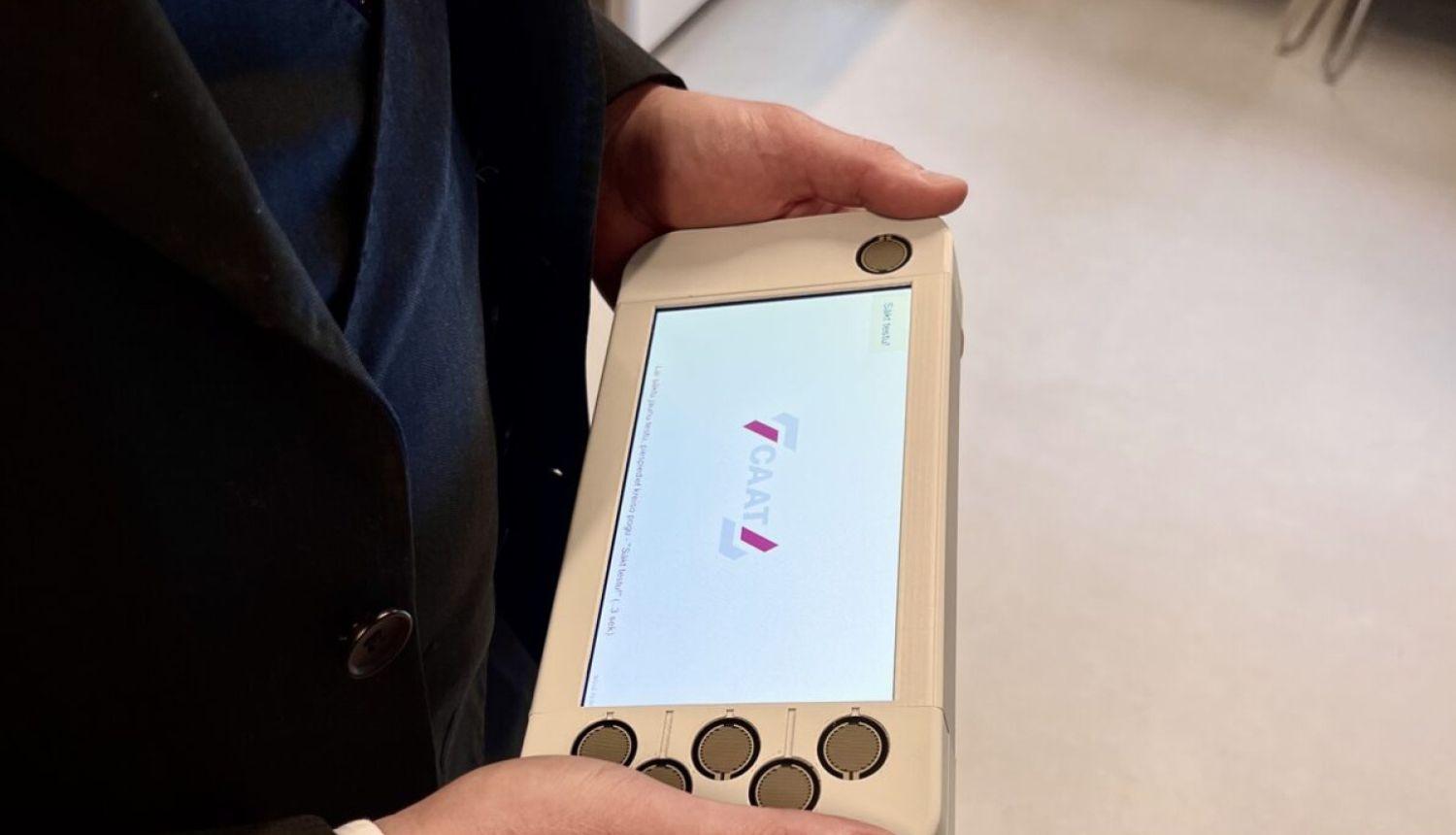
The digital tool is designed to computerise the assessment of symptoms of behavioural and emotional disorders in adolescents aged 13–19. It is a professional research instrument currently being tested and refined as a prototype, with the potential to become a valuable aid for psychologists.
The digital tool consists of two parts
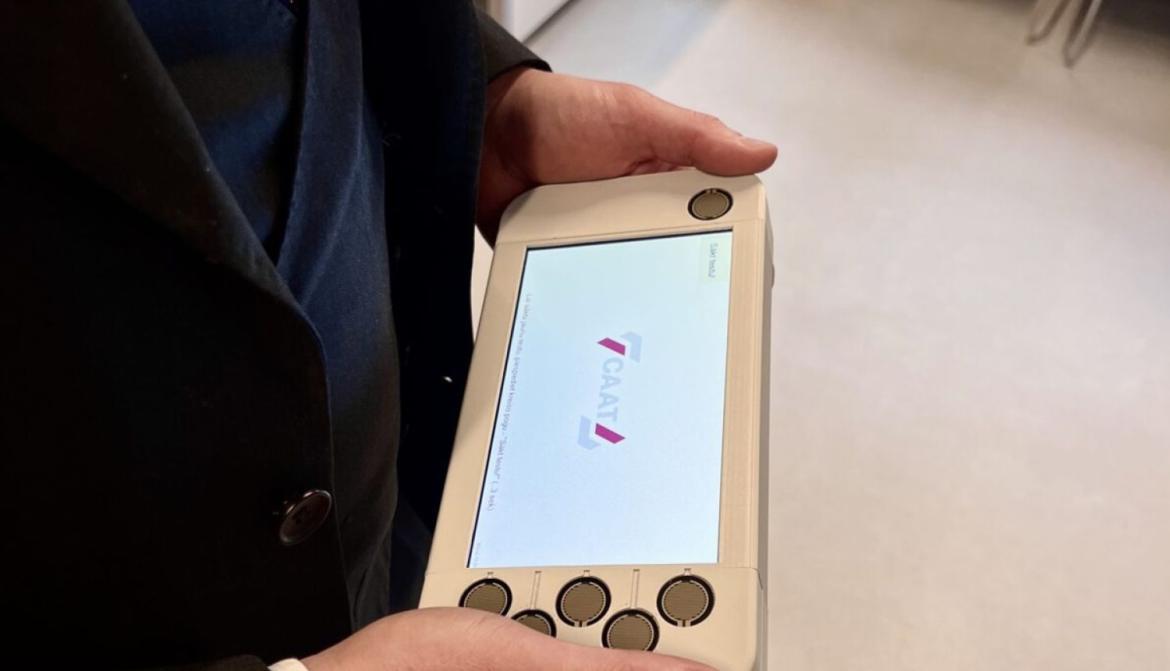
- The device itself is a special tablet created by RTU researchers. As the adolescent interacts with it, the tablet measures various physiological indicators and links them to mental-health-related parameters. It records psychophysiological data such as the speed of decision-making and the pressure applied when selecting an answer. These indicators can reflect tension, impulsivity, or avoidance of specific questions. This means the tool does not rely solely on what the adolescent reports, but also on how they respond.
- Tests and assessments integrated into the device, developed by psychiatrists, psychologists, and researchers to evaluate adolescent mental health based on age-appropriate criteria for Latvia. This part includes questions covering personality traits, anxiety and depressive symptoms, eating disorders, substance use, behavioural difficulties, and suicidal thoughts and risk.
The new tool helps psychologists detect behavioural and emotional symptoms sooner, create an appropriate support plan, activate family resources, and offer recommendations to teachers and support staff at school.
Project stages within the national research programme
- Development of statements/questions. Psychologists created sets of statements for anxiety, depression, eating disorders, addictions, and more. Experts reviewed these, two certified clinical and health psychologists, four certified child psychiatrists (including a narcologist and a psychotherapist specialising in eating disorders), as well as adolescents themselves, to ensure accuracy, clarity, and cultural relevance.
- Creation of the digital solution. RTU engineers, together with psychologists, developed the software and tablet device, integrating pressure sensors and designing data-processing algorithms to record psychological and physiological parameters precisely.
- Testing in clinical and general populations. The tool was tested with adolescents already receiving specialist care and with students in schools who have no diagnosed mental health issues. This allows for clear benchmark values when a situation falls within normal limits and requires only school or family support, and when specialist involvement is necessary.
- Large-scale testing involving more than 1,000 adolescents, followed by data analysis and evaluation of the device’s functions to ensure its future usability in Latvia’s healthcare system.
Benefits for everyone involved
If such a tool becomes available in psychologists’ offices at schools or healthcare facilities, early signs of mental-health risks can be detected and documented sooner.
Adolescents may find it easier to start a conversation, as many prefer answering digital questions before speaking directly with a specialist. For young people who struggle to express their feelings verbally, psychophysiological measurements reveal what words cannot capture. Parents, too, benefit; specialists can provide more precise explanations of the child’s emotional state and recommend evidence-based support rather than relying solely on subjective impressions.
For psychologists, this digital tool offers a modern, standardised, scientifically grounded instrument that is both professionally robust and easy for adolescents to understand. For the healthcare system, the collected data can serve as an objective foundation for updating clinical guidelines in adolescent mental health care. At the national level, this research supports evidence-based policymaking on service planning and funding, and on understanding the overall state of adolescent mental health in Latvia.
By implementing this project as part of the national programme “Public Health,” the state acknowledges adolescent mental health as a national priority, not merely the initiative of a few dedicated individuals. If adolescents burn out already in school, if they learn to live in constant anxiety and hopelessness, the consequences affect numerous fields vital to society’s development and resilience: education, the economy, demography, social trust, and security. Healthy adolescents are essential for the country’s safety and future.
That is why it is so vital that Latvian scientists develop evidence-based, computerised, culturally adapted tools specifically for Latvian professionals and young people. This is science serving an efficient mission.
Notice and understand: Your health
Journalist Gustavs Terzens, together with young science ambassador Roberts Rožkalns, visits the research team to learn how this innovative digital tool is being developed to understand youth mental health in post-COVID times better.
What is this new computerised method for assessing adolescent mental health?
Watch the video to see how classical psychological tests can be combined with new technologies, including psychophysiological measurements. The newly developed tablet will enable more precise assessment of an adolescent’s emotional state, timely risk identification, and earlier support for families and specialists.