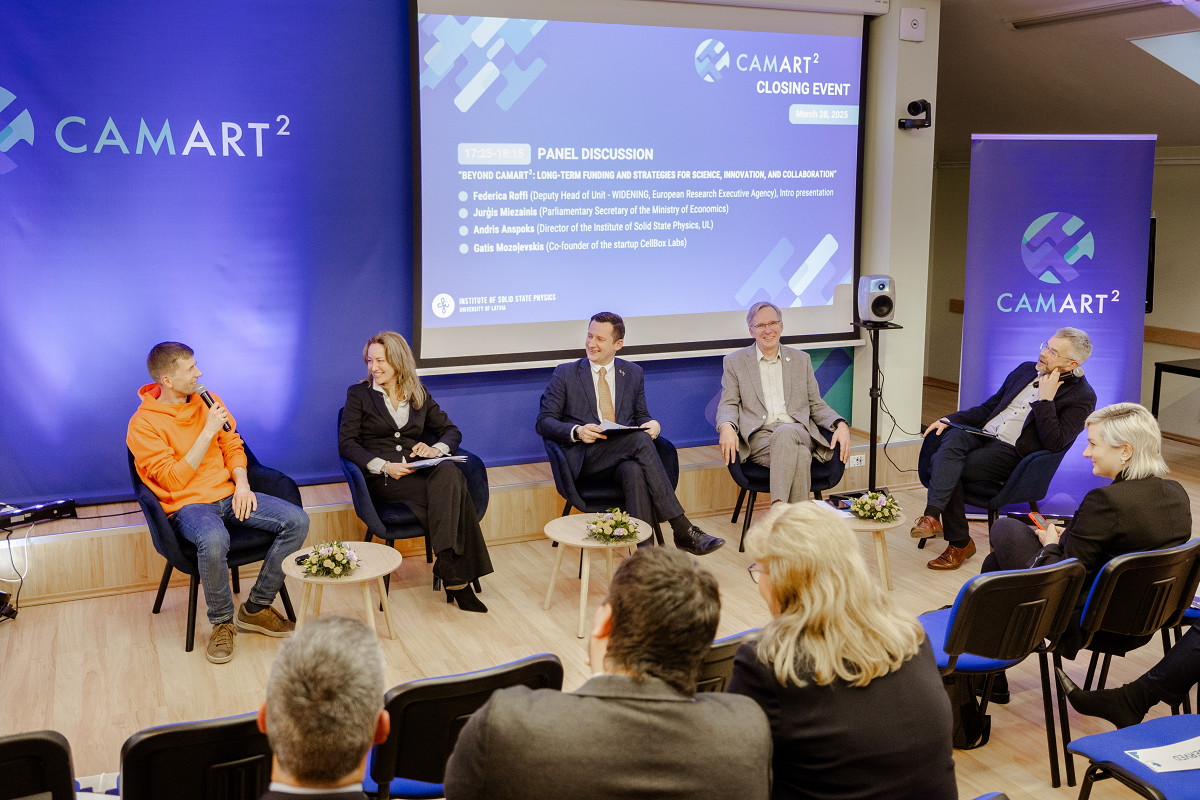
On March 28, 2025, the Institute of Solid State Physics, University of Latvia (ISSP UL) hosted the closing event of the CAMART2 project. The event brought together representatives from European institutions, Latvian ministries, foreign embassies, project partners from Sweden, and industry representatives.
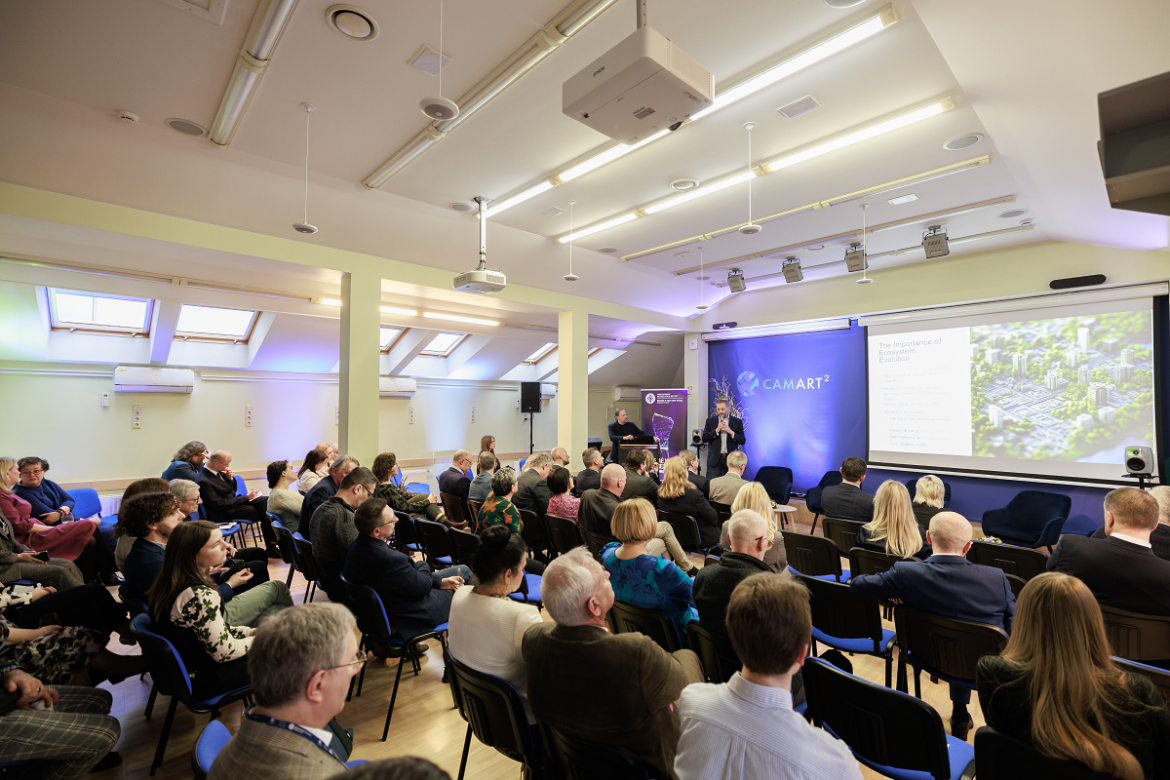
The event was opened by Mārtiņš Rutkis, CAMART2 project leader, followed by welcome speeches from Zane Petre, Head of the European Commission Representation in Latvia, and Federica Roffi, Deputy Head of the WIDENING Unit at the European Research Executive Agency (REA). Roffi emphasized that "CAMART2 is an outstanding example of how EU funding can foster research and innovation, strengthen scientific collaboration, and contribute to sustainable development."
Key speakers included Andris Šternbergs, Deputy Director for Science at ISSP UL; Robert-Jan Smits, former Director-General of the European Commission’s Directorate-General for Research and Innovation; and Björn Samel, Vice President for Smart Hardware at the Swedish research institute consortium RISE. Samel expressed Sweden’s commitment to further collaboration:
"The results of this project demonstrate that, by working together, we can achieve remarkable goals. We are eager to continue our collaboration with ISSP UL to develop new technologies and solutions that align with modern market demands."
Professor Mikael Östling, former Vice President of the Royal Institute of Technology (KTH) in Sweden, emphasized how long-term international collaboration, established through CAMART2, has significantly contributed to the development of science and technology. He concluded his speech by stating:
"We are proud to be part of this process and to witness its impact not only in Latvia but across Europe!"
The discussion on cooperation and innovation in Europe continued with insights from Vesna Bengin, founder of the TEAMING Project Club from Serbia, Ivars Ijabs, Member of the European Parliament, and Andris Anspoks, Director of ISSP UL.
ISSP UL Director Andris Anspoks on the Achievements of CAMART2
"As we conclude CAMART2, we can proudly say that we have modernized our center of excellence in science and innovation and strengthened our international presence. Our Swedish partners played a crucial role in this journey. CAMART2 has proven that long-term investment in science yields results when combined with strategy, process optimization, capacity-building, and modern infrastructure."
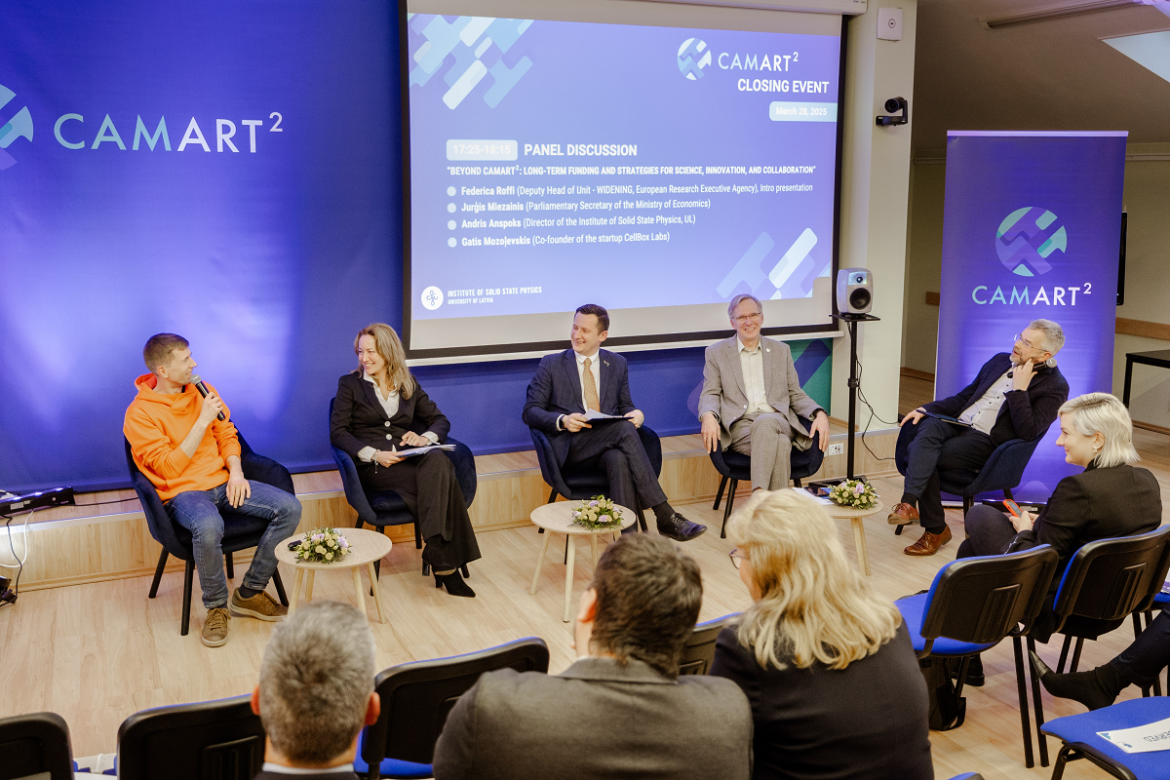
Following the speeches, a panel discussion took place: “Beyond CAMART2: Long-Term Funding and Strategy for Science, Innovation, and Collaboration”. Panelists included Andris Anspoks (ISSP UL Director), Federica Roffi (European Research Executive Agency), Jurģis Miezainis (Parliamentary Secretary of the Latvian Ministry of Economics), and Gatis Mozoļevskis (Co-founder of ISSP UL spin-off CellBox Labs). Discussions focused on the resilience of European science in a shifting geopolitical landscape, emphasizing the power of diversity and collaboration in maintaining Europe’s competitive edge.
CAMART2 Project Impact
Implemented over eight years, the CAMART2 project invested over €30 million in modernizing ISSP UL research and innovation ecosystem. Through staff development, partnerships with innovation-driven companies, and infrastructure improvements, the project significantly enhanced commercialization opportunities for new materials and technologies and expanded collaborations with leading research centers and enterprises worldwide.
Key outcomes of the project include:
- ISSP UL financial turnover tripled (from €3M to €9M annually).
- International project funding increased fivefold (from €0.5M to €2.5M per year).
As a result, ISSP UL has strengthened its position as a key player in the international science and innovation landscape, paving the way for future growth.
For more information: CAMART2 website | EuroNews coverage
About CAMART2
CAMART2 (Grant Agreement No. 739508) was implemented in collaboration with KTH (Sweden) and RISE (Sweden), with a total budget of €30 million: €14.99M funded by the European Commission, €15.32M co-financed by the Latvian Ministry of Education and Science, the Ministry of Economics, and ISSP UL under the Specific Support Objective Project No. 1.1.1.4/17/I/002.
About ISSP UL
The Institute of Solid State Physics, University of Latvia (ISSP UL) is a leading materials science research center in the Baltic Sea region, specializing in interdisciplinary research. With 300 staff members, including 100 highly qualified scientists, ISSP UL conducts cutting-edge research, educates students, and develops innovative industrial solutions.