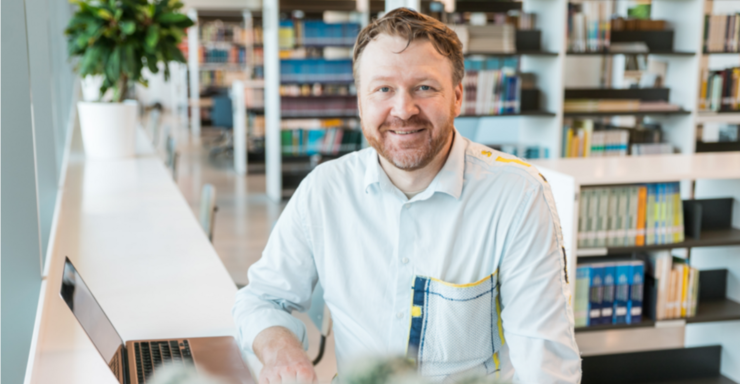
“The profession of a family doctor is still surrounded by various stereotypes, which can also influence the career choices of young doctors,” reveals a large-scale study conducted by Rīga Stradiņš University (RSU). The study included interviews with students of the Medicine programme and an analysis of medical students’ attitudes toward the family medicine speciality. One member of the research team is doctoral student Ieva Griķe from the Social Sciences programme, subprogramme Health Management. She aims to challenge these stereotypes and, together with her colleagues, seeks to identify the key barriers to attracting young doctors to family medicine. The reality turns out to be much broader and more complex.
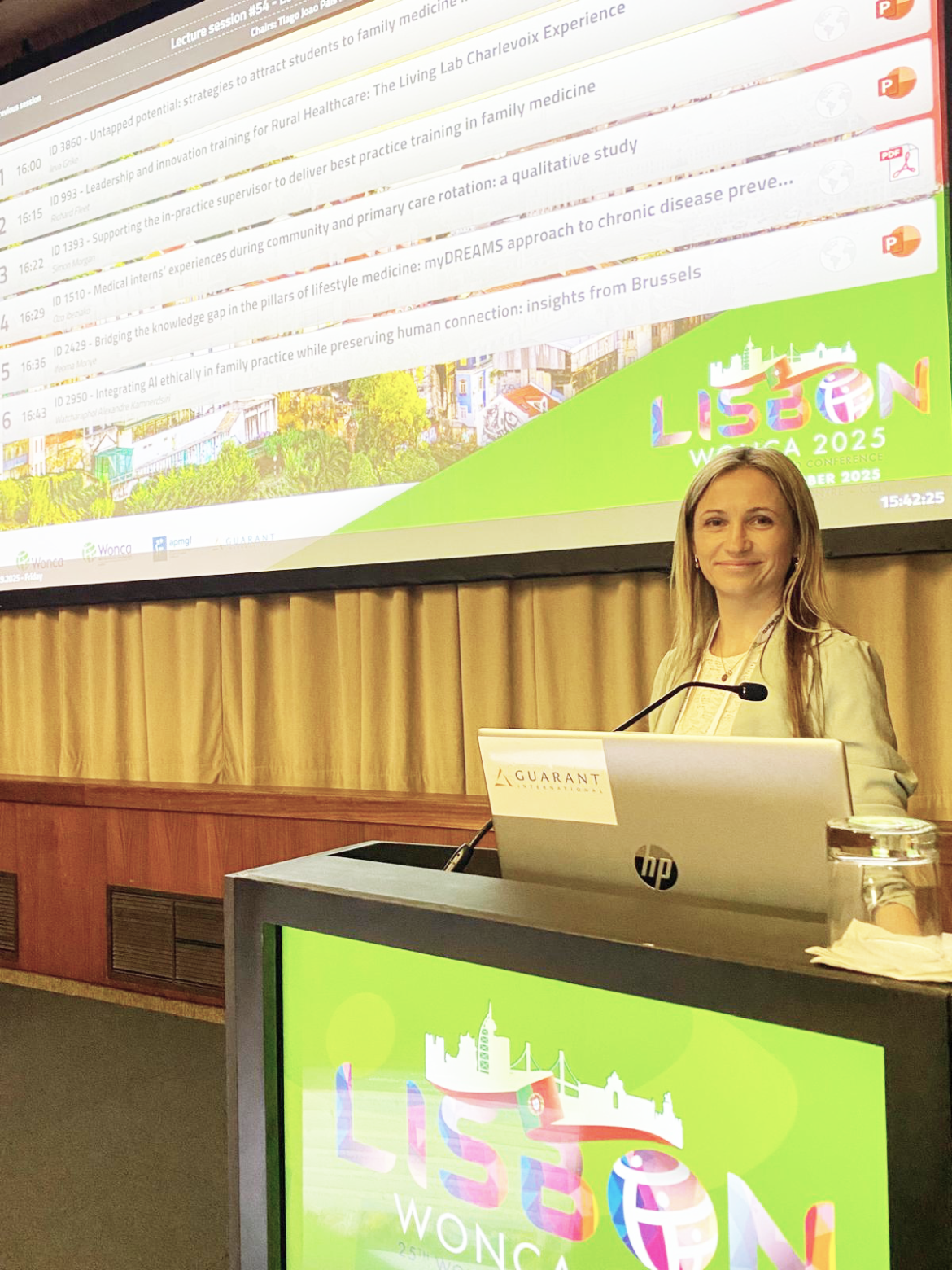
We introduce doctoral student I. Griķe and her research.
I. Griķe is not only a doctoral student at RSU; her professional career has been connected with the university at several stages. She initially worked in the RSU Doctoral Studies Department, later led residency processes in the Residency Department, and is currently the Director of the RSU Lifelong Learning Centre. Since 2007, her career has been linked to higher education and science policy, including work at the Ministry of Education and Science.
Her first degree is in political science, and she holds a master’s degree in health management. This combination of experience has provided a strong foundation for her doctoral studies, where she integrates professional experience with her scientific interest in health policy.
Your doctoral thesis is being developed within the framework of the National Research Programme project “Strengthening the Vitality of Family Doctors in Latvia: Challenges and Solutions.” Why did you choose this topic?
While working at the RSU Residency Department, I planned and coordinated residency processes and education for future specialists, and collaborated with residency programme directors and healthcare institutions across approximately 60 programmes. This enabled me to develop a deep understanding of the challenges in residency training. Since RSU and the University of Latvia jointly organise residency admissions, I was closely involved in the process and had a comprehensive view of the situation in Latvia.
Even then, it was clear that certain medical specialities were particularly needed by the state in large numbers. However, these are often not the most popular choices among young doctors. For example, family medicine is one of the less frequently chosen specialities. A similar situation exists for internal medicine and emergency medicine.
These are crucial specialities for ensuring primary healthcare, yet student interest remains relatively low.
Our research confirmed that this is not merely an issue of individual choice; it is influenced by the organisation of the healthcare system, the work environment, the prestige of the speciality, and career prospects.
I had already started my doctoral studies, and my initial topic was broader, focusing on shortage specialties. When the Ministry of Health announced this project, which specifically addresses factors influencing recruitment and retention in family medicine, it aligned closely with my professional background and education, combining political science and health management.
The study is extensive. Which parts were you involved in?
The research is currently in its final phase. I was mainly involved in two work packages: analysing external environmental factors related to student recruitment and retention of young doctors, and developing recommendations for improvement.
We examined the regulatory framework for attracting and retaining family doctors, interviewed state institutions, municipalities, and professional associations, and assessed their perspectives and the tools they use to improve the situation. We also reviewed scientific literature to understand global practices, what works and what doesn’t.
In Latvia, two universities, the University of Latvia and RSU, train young doctors. We also evaluated how early students are exposed to family medicine during their studies, as motivation often develops early.
In another work package, colleagues in social anthropology interviewed students, residents, and young family doctors to understand their perspectives.
What surprised you most in the findings? What could be improved?
On the one hand, a lot is already being done by the state and universities. The positive aspect is that the problem has been clearly identified.
However, many planned actions lack funding.
At the same time, the study showed that the main challenge is not only financial.
Often, the issue lies in the lack of coordinated action and a clear long-term plan; many institutions are active, but their efforts do not form a unified system.
The current approach is fragmented, lacks oversight, and doesn't provide a clear long-term vision.
If you had to promote family medicine residency to final-year students, what would you highlight?
Interviews revealed a perception that family doctors primarily handle administrative tasks and referrals.
In reality, it is a very broad speciality with significant opportunities for professional growth. Modern technologies are increasingly used, including ultrasound.
Family medicine may seem simple, but it is one of the most demanding specialities. To excel, one must possess knowledge across multiple specialities, including dermatology, internal medicine, cardiology, otolaryngology, and others.
The study also shows that young doctors value the work environment, teamwork, professional support, and modern practice settings. In many countries, family medicine is organised as team-based rather than individual practice.
If you became Minister of Health tomorrow, what would you change?
Young doctors make decisions not only about specialities but also about their entire lifestyle, work environment, team, region, administrative burden, and future security.
The first step would be to create a structured, supportive primary care model in which doctors do not feel isolated.
This would involve a coordinated system with continuity, teamwork, and institutional support, along with clearer collaboration between the state, municipalities, and other stakeholders.
What are doctoral studies like?
Doctoral studies require strong self-discipline. There is a lot of independent work.
Maintaining discipline can be challenging, but working in a research team helps, deadlines motivate, and discussions improve understanding and interpretation.
Have you had international opportunities?
We presented our results at two conferences: the European Rural Family Medicine Conference and the World Organisation of Family Doctors Congress.
It was insightful to see that our challenges are not unique; many countries face similar issues, though some have more developed systems.
What can we learn from other countries?
The United States and Canada offer valuable examples. Since the 1960s–70s, they have systematically encouraged interest in primary care.
For example, longitudinal learning pathways allow students to follow patients over time and gain deeper insight into family medicine, often influencing career choices.
What about your work at the Lifelong Learning Centre?
We are expanding educational offerings, including programmes in social sciences and digital transformation, as well as micro-credential programmes.
These allow professionals to acquire relevant skills quickly and will become increasingly important for adapting to labour market changes.
The centre aims to become a place where people can return at different life stages to reskill or upskill.