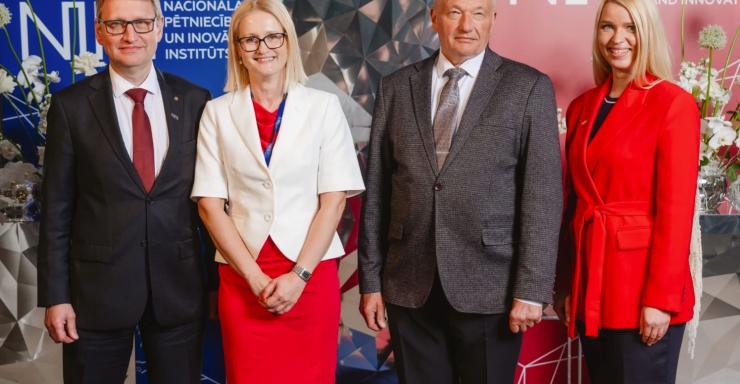
The CAMART² project, an eight-year Horizon 2020 Teaming initiative, has officially concluded with the European Commission’s approval of its final report. With 30 million EUR in total funding (15M from the EU and 15M from national sources), the project’s goal was to modernize the Institute of Solid State Physics, University of Latvia (ISSP UL) into a world-class Centre of Excellence in research, innovation, and international collaboration.

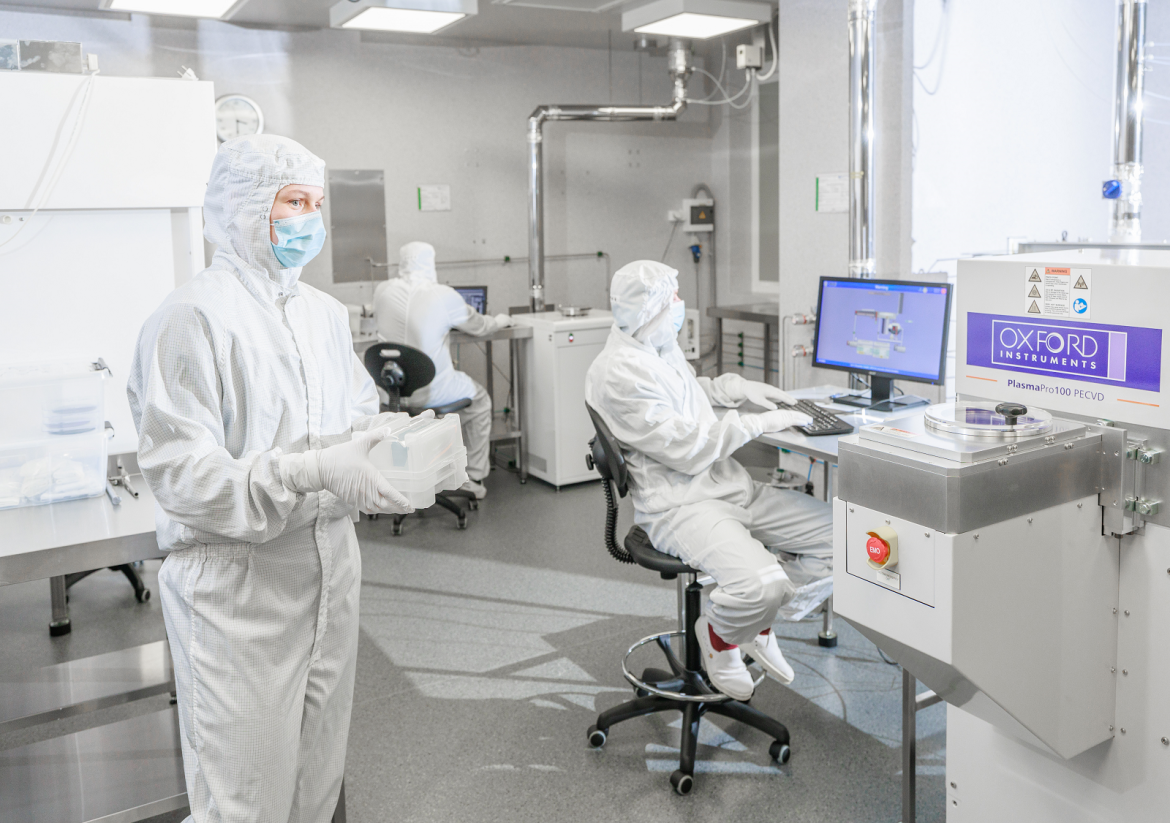
Over the past decade, CAMART² has reshaped ISSP UL. The institute has expanded its team and attracted more international talent (from 200 employees to 300), developed new Master’s and PhD programmes, and invested 15 million EUR in cutting-edge infrastructure. Scientific output has grown in both quality and volume, collaborations with industry and international partners have intensified, and several spin-off companies have emerged from its innovation ecosystem all resulting in annual revenues tripling from 3M EUR to 9M EUR.
The success of the CAMART² project is also lauded by the European Commission: “The project has delivered exceptional results with significant immediate or potential impact [..] has reached its main objectives and established the structural conditions for ISSP UL to operate effectively in the post-CAMART² era”.
Andris Anspoks, Director of ISSP UL, says: “CAMART² proves that strategic, long-term investments in science, combined with capacity building and modern infrastructure, yield significant results.”
Looking ahead, ISSP UL will build on the foundations laid by CAMART² to further increase its international competitiveness and deepen cooperation with academia, industry, and society.
The Institute thanks its staff, project team, and partners KTH Royal Institute of Technology and RISE Research Institutes of Sweden for their dedication and support in making this transformation possible. More about the impact of the CAMART² project.
The “CAMART²” project’s aim at ISSP UL has been to further modernize the Centre of Excellence in Advanced Material Research and Technology in partnership with KTH Royal Institute of Technology and the RISE Research Institutes of Sweden. A total of EUR 30 million has been invested in the implementation of “CAMART2” (Grant Agreement No. 739508): EUR 14,999,955 allocated by the European Commission, as well as EUR 15,320,196 in co-financing from the Ministry of Education and Science of the Republic of Latvia, the Ministry of Economics of the Republic of Latvia, and the Institute of Solid State Physics, University of Latvia (ISSP UL) within the framework of the Specific Support Objective project No. 1.1.1.4/17/I/002.
The Institute of Solid State Physics, University of Latvia (ISSP UL), is an internationally recognized leader in materials science and interdisciplinary research in the Baltic Sea region. The institute, with 300 employees and over 100 highly qualified scientists, conducts internationally competitive research, educates students, and offers innovative solutions for industrial needs.