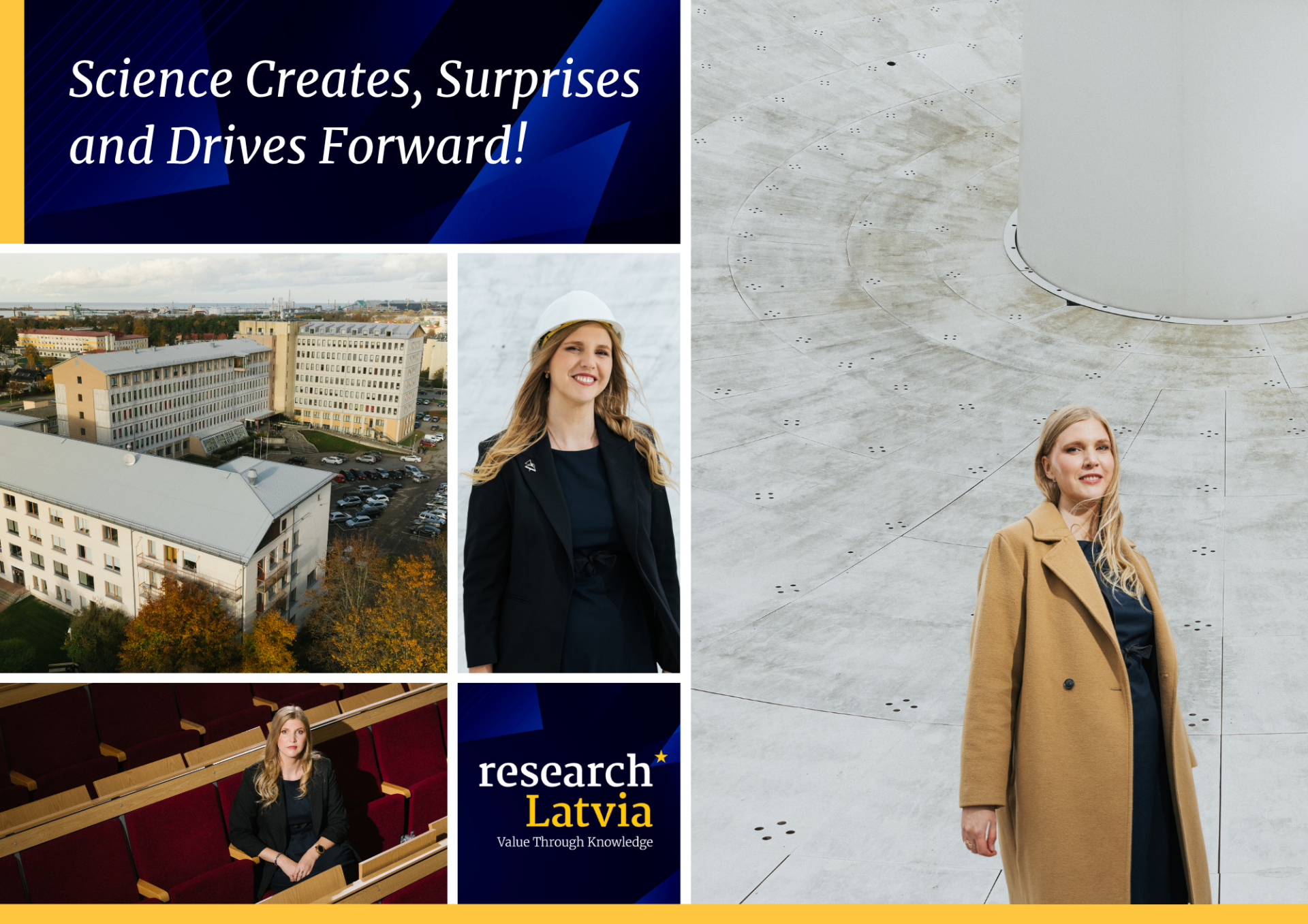
When Information Technology Meets the Universe Space exploration is becoming increasingly important, expanding humanity’s knowledge of the universe, promoting innovation and technological development, and attracting new talent to science. Her work highlights the importance of combining expertise from various fields to address complex scientific questions. At such a point of cooperation between technology and astronomy is the doctoral candidate Mg. sc. comp. Karina Šķirmante, a leading researcher and lecturer at Ventspils University of Applied Sciences (VeA).
Karina’s research activities cover high-performance computing and data processing, focusing on space technology projects. She is actively involved in the European Space Agency’s Comet Interceptor project, which aims to launch a probe in 2029 to study a comet that has never come close to the Sun directly in space for the first time. In preparation for this mission, Karina, together with colleagues from the Ventspils International Radio Astronomy Centre (VSRC) of the Institute of Engineering Sciences of the Estonian Academy of Sciences, is modelling comet activity in the radio frequency band, in collaboration with researchers from the Tartu Observatory (Estonia) and Aalto University (Finland). This international collaboration is helping to develop and calibrate the instruments that will be used during the mission.
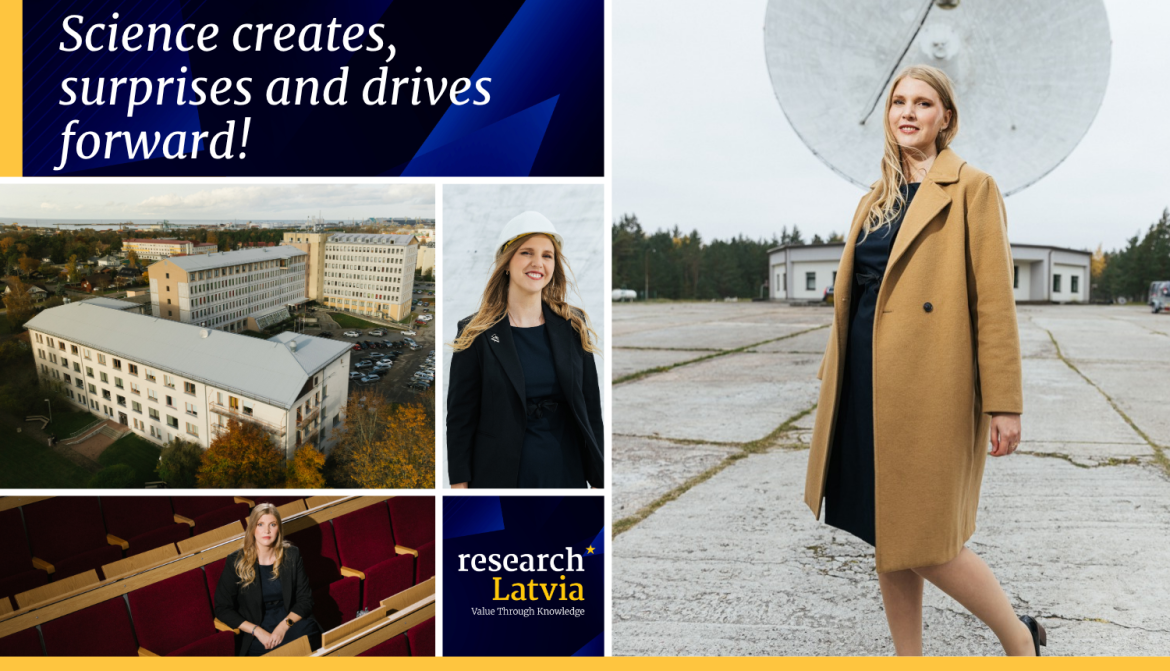
"This probe will be located at the so-called "Lagrangian 2" point and will wait for a suitable comet. When it gets close, the probe with subproblems will head towards it to obtain as many images and data as possible," explains VeA's lead researcher K. Šķirmante.
In parallel, she develops student involvement in radio astronomy, providing an opportunity to apply information technology knowledge in real research projects – from data processing to machine learning solutions: "When a student sees that his IT knowledge is practically applicable in science, there is also a desire to work further in this direction," emphasizes the VeA leading researcher and lecturer at the Faculty of Information Technology.
The future doctor's creative contribution is also manifested in other areas. Karina is one of the developers of the modern, mental health-adapted app EMORI. It has won the internationally recognised "Red Dot" award for excellent design and a carefully thought-out approach to promoting emotional self-regulation.
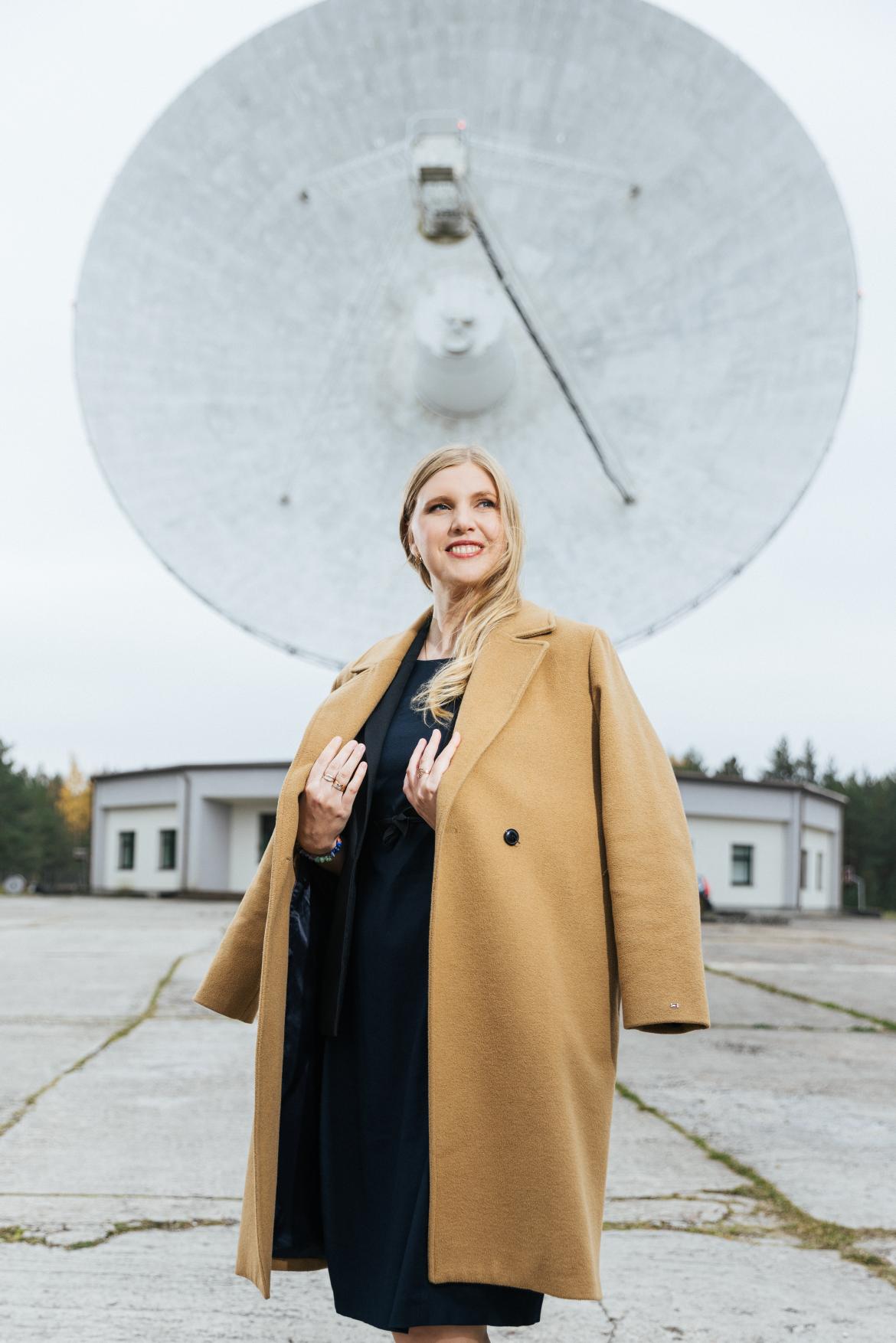
"The greatest satisfaction in research comes to me when I see that my persistent daily work culminates in the publication of an article, the creation of a new project idea, the implementation of successful cooperation and the successful transfer of knowledge to students," says Mg. sc. comp. Karina Šķirmante.
Mg. sc. comp. Karina Šķirmante is an inspiring example of how high-level research with international significance is developing in Latvia, based on technology management, international cooperation, and the education of future scientists. Her work demonstrates that Latvian researchers are essential partners in global science projects and future missions into the universe.
About the “Science Calendar 2025”
This activity is implemented within the framework of the ERDF project No. 1.1.1.1/1/24/I/001 “More Effective and Smarter Implementation and Management of Latvia’s Science Policy”, carried out by the Ministry of Education and Science.
The project developers include the creative team of SIA "Entuziasti Digital", featuring Mārtiņš Pavasaris, video director Kristaps Mozgirs, and photographer Mārtiņš Goldbergs, as well as the researchLatvia team.
Since 2018, the Science Calendar "Research Latvia" and traveling exhibition have been created to promote awareness of Latvian scientists' achievements, enhance public understanding of the importance of science, and inspire young people to engage in scientific fields.