Latvia and Lithuania share common challenges related to the implementation of the European Union’s environmental policy, which places particular emphasis on the development of urban green infrastructure and the introduction of climate-adapted, resilient greenery. However, at the practical level, municipalities and industry professionals often lack the necessary knowledge and skills to integrate such sustainable and scientifically grounded approaches into local development planning documents, landscape design, and construction.
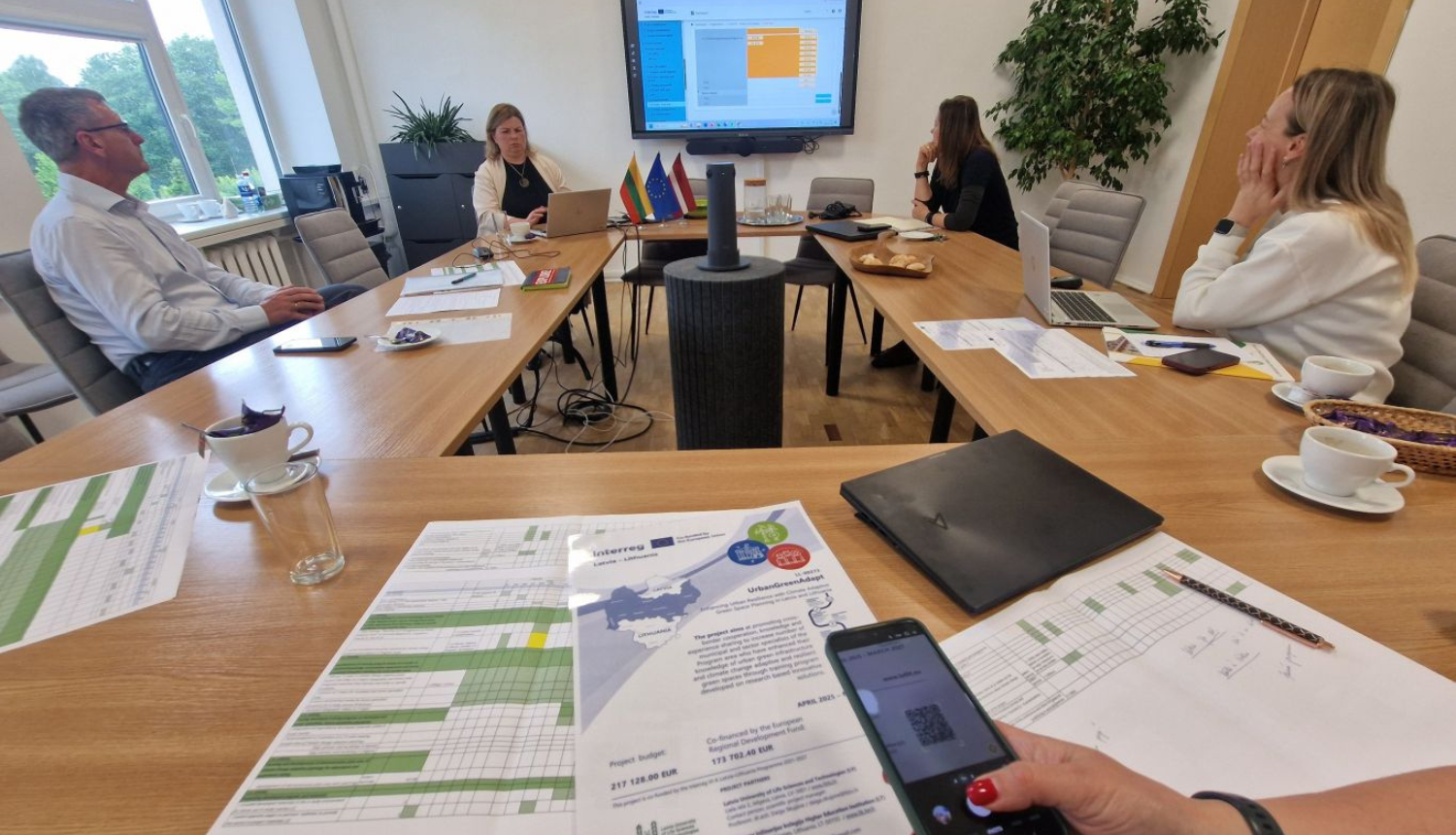
Researchers from the Institute of Landscape Architecture and Environmental Engineering at the Latvia University of Life Sciences and Technologies, in collaboration with colleagues from the Lithuanian College of Engineering (Lietuvos inžinerijos kolegija), have launched an international cooperation project titled “Development of Climate-Adapted Greenery for Enhancing Urban Resilience in Latvia and Lithuania”.
The aim of the UrbanGreenAdapt project is to strengthen the capacity of municipalities and sector specialists within the programme territory of Latvia and Lithuania by equipping them with knowledge and skills regarding innovative, research-based solutions for designing and integrating climate-resilient greenery into urban green infrastructure. This experience will serve as crucial support for local governments in implementing EU environmental policy requirements, fostering sustainable spatial planning and management.
Project activities will focus on selecting suitable plant species for urban areas and developing biodiversity-rich green infrastructure that enhances both the ecological resilience of cities and residents’ well-being. A study will be conducted to assess the current situation and challenges in planning, implementing, and managing greenery and green infrastructure in Latvian and Lithuanian cities. Based on the results, a specialized training programme, methodological materials, and a handbook will be developed for municipal staff, industry professionals, and students in related fields. The training programme will also be piloted during the project to ensure its practical relevance and effectiveness.
To educate and inform the public, a pilot site with climate-resilient greenery will be established in Jelgava, and animated infographic video materials will be produced to visually communicate the project’s content.
The innovative aspect of the UrbanGreenAdapt project lies in the development of a range of climate-adapted and urban-resilient plant species - a field that has not been extensively studied in either Latvia or Lithuania. This new approach will promote the development of greener, more resilient, and climate-adapted cities while increasing public awareness of the importance and role of sustainable greenery in today’s urban environments.
Project website: https://latlit.eu/
More information about the project is available on the Latvia University of Life Sciences and Technologies website.
The project is implemented under the Interreg Latvia–Lithuania Cross-Border Cooperation Programme (Project No. LL-00273, UrbanGreenAdapt).