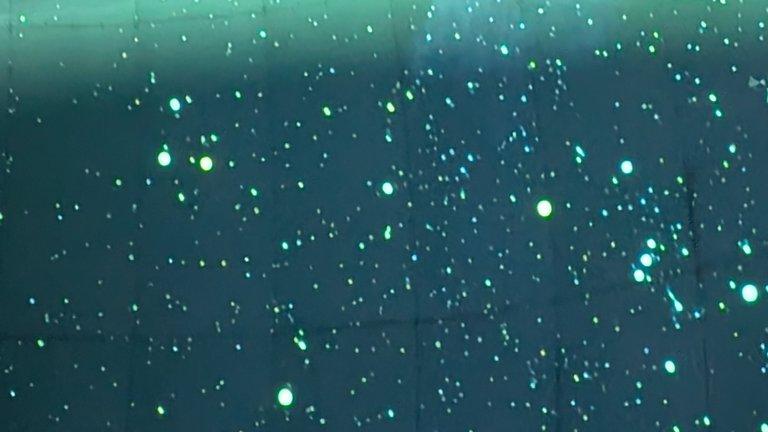
The asteroid, observed by an astronomer at the Baldone Observatory on the night of July 29, 2017, has now been officially confirmed as a new discovery and included in the catalog under the name "LU Fonds", reports the University of Latvia (UL).
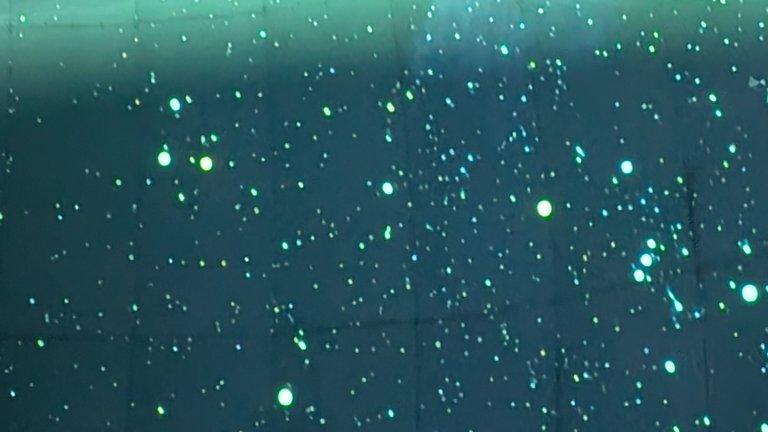
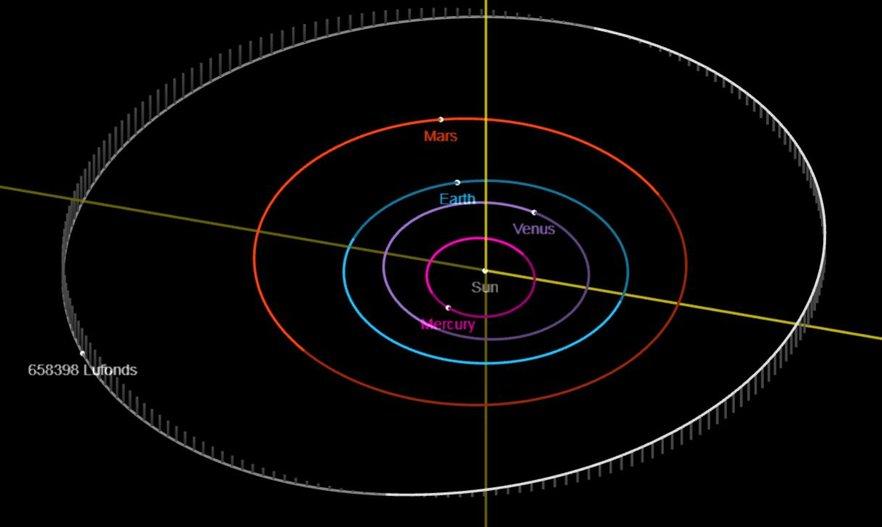
The asteroid 658398, also known as Lufonds = 2017 RE3, has been named in honor of all University of Latvia (UL) Foundation patrons, who have contributed to Latvian education, science, and the modernization of the Baldone telescope. Although it was first observed long ago, it is not uncommon for the confirmation of a new object to take five or more years.
"To fully confirm the discovery of a new object, multiple observations are required to verify its movement along a defined orbit. The positional measurements of the asteroid 'UL Fund' were gathered during 15 close approaches to Earth, with observatories worldwide contributing to the process," explains Ilgmārs Eglītis, lead researcher at the UL Institute of Astronomy.
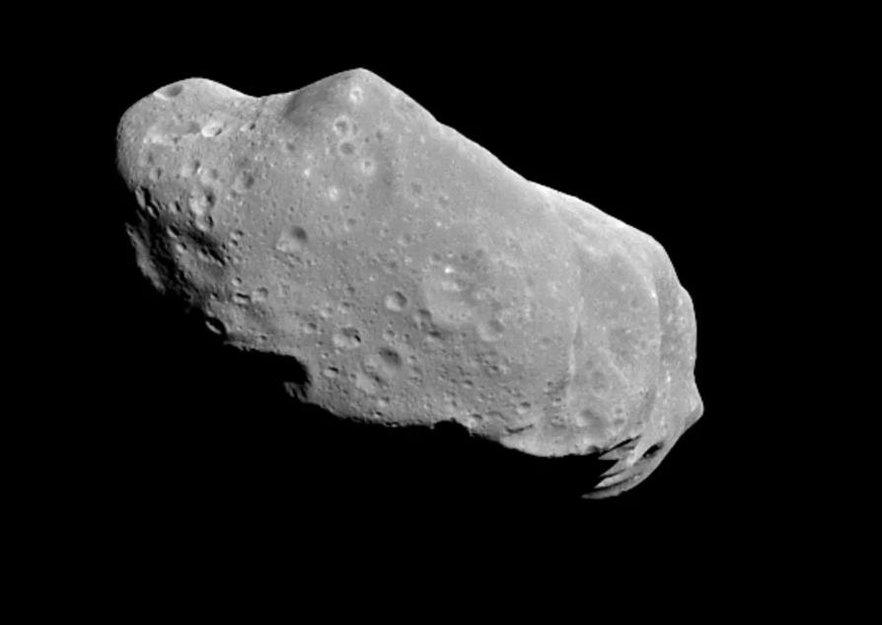
The newly discovered asteroid is approximately one kilometer in size and has an elongated shape. Its distance from the Sun is 2.78 astronomical units (about 417 million kilometers), and it completes one orbit around the Sun in 5.26 years. At the time of discovery, the asteroid was located in the Pisces constellation, between Mars and Jupiter, with a magnitude of 20.8.
The brightness of celestial objects visible from Earth is measured in apparent magnitude, denoted by the letter "m". This is an inverse logarithmic scale—the smaller the magnitude, the brighter the object. The brightest stars visible to the naked eye have a magnitude of 1 (m = 1), while the faintest ones are around 6. Stars with a magnitude of 7 or higher are no longer visible without optical aid.
Since 2008, as part of the research program "Small Bodies of the Solar System", scientists at the Baldone Observatory have discovered 149 asteroids. Most of these discoveries are credited to Ilgmārs Eglītis, whose passion lies in astronomical observations.
Although around eight asteroids are discovered in Latvia each year, only a few receive official names. Even globally, asteroid research is relatively recent—currently, only 45% of all potentially hazardous asteroids near Earth have been identified. Since astronomers cannot detect objects located on the Sun-facing side of Earth, spacecraft observations play a crucial role in their discovery.
Eglītis explains that identifying new asteroids, especially those near Earth, is essential for planetary safety. Even a one-kilometer-wide asteroid impacting Earth could cause catastrophic or even civilization-ending consequences.
"This asteroid is relatively large, although the biggest one I’ve discovered is 32 kilometers wide. However, there aren’t many objects of that size in the Solar System," says Eglītis.
To learn more about the threats posed by asteroid impacts and cosmic phenomena like supernovae, check out the episode of "Science or Nonsense", featuring astronomy enthusiast Raitis Misa and Ventspils University of Applied Sciences rector Andris Vaivads.
Studying asteroids is extremely important, as it is crucial to determine their taxonomic class or type. These objects can be composed of ice, rock, or metal. In the future, such asteroids could serve as valuable sources of rare metals or water.
Eglītis explains that water is scarce on Mars and the Moon, and even more so in space. However, survival beyond Earth is closely linked to the availability of water.
The Schmidt-type telescope at Baldone Observatory is unique due to its wide field of view and exceptional image quality of cosmic objects. It is the largest telescope in the Baltics and ranks twelfth among instruments of this type worldwide.
There are over 700 observatories worldwide, covering optical, infrared, radio, X-ray, and gamma-ray wavelengths, as well as space-based observatories. Most countries have one or two, but telescopes like the one in Latvia are rare—only about 50 exist worldwide. This telescope is unique, as it allows wide-field sky observations, making it particularly well-suited for discovering new celestial objects. For example, it can capture an entire Andromeda Galaxy in a single image.
"The most significant work has been in the study of carbon stars within our galaxy—since 1966, more than 400 have been discovered. Comets are also being observed. Additionally, for over 40 years, a systematic search for novae in the Andromeda Galaxy (M31) has been ongoing, leading to the discovery of 70 novae," explains Eglītis.
The location of the observatory was chosen over 66 years ago based on three key factors:
- Proximity to the capital, ensuring accessibility.
- No nearby railways, reducing industrial impact and air pollution.
- Better weather conditions, with 4% clearer skies than Riga, based on historical meteorological data.
Thanks to donations from UL Fund patrons, the University of Latvia’s Institute of Astronomy has implemented three modernization projects. One notable upgrade was the installation of an SSD camera as part of the "MikroTik" Project Competition in the fields of nature, technology, and medical sciences. This advancement reduced exposure time from two hours to just eight minutes. Additionally, the images are now digital, allowing researchers worldwide to access and analyze them remotely.
Future modernization plans include upgrading the control system, enabling computer-based operation and expanding movement trajectories. These improvements would allow integration into an automated telescope network, enabling astronomers and students worldwide to conduct remote observations.