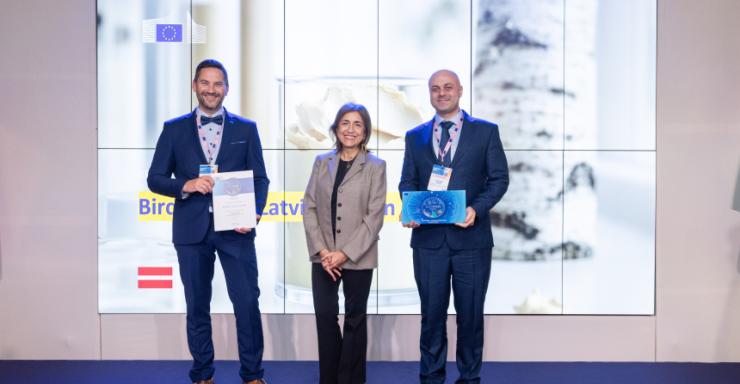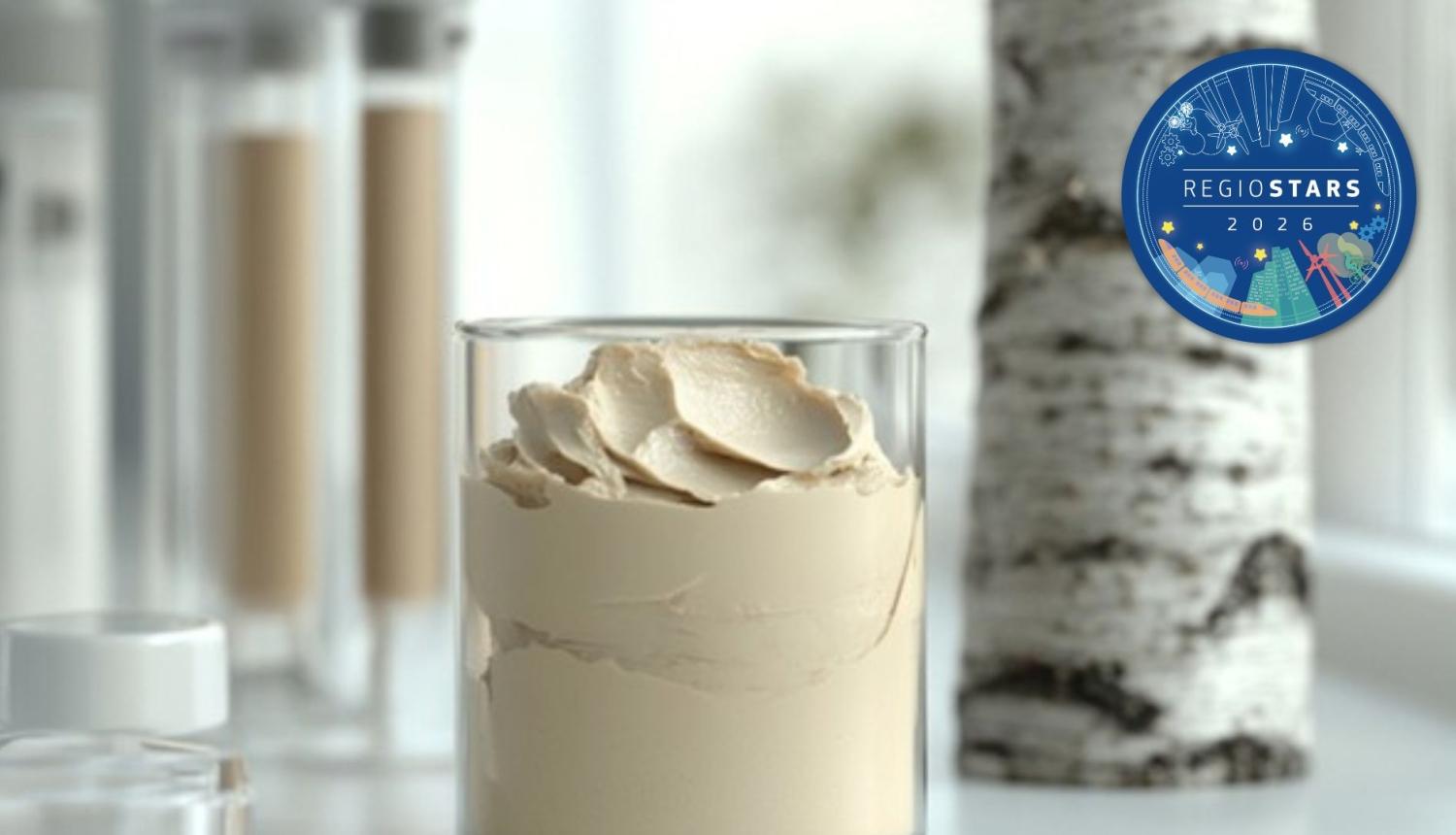
For the third year in a row, a European Union (EU) funds project implemented in Latvia has been selected as a finalist in the European Commission’s prestigious “RegioStars” competition. This year, the competition jury has nominated the Latvian State Institute of Wood Chemistry project “Treasures of Birch Bark – Latvia’s Green Oil” in the “Green Europe” category. The project resulted in the development of a patented technology for obtaining valuable microparticles of birch bark extractives and using them in eco-innovative, high value-added products.
This year, the competition received a record number of applications, with 274 project submissions from across Europe, of which the jury selected only 25 projects for the final across five categories.
The competition final will take place on 13 October in Brussels, where the finalists will present their projects to the competition jury and a live audience. The category winners and the winner of the Public Choice Award will be announced on the evening of 14 October. Residents of Latvia are invited to support the Latvian project by voting for it in the Public Choice Award until 12:00 on 14 October on the European Commission website: https://ec.europa.eu/regional_policy/projects/regio-stars-awards_en.
Birch bark continuously accumulates in significant quantities as a by-product of plywood production, but traditionally it has mainly been burned for heat generation. At the same time, birch bark contains large amounts of valuable extractives, including triterpenes, the most significant of which is betulin. The developed approach helps the valuable substances in birch bark dissolve better in water and makes them easier to use in dietary supplements. In cosmetics, the resulting microparticles can be used to form plant oil gels and stabilise cosmetic creams, while also providing preservative, antioxidant, and wound-healing properties. This opens up broad opportunities to use the developed technology in the development of various high value-added products.
Importantly, the project results have not remained only at the level of scientific publications and a patent.
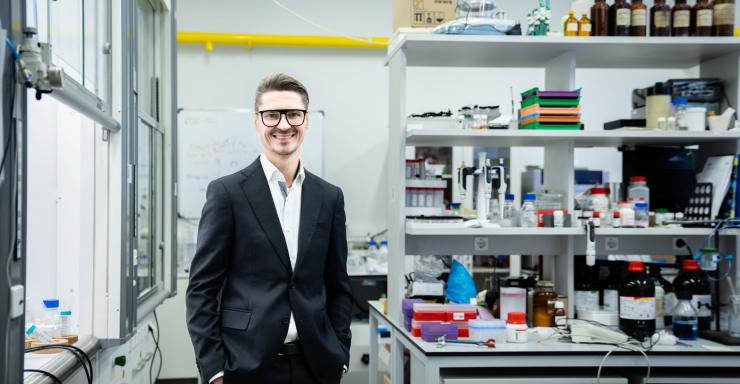
“When we started this project, birch bark was mainly a low value-added by-product used for energy production. Today, the technology developed by our team of scientists has been patented, its exclusive commercial exploitation rights have been transferred to JSC “Latvijas Finieris”, and BetulinLab is already turning this knowledge into BETULINK – an industrially scalable, high value-added oleogel raw material. This proves that Latvian science is capable, within a relatively short period of time, of completing the entire journey from an idea to industry and the market,” explains the project’s scientific lead, Aigars Pāže.
The scientific lead also notes that in the “RegioStars 2026” final, they want to demonstrate that the green transition does not mean only reducing resource waste. It can create new technologies, strengthen cooperation between science and industry, develop export-capable production, and generate greater economic value here in the region. “What we burned yesterday is becoming Latvia’s green gold today,” emphasises A. Pāže.
This also precisely reflects the essence of “RegioStars”. Since 2008, the competition has served as the European Commission’s quality label for outstanding EU co-funded projects whose solutions contribute to regional development and can inspire similar initiatives elsewhere in Europe.
The total cost of the project was €710.6 thousand, of which €494.7 thousand was EU support. The project was implemented from January 2021 to November 2023.
Alongside this project, two other cooperation programme projects involving Latvia have been nominated for the “RegioStars 2026” final in the “Europe Closer to Citizens” category. The Interreg Baltic Sea Region programme project “Baltic Sea Region Cultural Pearls for More Resilient Cities and Regions” strengthens municipal social resilience and citizen participation through culture. Meanwhile, within the Latvia–Lithuania Cross-Border Cooperation Programme project “Historical Route: Raudondvaris–Bauska”, Bauska Castle and Raudondvaris Manor have been developed into year-round tourism destinations.