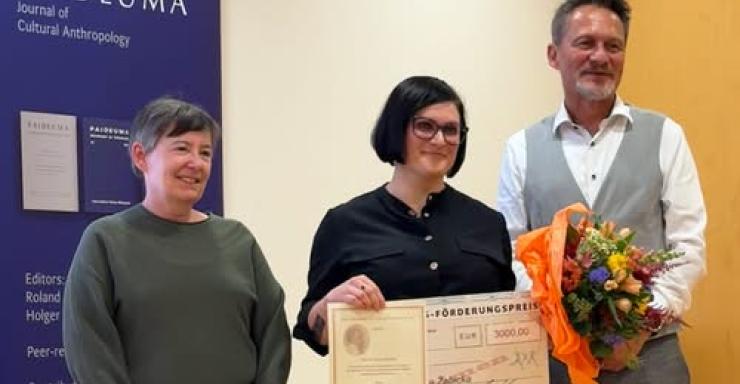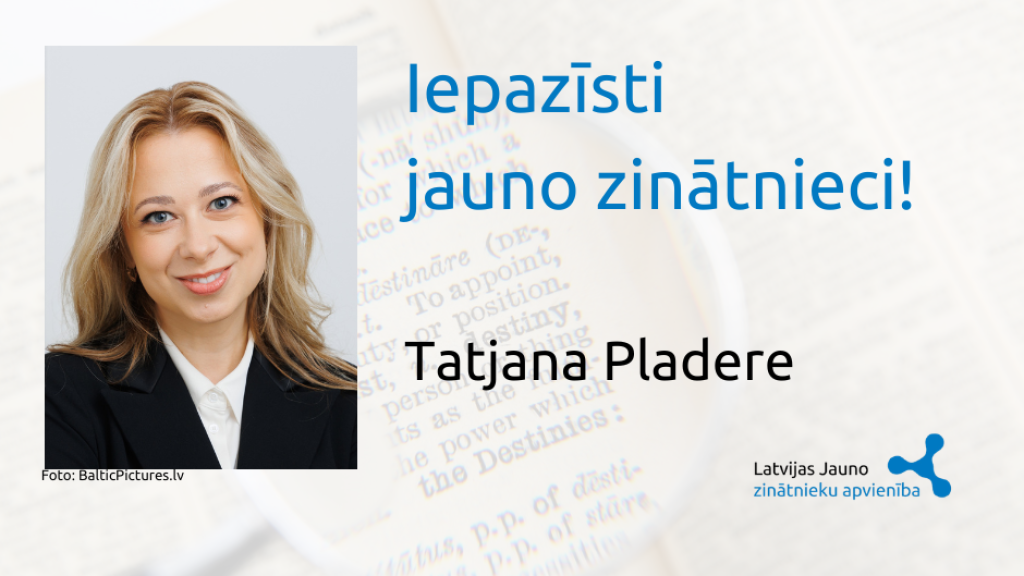
Tatjana Pladere is an Associate Professor at the University of Latvia (UL), a leading researcher, and the Head of the Department of Optometry and Vision Science. Tatjana leads several research projects, communicates science engagingly to both fellow researchers and the wider public, and has become a laureate of the international Optica Ambassador 2026 competition. Recently, Tatjana received the UL Excellence Award “Young Scientist of the Year 2025”. We congratulate Tatjana on her achievements and invite you to join our conversation series “Meet the Young Scientist!”.
Optometry is an interdisciplinary field that combines healthcare, the exact sciences, and technology. Which of these aspects is closest to you? What inspired you to study optometry?
Optometry has become my perfect match and, at the same time, an opportunity to grow and express myself — something I am truly grateful for. It allows me to apply the type of thinking characteristic of the exact sciences and my constant desire to solve complex problems in order to help people.
In this field, the human being is — and remains — the highest priority. At the same time, as the years go by, the ways we can address various challenges continue to evolve, with new technologies playing an increasingly important role.
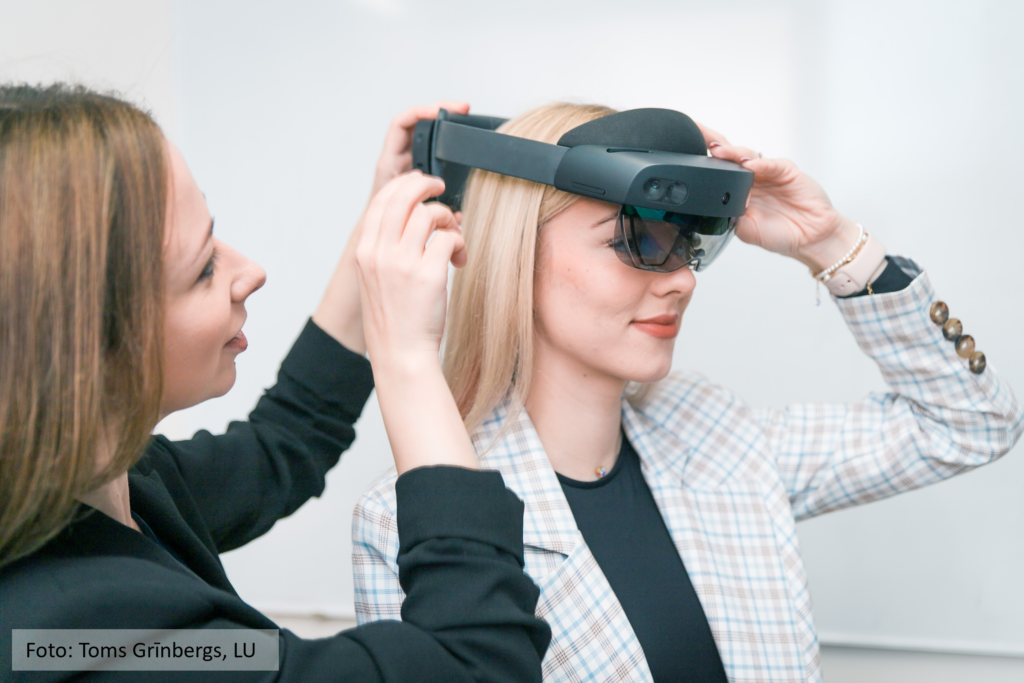
Your doctoral research focused on the quality of three‑dimensional images, but now your work also includes projects related to augmented reality. Clearly, vision science is developing very rapidly. How would you briefly describe the main tasks of modern optometry and vision science in improving people’s everyday lives?
As digitalization and the use of display technologies increase, so does visual load. At the same time, new technologies can enhance the efficiency of healthcare and open up new possibilities for addressing vision‑related problems. In this context, one of the most important tasks of optometry and vision science is to serve as a compass in the interaction between humans and technology. It is crucial to ensure that we stay on course, continue to prioritize human needs, and take individual abilities into account.
What motivates you in your daily work?
I am motivated by the desire to expand the opportunities available to people so they can live better lives.
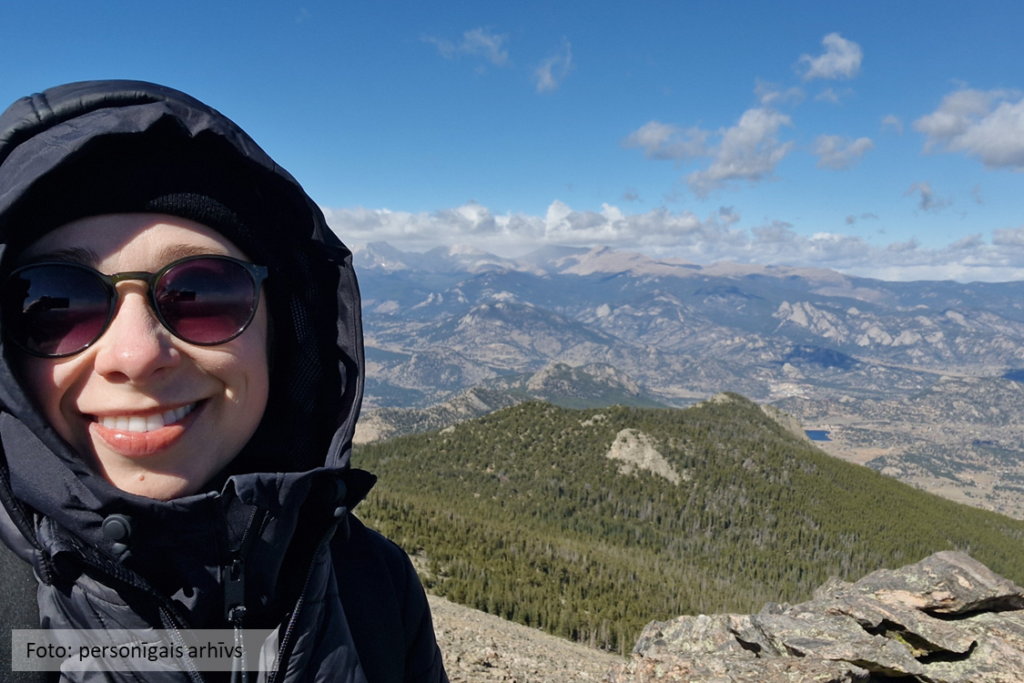
The UL Department of Optometry and Vision Science can be proud of its success in attracting research projects — several are currently underway, including national (FLPP, ERDF) and international (Horizon Europe, COST) initiatives. What is the common element behind these successful projects?
When you have a team with strong ideas and solid research foundations, success is built on a winning mindset, a willingness to learn, and diverse support from both the system and the community. Everything starts with mindset. As I often remind others — many obstacles exist only in our own heads. When I ask why someone hasn’t applied for a project (or scholarship) competition, I often hear capable and talented people say: “I don’t believe I’ll succeed.” Or: “I already tried — I invested all my time and energy into the application, but my idea was rejected, and it was very painful.” Or: “The success rate is only 9% — I don’t feel special enough to be in the top 9%.” These are the thoughts we need to work on. Only when a person truly believes they can win will they do everything necessary to achieve it.
Once the initial barriers are overcome, new ones inevitably appear along the way. That is why accessible support — both systemic and community‑based — is crucial. In our Department of Optometry and Vision Science, we share successful project applications and the lessons learned so colleagues can benefit from this experience. We also share applications still in development, because an outside perspective often helps improve them. Each of us has our own strengths, and by combining them synergistically, our chances of success grow significantly. I am also genuinely pleased that the environment at the University of Latvia is gradually changing — support that once seemed like a distant dream is now becoming available.
Although your career has developed steadily at the University of Latvia, you also have extensive international collaboration experience — you have taken part in several short‑term visits to foreign universities. What is the most valuable experience for young scientists during such visits abroad?
Each of these visits has allowed me to learn more about current opportunities and challenges at foreign universities, meet potential collaboration partners, and engage in knowledge exchange. An additional benefit I greatly appreciate is the chance to observe how different cultures shape work processes. This helps me better understand others and fosters sustainable cooperation. It’s no surprise that I return from every business trip inspired and with a renewed sense of enthusiasm.
You recently became an Optica Ambassador 2026. This is both an honor and a responsibility. Tell us more about this nomination and what motivates you to engage in communication and mentoring activities.
I have been active in international professional organizations for more than 15 years, and this experience has shaped who I am today — both personally and professionally. I began as a student, organizing and leading science‑popularization events in schools and helping with the annual international young scientists’ conference “Developments in Optics and Communications.” Today, I am involved in new roles — serving on organizational governance committees and evaluating applications for scholarship programs.
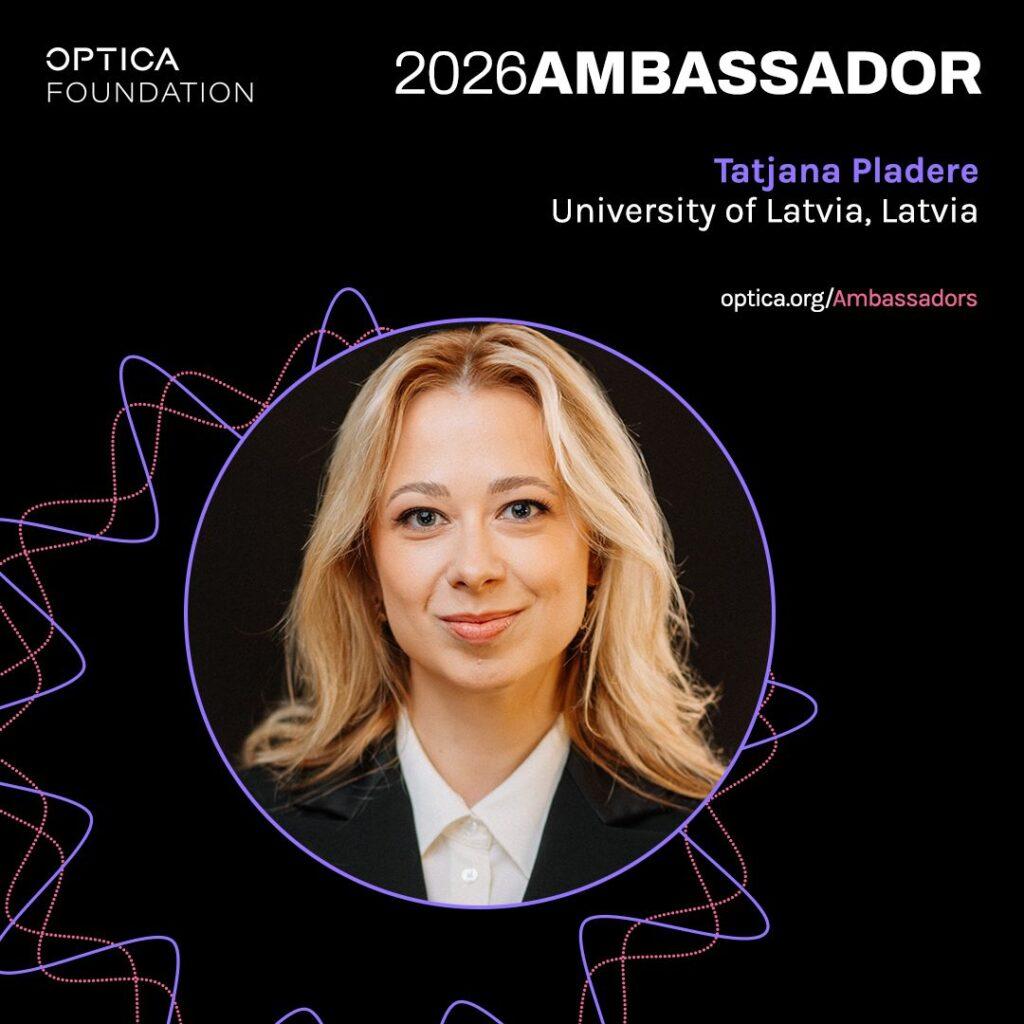
Optica Ambassador is a lifetime recognition awarded to outstanding emerging leaders in the fields of optics and photonics. It is important to me that people dare to dream big, overcome their internal barriers, and give themselves another chance. This is one of the reasons why I engage in communication and mentoring activities — and why I am willing to step on stage myself from time to time, even when the experience can be both positive and challenging. I am genuinely happy when someone who previously doubted themselves hears my story and sees proof that they, too, can succeed — they stop “cancelling” themselves and start taking action.
You have participated in various science communication events, including those organized by the Latvian Young Scientists’ Association (LJZA) — interviews at the Lampa conversation festival, the young scientists’ session at Deep Tech Atelier, and others. Why is it important for scientists to occasionally step out of the laboratory or library and speak to audiences outside their field?
Communicating science beyond one’s professional bubble is a great opportunity to share knowledge, inspire others, and practice conveying your core message clearly. When I talk about my research, I sometimes test what people react to, when, and why — paying special attention to nonverbal cues. A person may politely say the topic is interesting, but you can immediately see whether there was a “click,” or whether the main message still needs refining. When preparing project proposals or publications, I like to imagine that I am telling — not writing — the story of my topic to a specific person. This helps me shape my thoughts and craft the application as an engaging narrative.
In 2023–2024, you served on the LJZA board and actively worked on issues important to the association. What were your priorities during your time on the board?
It was a great honor to serve on the LJZA board alongside people whose dedicated work, strategic thinking, and contribution to the development of Latvia’s scientific ecosystem I deeply respect and admire. From the very beginning, my role naturally evolved toward international cooperation. I often traveled abroad to represent Latvian young scientists at conferences and other events, to speak about the situation in Latvia, to learn from others’ experiences, and to explore opportunities for joint initiatives.
Since my previous experience had been shaped mostly within the STEM environment, being involved in the association’s work not only allowed me to meet many talented young scientists from different fields but also significantly broadened my perspective on the current state of science in Latvia.
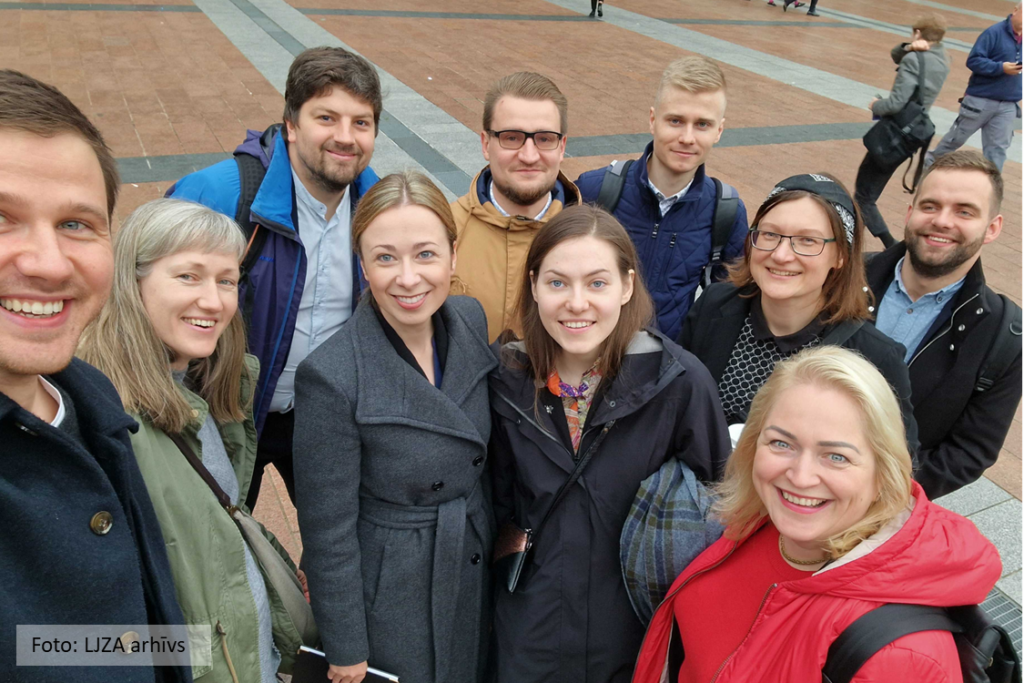
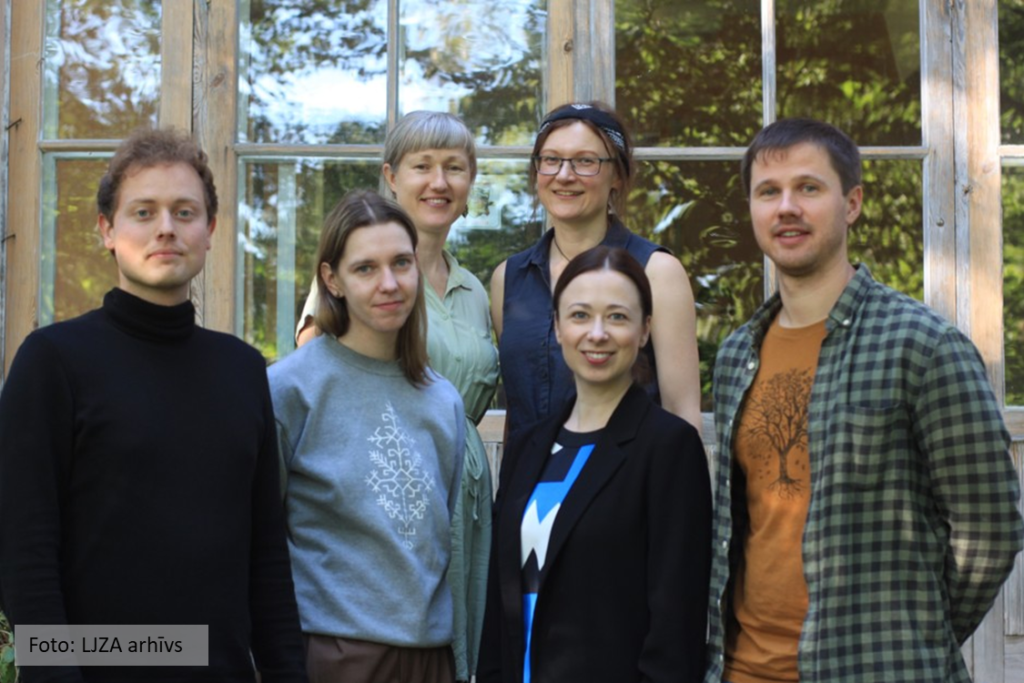
Can you name the most memorable adventure you’ve experienced together with LJZA members?
Taking part in the retreat organized by LJZA was without a doubt one of the best cognitive adventures I’ve ever had, and I’m still very proud of what we accomplished there. It was a special experience thanks to several factors. First — a focused event: just a few days away from the everyday rush, when you can devote all your attention to one specific task. Second — a truly exciting task. And most importantly — the people, with whom you feel completely in sync and can simply be yourself. During this retreat, we created a guide for doctoral students. I wholeheartedly recommend it to anyone who is planning to begin or has just begun their PhD journey.
What would you wish or advise to future and early‑career researchers regarding career development after earning a doctoral degree?
Find your own path!