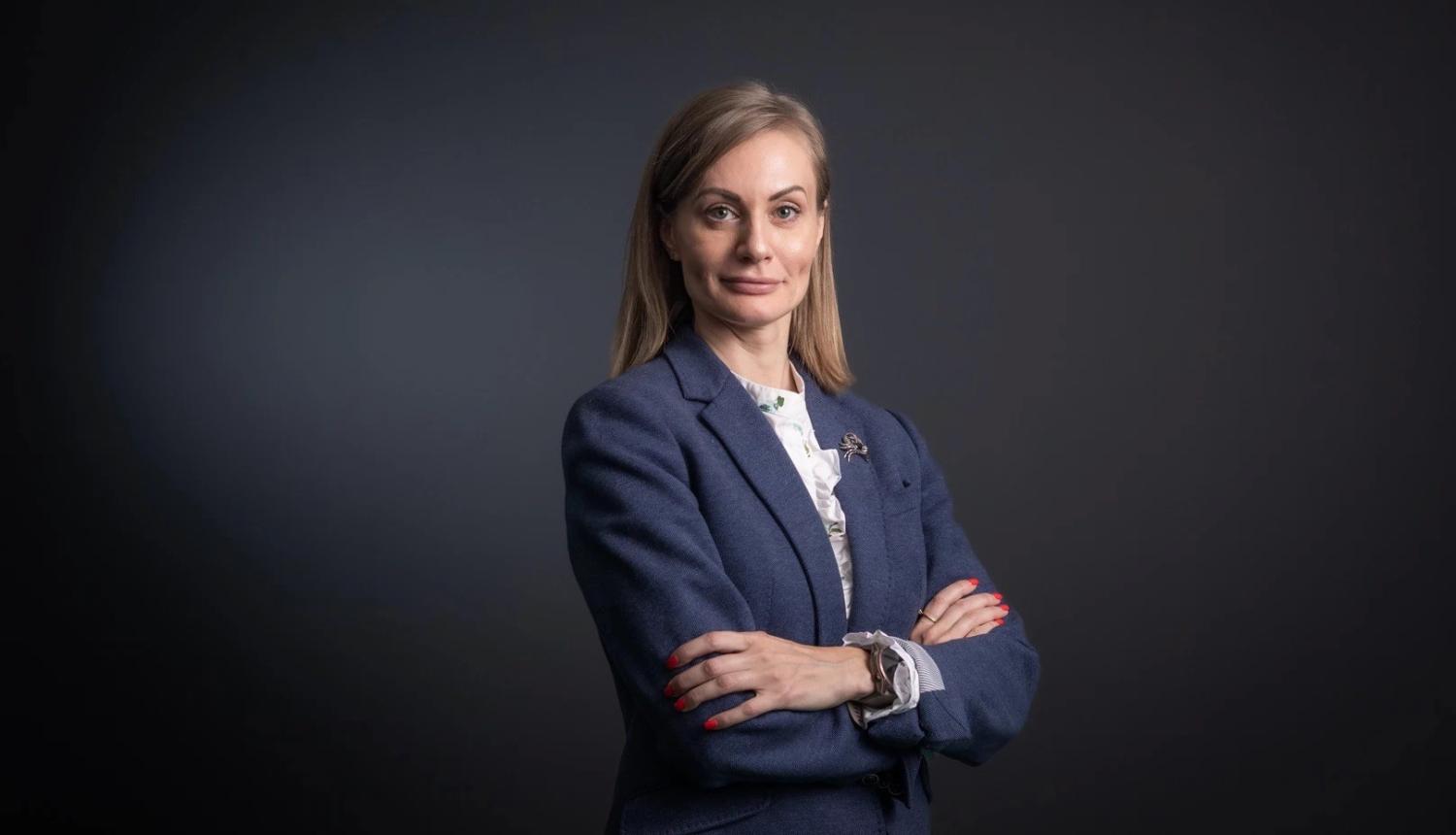
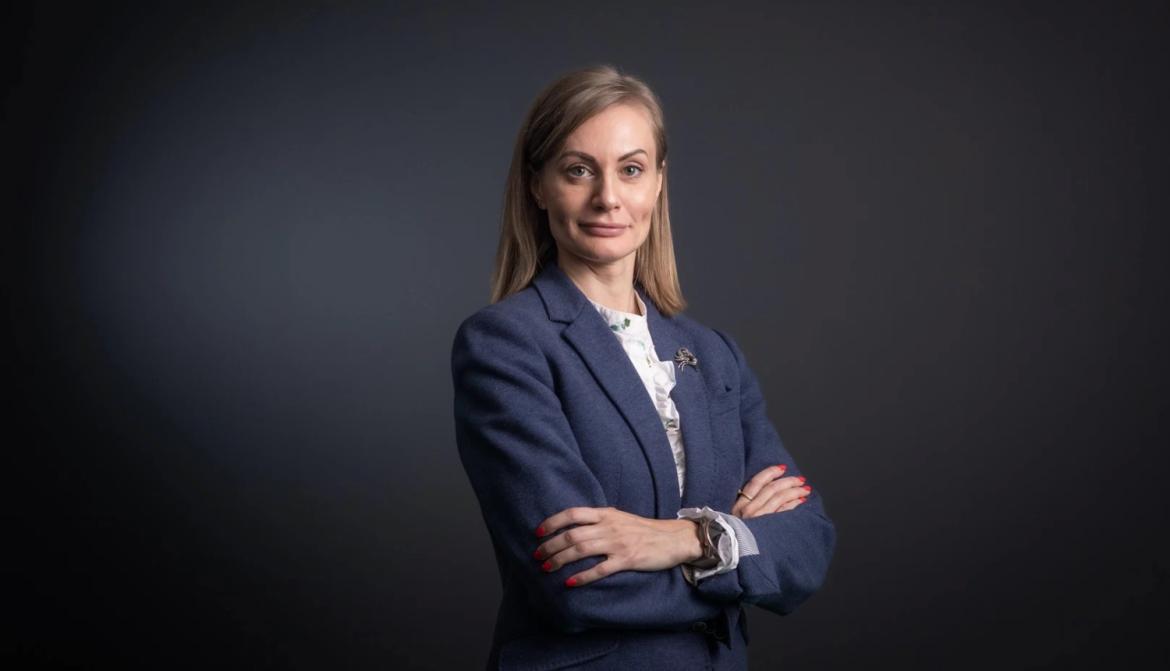
Ksenija Lāce has more than 20 years of experience in the field of information technology. While working in large software development companies, she realized that one of the most challenging business processes is often mergers between companies. Searching for ways to make these processes smarter and more efficient, Ksenija returned to academia after a break of more than ten years and began her doctoral studies. Today, she continues to advance this research direction in her postdoctoral project.
One of the most complex tasks during company mergers is the integration of different information systems. Each company typically has its own software, data structures, and workflows developed for specific needs. When these systems must start working together, it often becomes clear that they are not easily compatible. Moreover, many specialists who deal with such matters enter these processes without significant preparation or prior experience. However, if integration is not carefully planned and implemented, it can cause major disruptions to business operations, delay projects, and even lead to significant losses.
To address this challenge, Ksenija developed a methodology in her doctoral research that helps specialists approach information system integration in a structured way — to understand which systems should be integrated, in what sequence, and how to make well‑grounded decisions in a complex process. The doctoral thesis was successfully defended, but the research did not end there — the next step was to explore how these ideas could be applied in real work environments.
Her experience in companies showed that the methodology was highly valued, but in today’s fast‑paced work environment people often seek solutions that are easy to understand and do not require lengthy study. Therefore, the next step was to transform the methodology into a digital solution — an application that enables learning by doing. This idea also became the focus of Ksenija’s postdoctoral research. The solution incorporates gamification elements that allow users to test different decisions and see their consequences in a safe environment.
“It is similar to pilot simulators — before making decisions in a real situation, you have the opportunity to try them out in a safe setting,” she explains.
Ksenija’s interest in information technology began in childhood. Her mother managed a computing center and once took her to see the large computers that, to a child’s eyes, seemed almost like something from another world. This experience made a strong impression — and, as it later turned out, influenced her future career choice.
“I was about four years old when I first saw the computing center. Those were massive computers that occupied entire rooms, and it seemed incredibly fascinating. I think that was the moment I realized — I wanted to be close to this world,” she recalls.
Even today, after more than twenty years in the field, Ksenija feels completely at home in IT. In her view, it is precisely the dynamism of the field that makes it so exciting.
“It’s an industry that constantly changes. Every year, even every month, new technologies, new ideas, and new solutions emerge. That means you never stop learning.”
Returning to academia after a long break, Ksenija was pleasantly surprised by how much the research environment had evolved. Nowadays, scientists have far greater opportunities to collaborate internationally, share ideas, and jointly address complex issues.
“Today, borders practically don’t exist — there are so many opportunities to collaborate with colleagues in other countries, meet industry experts, and develop ideas together. It’s very inspiring because you realize you’re not alone in your research — you’re part of a larger community working to solve various problems,” she says.
This is why Ksenija encourages others — especially young people — not to be afraid of taking the research path. The most important thing is to find a question that truly interests you. “If you work on a topic that genuinely excites you, then even in the most challenging moments you have the motivation to continue. Science requires patience, but it also brings great fulfillment — because you know you’re trying to solve a problem that has no ready-made answer yet.”
In her view, science is not only an academic activity but also a way of thinking that helps approach problems in a structured manner and search for new solutions.
“Science is essentially a process in which we try to understand the world and find ways to make it better. Many things we take for granted today — technologies, medical solutions, innovations — once began with a simple question: can we do this differently?” she explains.
Speaking about the future, Ksenija envisions her path at the intersection of two worlds — academia and business. She believes that this is precisely where the greatest potential for new ideas emerges: “I find it very valuable to be in between industry and academia. This way, you don’t lose touch with real problems companies face every day, and at the same time you can use the scientific approach to explore new solutions,” she says. “It is exactly where practical experience meets research that the most interesting ideas often arise.”
The “Postdoctoral Research” programme in Latvia is implemented with EU fund co‑financing. The aim of the programme is to develop the skills of young scientists, strengthen their research capacity, and provide career opportunities in scientific institutions and within companies, supporting the renewal of research human resources and increasing the number of qualified researchers in Latvia. Activity 1.1.1.9 “Postdoctoral Research” (2024–2029) is administered by the Latvian Council of Science.
More information about the programme [LV]: www.lzp.gov.lv/lv/pecdoktoranturas-programma