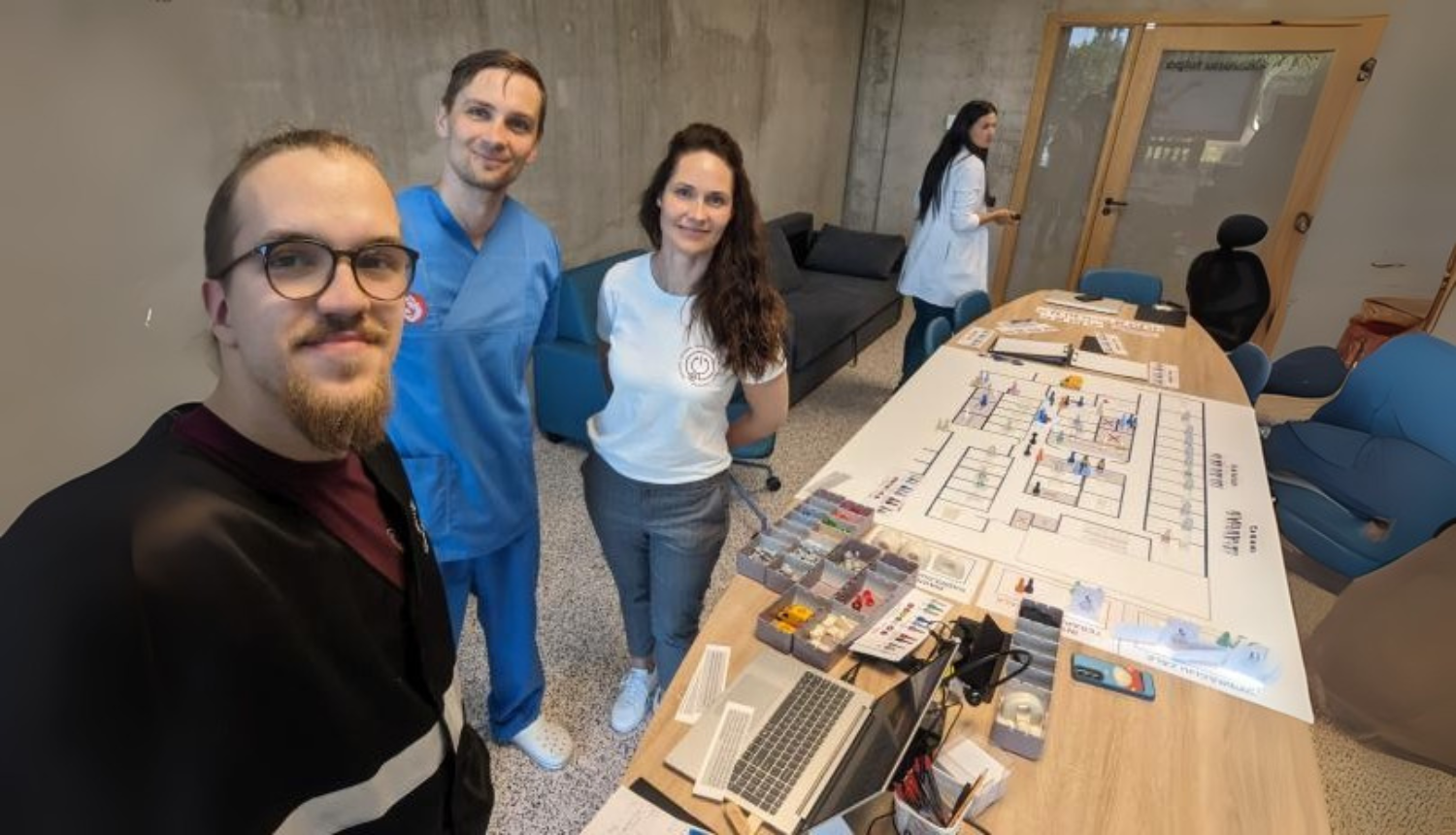
RSU Develops Tabletop Simulation and Enhances Children's Clinical University Hospital Readiness for Patient Influx During the Song and Dance Festival

Author
RSU Medical Education Technology Centre

July 8, 2025

innovation research

Expanding its range of simulations, the Riga Stradiņš University (RSU) Medical Education Technology Centre (METC) has developed an innovative tabletop simulation platform to assess the readiness of medical institutions for the mass admission of critical patients.
RTU MITC.png
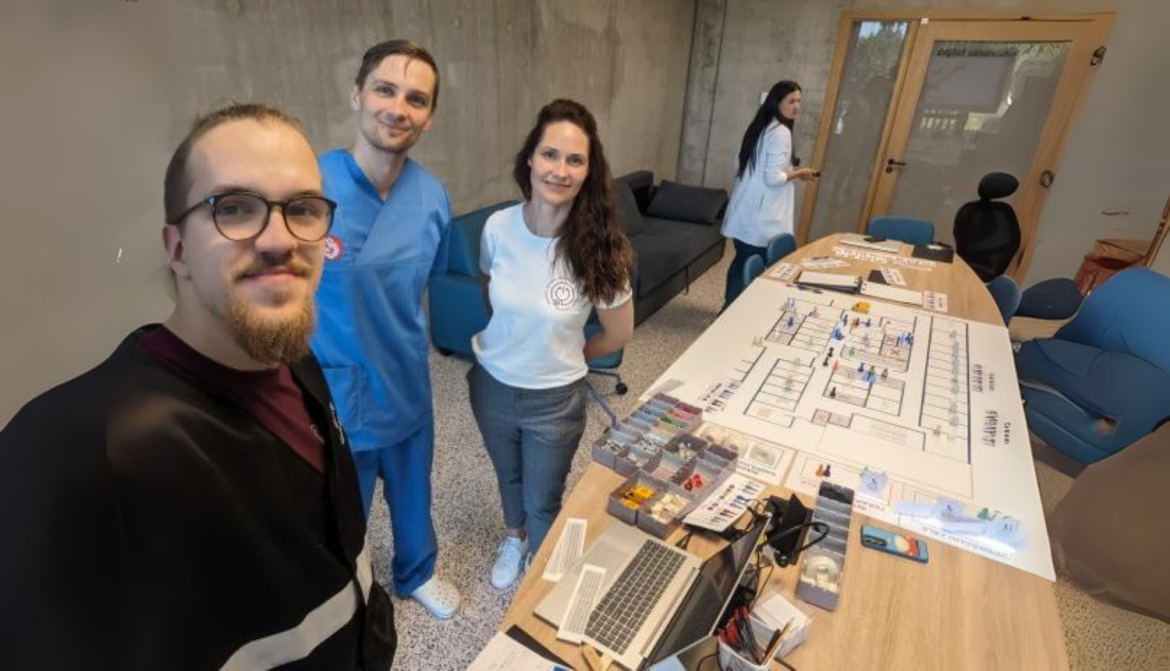
RSU MITC publicity photo.
​​​

This newly developed solution was presented to the staff of the Children’s Clinical University Hospital this week, helping them prepare for a potential increase in patient flow during the XIII Latvian School Youth Song and Dance Festival.


A tabletop simulation is a structured, visually straightforward method that allows hospital staff to role-play complex situations in a safe environment without posing any risk to real patients. It helps identify gaps in communication and collaboration, as well as test resource planning and decision-making chains under crisis conditions. Such simulations are beneficial in preparation for mass patient inflows, for example, during significant public events.


METC simulation instructors provided methodological support in the development and implementation of the simulation. In collaboration with the Department of Physics at the Faculty of Medicine, they developed an innovative technical solution for the tabletop simulation, featuring 3D-printed figures representing patients (with severity levels aligned to triage categories), various medical specialists, nurses, nurse assistants, and diagnostic radiology equipment.

“Tabletop simulations help visualise the bigger picture, understand patient flows, resource limitations, and the consequences of strategic decisions. They improve interdepartmental communication and cooperation within hospitals. Participants can experiment with decision-making and strategies in a safe environment without compromising patient safety. Tabletop simulations are cost-effective and require fewer resources, as they don’t involve real medical equipment or facilities. Scenarios can be easily adapted to different training goals,” emphasised METC Director Ieva Šlēziņa, highlighting the advantages of tabletop simulations.

The RSU METC team is ready to offer the newly developed tabletop simulation solution to other hospitals across Latvia.
Recommended articles

innovation

The shrinking bread business leads to a promising product with dual use

Valdis and Oņega Circeņi from Salaspils, who have experience in the bread business, noticed that with each generation the demand for traditional rye bread is declining, so they decided to look for a new, export‑oriented niche. This led to the creation of the company “Roga‑Agro” brand “Good Mood Mea…

Labs of Latvia

June 12, 2026

research

The 2nd International Congress of Transcultural Studies “Give and Take: Transdisciplinary Spaces of ‘Cohesive Netting’” to Take Place in Riga

The 2nd International Congress of Transcultural Studies, jointly organised by three European universities — the Latvian Academy of Culture in Riga, the University of Macerata (Università di Macerata) in Italy, and KU Leuven in Belgium — will take place in Riga from 30 June to 2 July 2026. This year…

Latvian Academy of Culture

June 11, 2026

research

From charging delays to seamless mobility – RTU researchers redefine battery use in electric transport

As electric mobility continues to expand rapidly across Europe, challenges such as long charging times, high costs, and sustainability concerns remain barriers to wider adoption. Researchers from Riga Technical University (RTU) are contributing to addressing these challenges by participating in the…

Riga Technical University

June 11, 2026

research natural sciences

How to replicate on Earth a process that occurs in the Sun? Researchers are working on future nuclear fusion technologies

Nuclear fusion is a process in which a large amount of energy is released when light atomic nuclei merge. This process also takes place inside the Sun. Although nuclear fusion is not yet used for commercial energy production, scientists around the world are working on its development, as in the fut…

Matīss Sondars (LU Eksakto zinātņu un tehnoloģiju fakultātes Ķīmiskās fizikas institūta pētnieks)

June 2, 2026